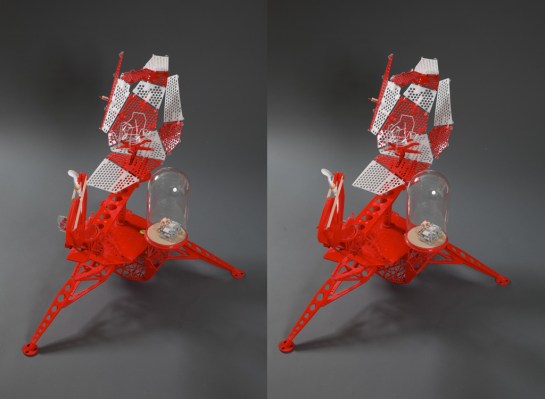
Instrument Five (Nat Chard)
Another of the new pictures – this time Instrument Five in stereo.
Usual process for resolving the stereo image.
Instrument Five (Nat Chard)
Another of the new pictures – this time Instrument Five in stereo.
Usual process for resolving the stereo image.

Instrument 6 (Nat Chard)

Instrument 6 (Nat Chard)
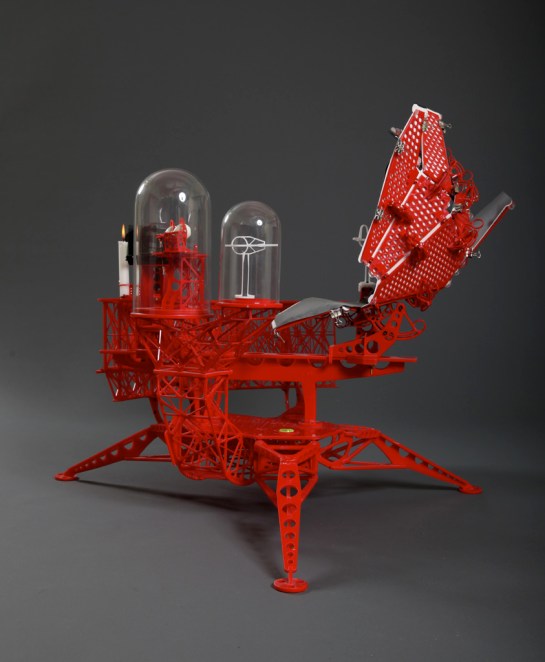
Instrument 6 (Nat Chard)

Instrument 6 (Nat Chard)
I have been reshooting Instrument Six – the earlier photographs were too saturated. Here are some tests. The surface on the folding picture plane is a material that retains polarisation, made by Da-Lite Screens. The instrument is seen here in real time mode – to see a shadow floating off the surface on which it should, by rights, land.

Instrument Three (Nat Chard)

Instrument Three (Nat Chard)
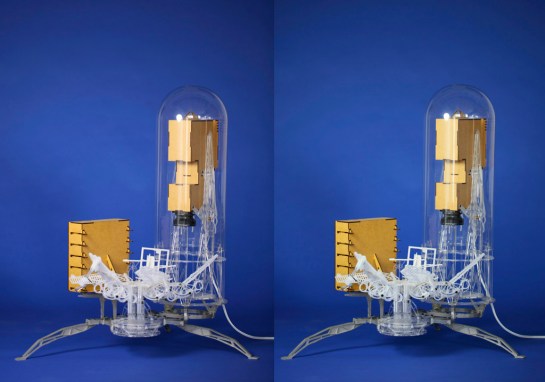
Instrument Three (Nat Chard)
Looking through some photographs I found some of the stereoscopic shots I had made of the instruments. Here are a few of Instrument Three.
See also:
https://natchard.com/2011/09/14/drawing-instrument-three/
https://natchard.com/2011/12/26/more-instrument-three/
To view the images in three dimensions, go cross-eyed until you can register one image over the other. You may need to reduce the size of the images a little and perhaps tilt your head a little to keep the horizons together. When you have the image, try to relax to get the full stereoscopic depth.
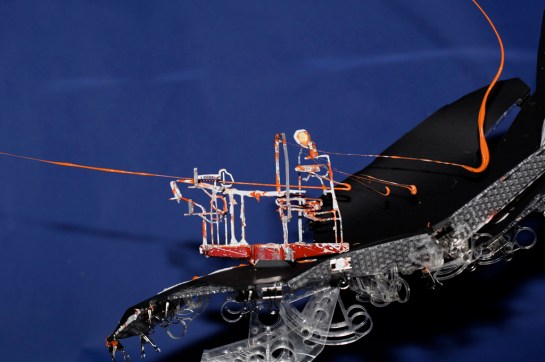
Instrument Five
A couple of extra pictures of Instrument Five in action, with a very laid back picture plane to draw out the throw of paint. Notice the meniscus of paint on the top right drawing piece (above) that is still there for the subsequent white paint throw (below).

Instrument Five
See also:
https://natchard.com/2011/10/16/more-instrument-five-2/
https://natchard.com/2011/09/28/more-instrument-five/
https://natchard.com/2011/09/24/drawing-instrument-five-developed-drawings/
https://natchard.com/2011/09/21/drawing-instrument-five-first-drawings/
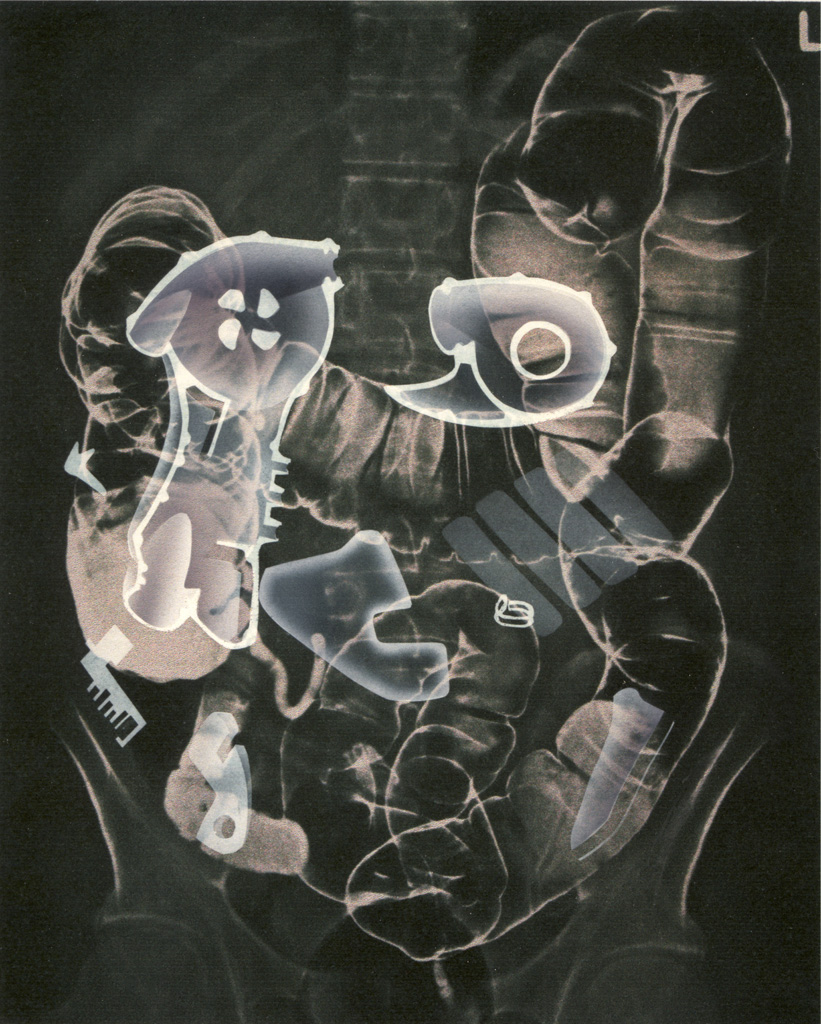
X-Ray 3b mk.2
I have just returned to some drawings I made many years ago. I had a request to put them in an exhibition, which might interfere with a couple of other exhibitions that are coming up, so I have made some copies with slight alterations. It is part of the second body project (see here and here) where I altered X-ray photographs of the body and the related positioning photographs to take those X-rays. The positioning pictures (the originals are taken from Positioning in Radiography by K.C. Clark, 1949 edition) have slight bumps on the body that reveal the synthetic organs through formal transparency. I have not altered these much but have developed the X-ray images by spraying transparent cool grey on the interior of the synthetic organs and added soft highlights, which gives a transparency closer to that in an X-ray.

X-Ray 3a – positioning image for X-ray 3b above

X-Ray 2b mk.2

X-Ray 2a Positioning image for X-Ray 2b (immediately above)
Although I have returned to projects before – there are three generations of body projects (and one that was started about eight years ago but lying dormant) and I am working on the eighth generation of drawing instruments, but I have never redrawn an old project before. I know a couple people whose work I really admire who are constantly revisiting old projects, so I do not feel too queazy about it!

Design Ecologies
I just received a copy of Design Ecologies (Volume 2 No.1) edited by Shaun Murray. The title of the issue is The Ill Defined Niche. It has chapters by Shaun Murray, Camila Sotomayor, Tim Matts and Aiden Tynan and one by me called Drawing Uncertainty that covers some of the instruments and the Bird Automata Test Track. If you are interested you can order a copy here.

IPS Infrastructure – Misting Tower, Connection Box and Workbench
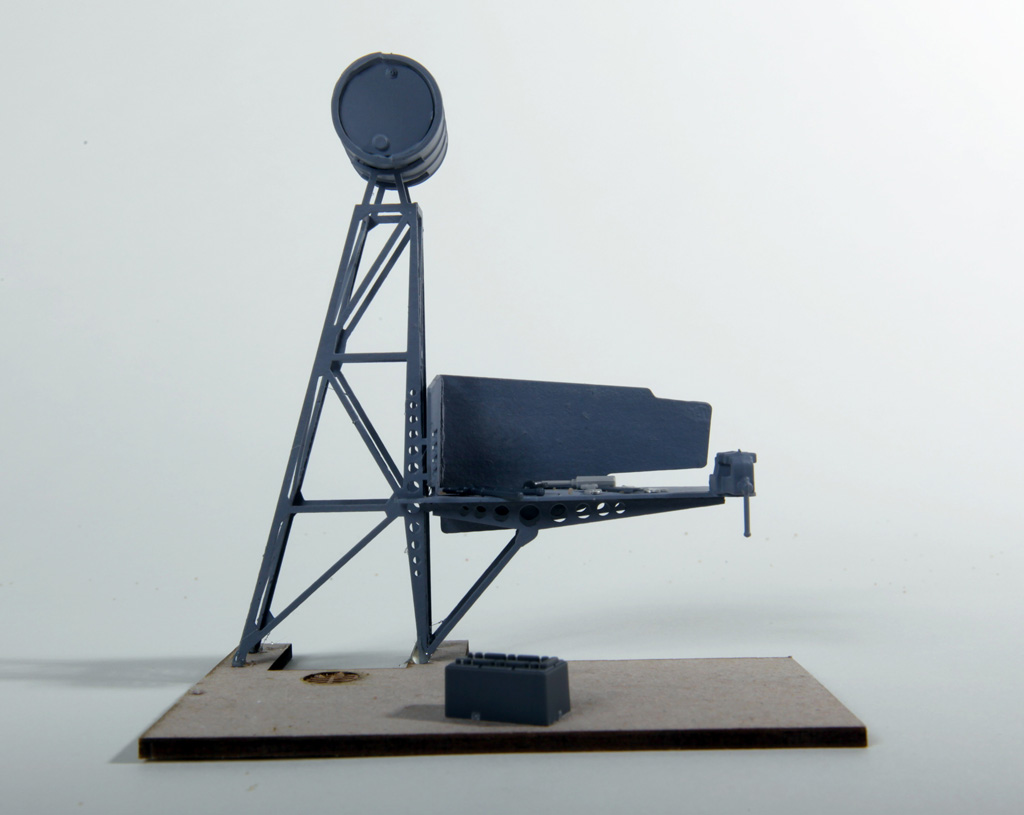
IPS Workbench
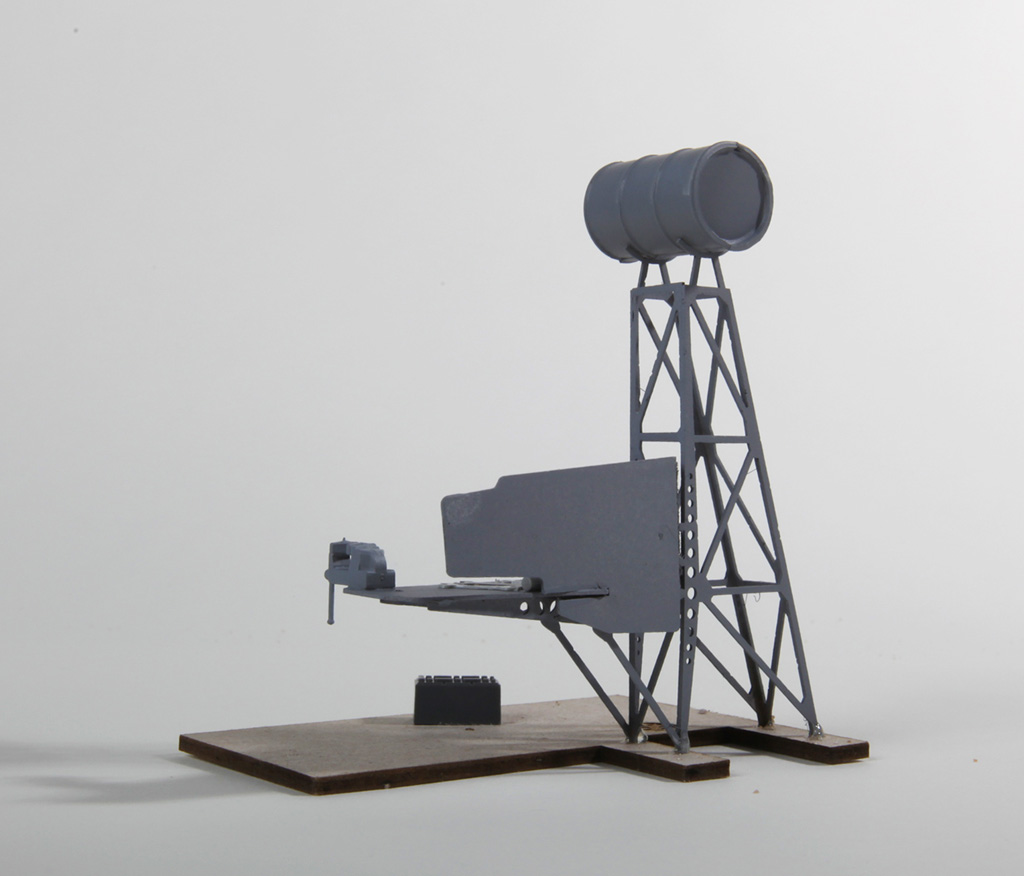
IPS workbench rear view

IPS workbench

IPS misting tower and workbench
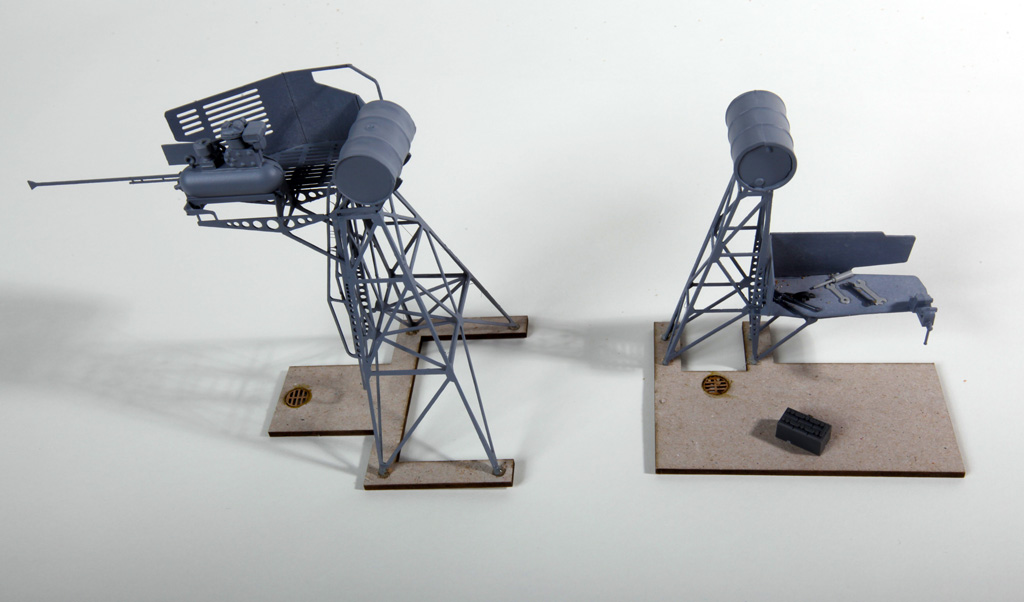
IPS misting tower and workbench

IPS Misting Towers

IPS Misting Towers

IPS MIsting Tower
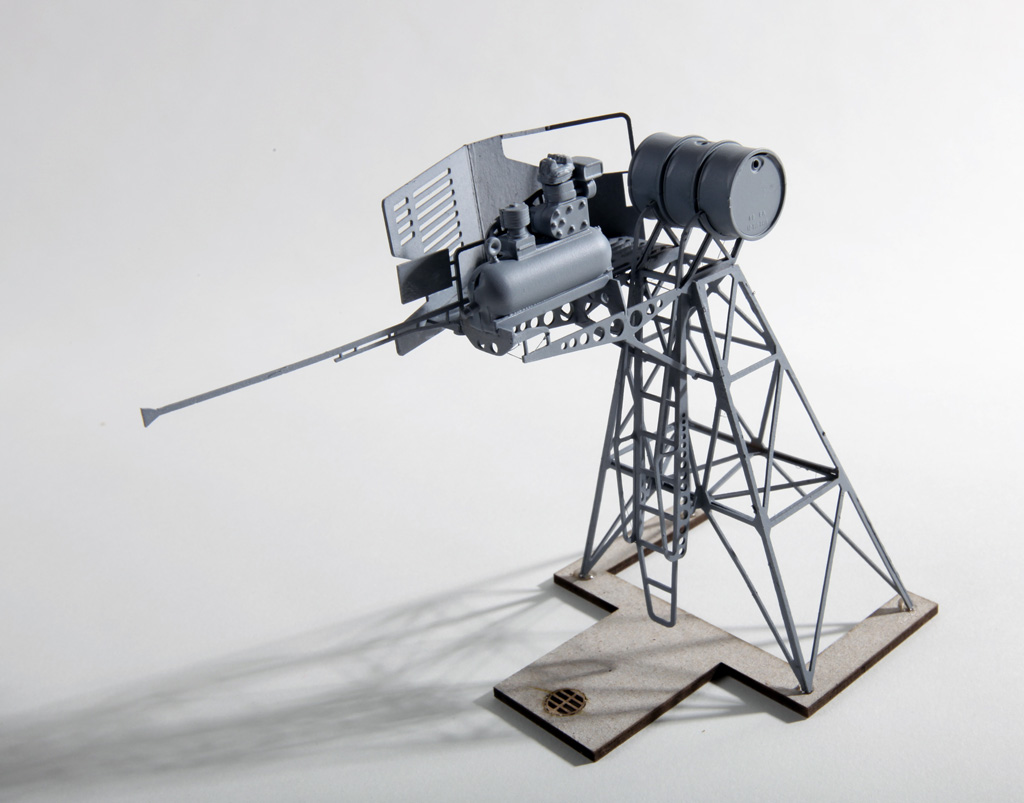
IPS Misting Towers

IPS Misting Towers

IPS Misting Towers

IPS Misting Towers
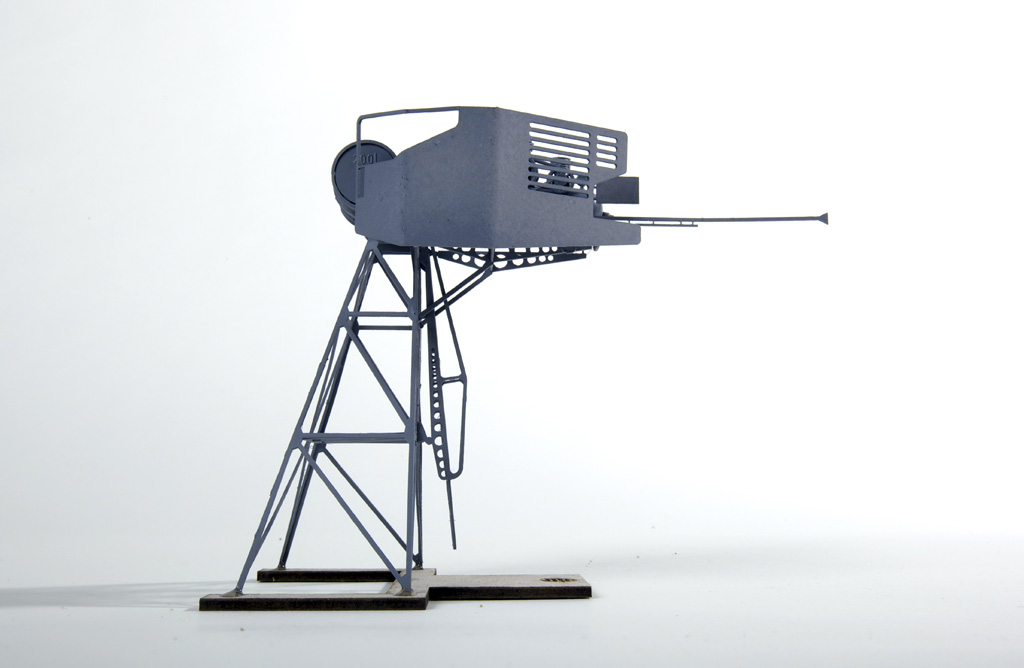
IPS Misting Towers
Misting towers for the Institute for Paradoxical Shadows
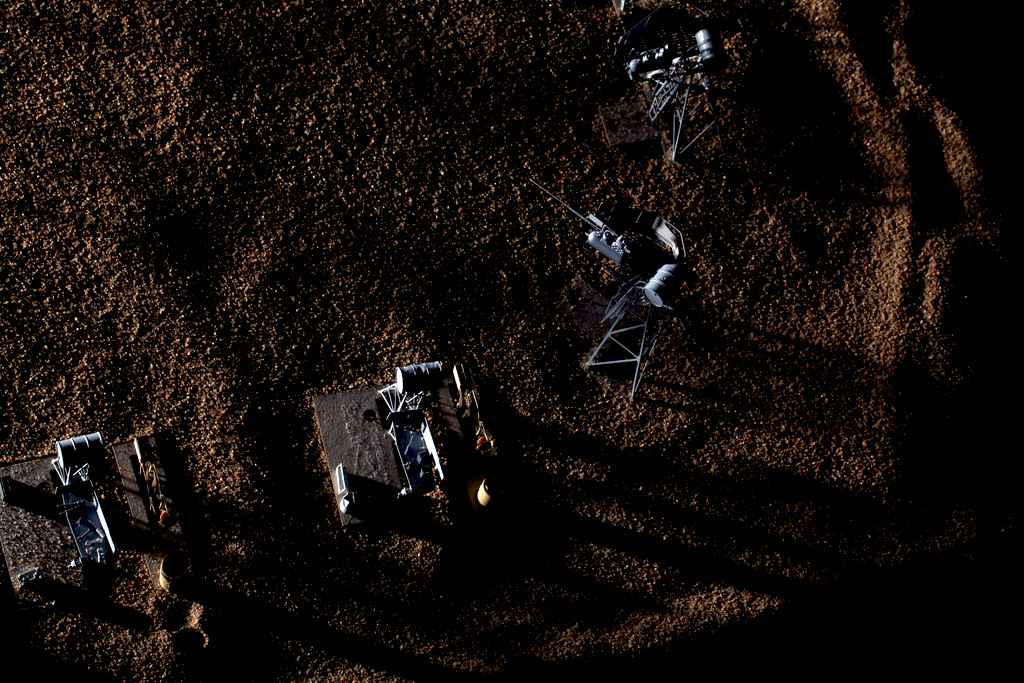
Institute for Paradoxical Shadows detail
An extra detail.

Institute for Paradoxical Shadows
An earlier view of the Institute for Paradoxical Shadows. It is developing the full size implications of instrument Six, shown below.

Instrument Six in real-time floating shadow mode

Instrument Six in research (photographic) mode

Stereoscopic view of floating shadow from Instrument Six
To view the floating shadow make sure the image is small enough to register the shadow in the left image over the one in the right hand image when you go cross-eyed (you will see three images – concentrate on the middle one). Try to relax to get a good three-dimensional view. You will see that the shadow sits a short way off the surface in which you would expect it to land.
 Nat Chard