Archive

Drawing instruments

Instrument Eight, in progress (Nat Chard)

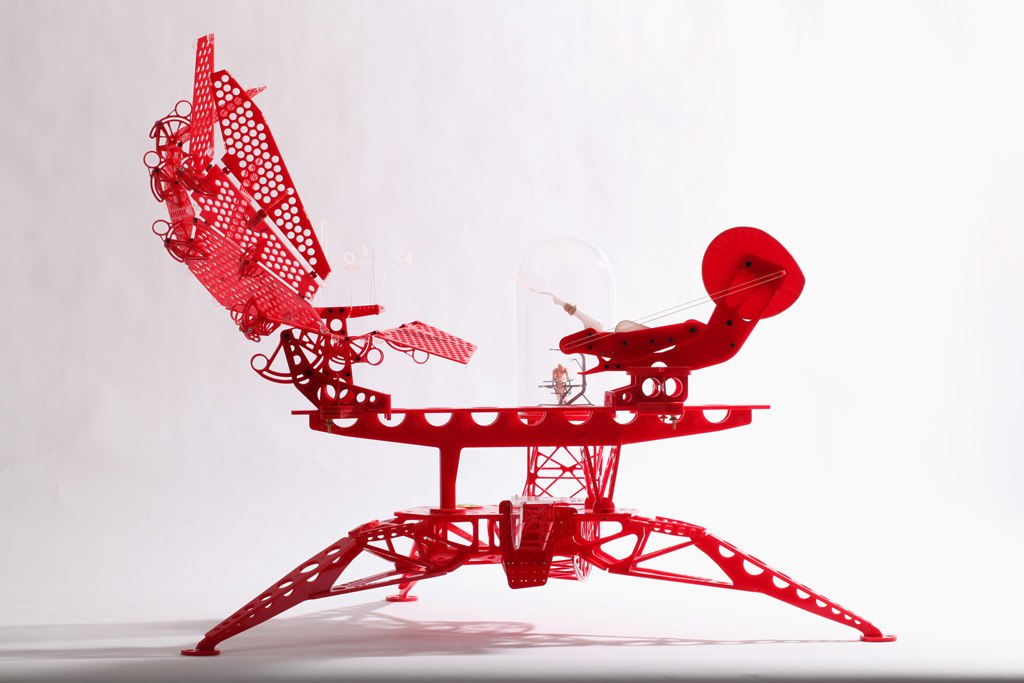
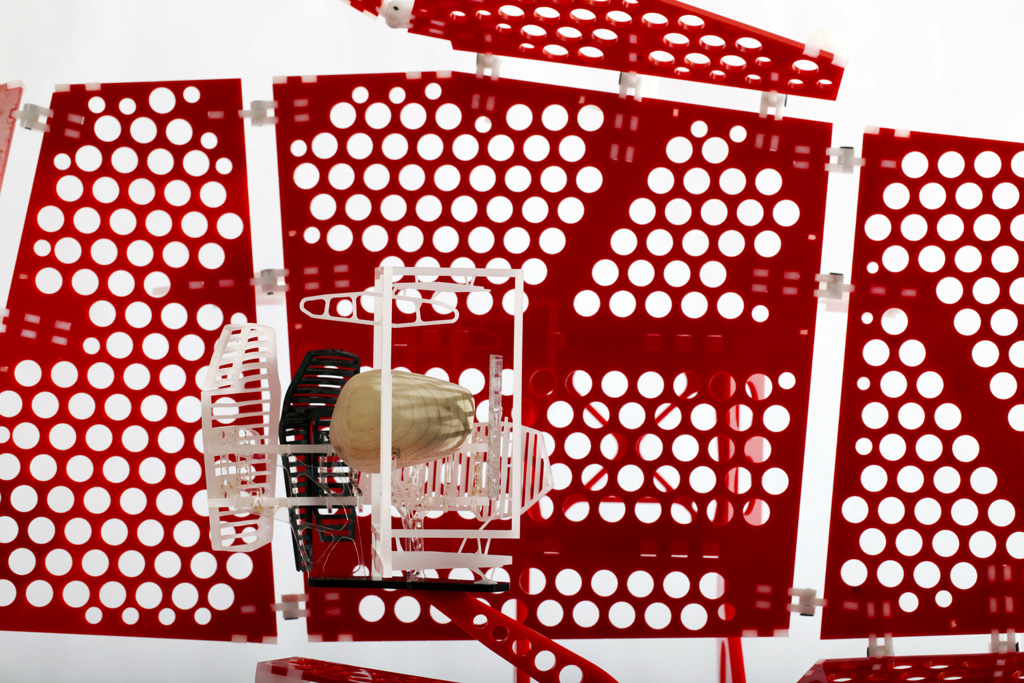
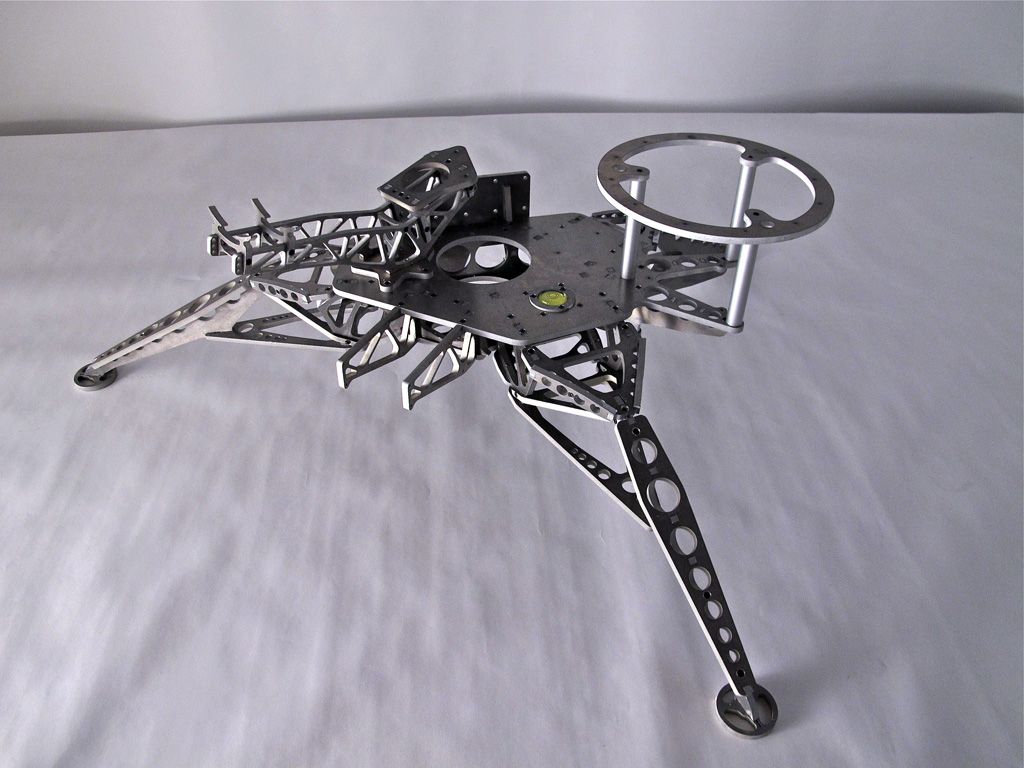
I have started working on a new series of instruments. This is the first chassis of (probably) four instruments, two of which are developments of Instrument Seven and two of which ask for more direct engagement. They incorporate some simple analogue computers to drive architectural models – architectural automata.
Instrument Eight, in progress (Nat Chard)

They are made from quarter inch (6.5mm) aluminium plate. I had the pieces waterjet cut. All the joints are slotted for structural integrity and are held together by bolts. The cutting is slightly off so all the joints need to be filed to get the pieces to fit – better than too loose I suppose. The chassis is much stronger than the acrylic ones I built for instruments four to seven, to the extent that I can comfortably stand on this one without it complaining. It is also much more resistant to breakage from knocks. I will tell the story as the thing develops. The design of the chassis is a development of that for Instrument Seven. It has a slightly different geometry and there are no interchangeable parts.

Instrument Eight, in progress (Nat Chard)
Picture Plane Copenhagen (MRT,FK, NC)

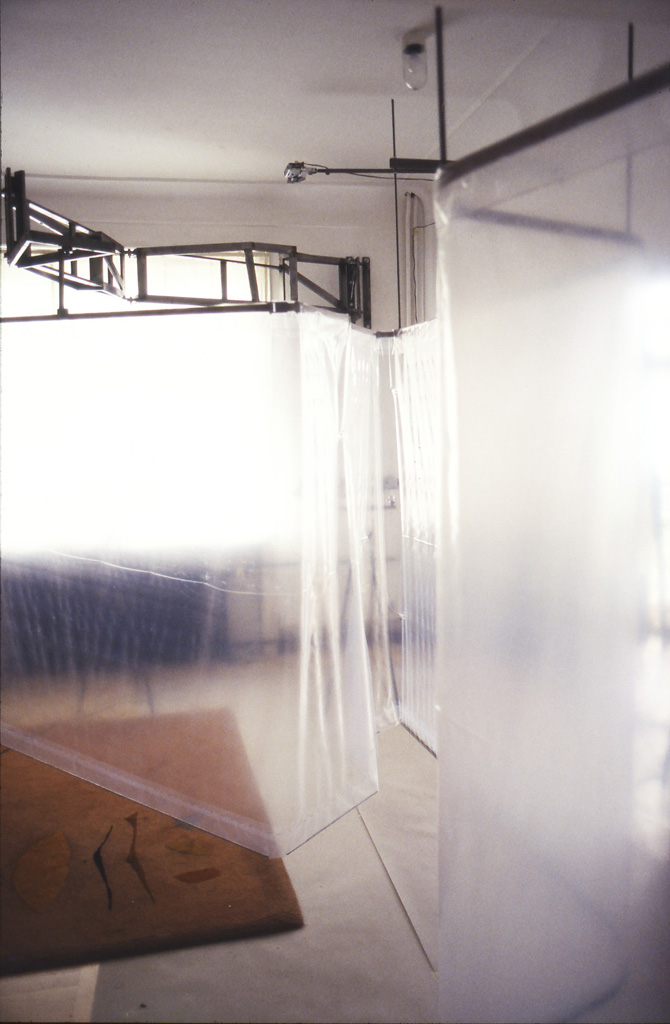
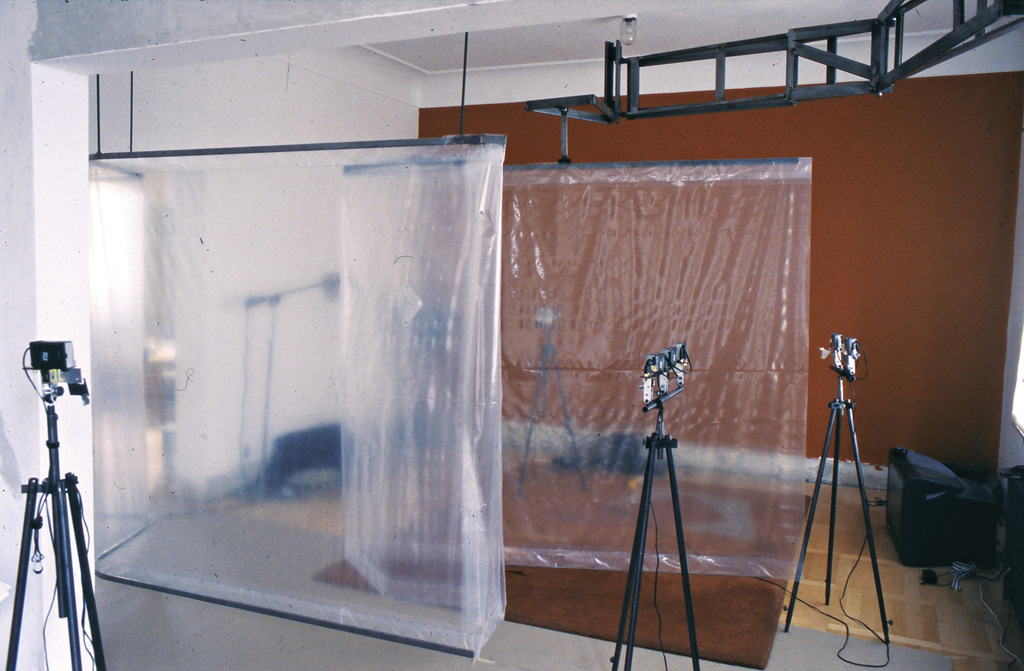
A collaboration between Mette Ramsgard Thomsen, Florian Koehl and Nat Chard. We built a crane to hang a floding picture plane made of polythene sheet. Florian had built a series of relay driven actuators to fire a set of ten cameras simultaneously. The cameras could have their flash switched on or off so that the the shadow from one flash might be caught anamorphically by another. The pictures from the cameras shown here are all from the same moment of exposure. All the pieces were fabricated over three or four days and set up in an apartment in Copenhagen. I will post a film of the picture plane in motion in a day or two – sorry for the lack of posts recently, I have been away.

Picture Plane Copenhagen (MRT,FK, NC)

Plan

The plan shows some of the range of movements possible with the steel crane we built to hold the picture plane.

Parts of the steel crane

Crane in position without picture plane

The following pictures are from Florian’s cameras. In the plan view you can see several flashes going off at the same time.

Image Five

Image Seven

Image eight

Image nine

Instrument Five Detail (Nat Chard)

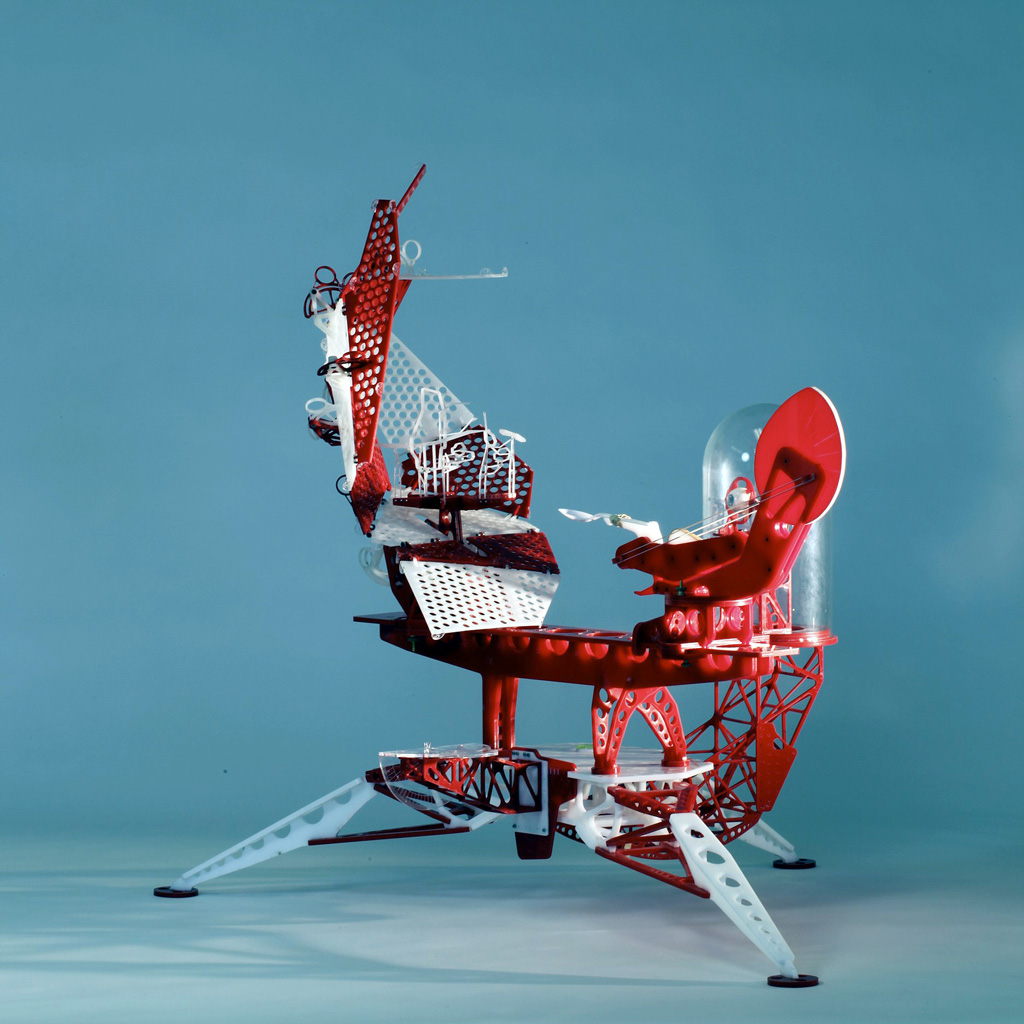
A few details to show the flying paint in motion in the Instrument Five drawings.

Instrument Five Detail (Nat Chard)

I did not post the whole picture of this one with the Drawing Instrument Five First Drawings post, so here it is:

Instrument Five (Nat Chard)
And another:

Instrument Five Detail (Nat Chard)
Instrument Five (Nat Chard)
If you click on the images you will see a larger version.

Here is a film of instrument three in action – it makes some sense of how the instrument works. During the first half the picture plane folds to provide a critical review of the projection. In the second half the model that is projected is moving, both to persuade but also, when the picture plane is folding, to try to insist on its opinion.

Instrument Seven drawing (Nat Chard)
Instrument Seven drawing (Nat Chard)

Instrument Seven drawing (Nat Chard)
Instrument Seven drawing (Nat Chard)

Instrument Seven drawing (Nat Chard)
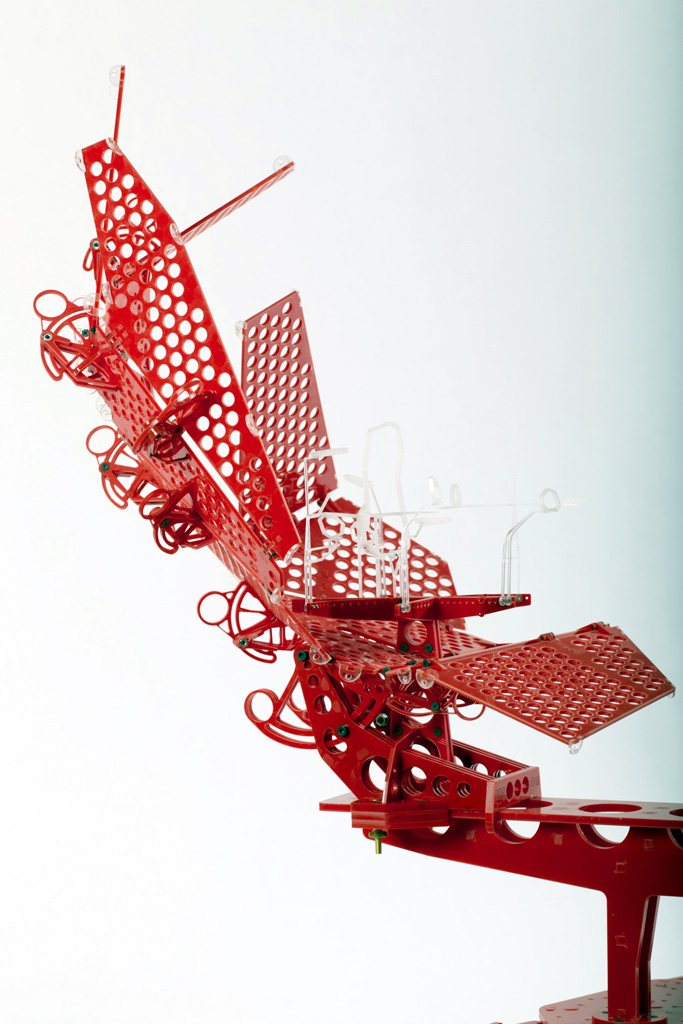
Instrument Seven drawing (Nat Chard)

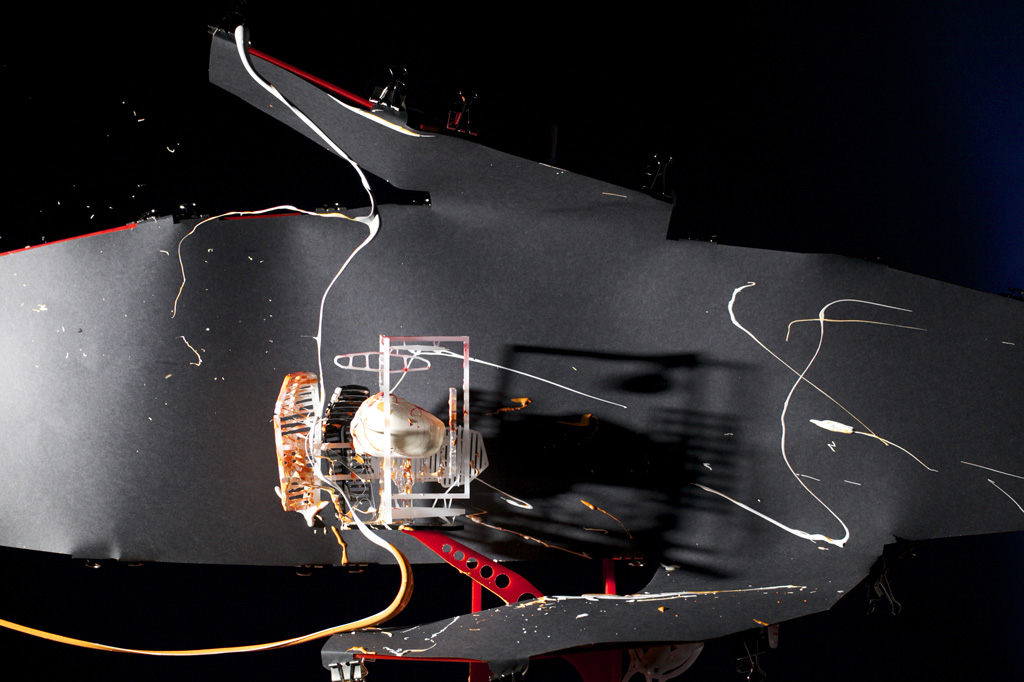
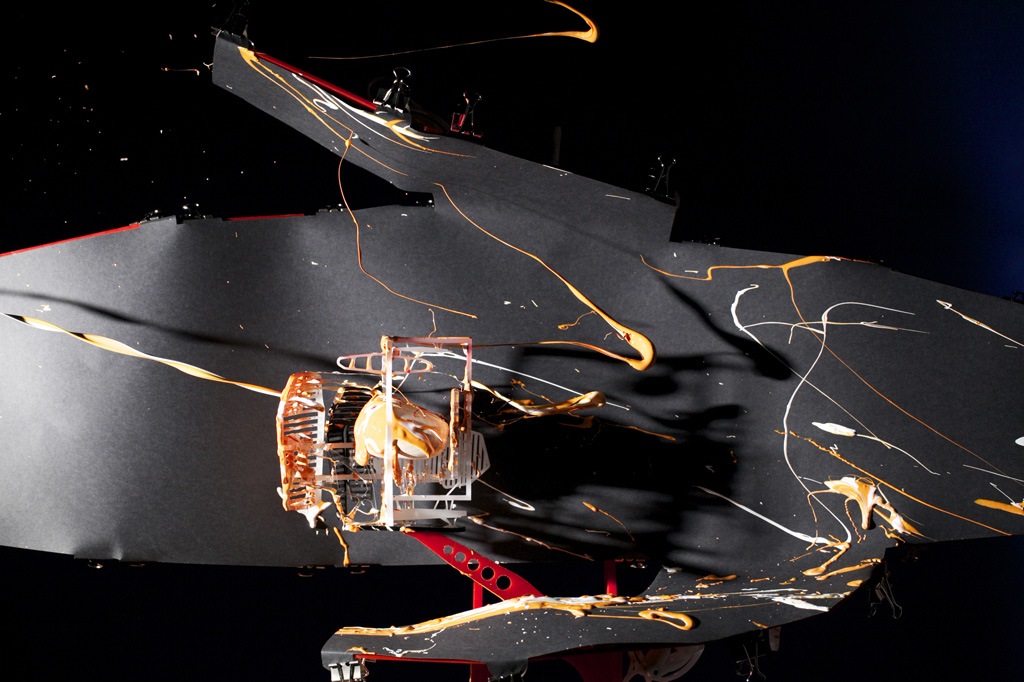
A series of paint throws at Instrument Seven.

Note how the picture plane catches mostly the splatters that come off the drawing pieces  except at the right hand end where some of the main throw is caught. The folds int he picture plane are much more subtle than in the previous instruments and have a much greater effect. The degree of fold can be seen in the previous post.

Instrument Five (Nat Chard)
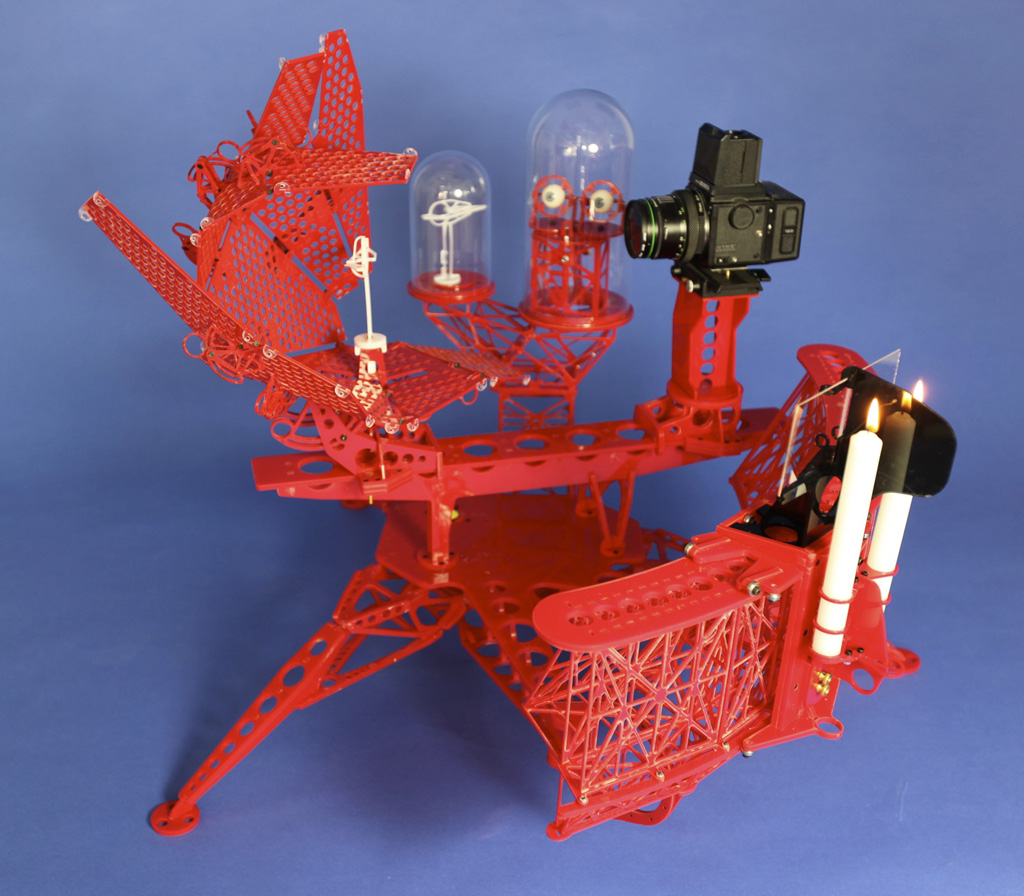
In the picture above you can see the view the catapult that is going to throw paint has of Instrument Five. As noted earlier, having the folding picture plane behind the drawing pieces means that many of the subtle splatters of deflected paint are obscured by the main body of paint that misses the drawing pieces and deposits a large splat of paint on the picture plane. The same instrument can be seen below, showing this relationship from the side.

Instrument Five (Nat Chard)

Instrument Seven has the same chassis as Instrument Five but has a new picture plane that sits adjacent to the flight of the paint (see below). The folding picture plane has adjustments between each individual plate plus the whole picture plane can rotate slightly. The plane is set up so that the area closest to the drawing pieces forms a harbour to protect that part from a direct flight of paint. Some of the direct flight can catch the back end of the picture plane (or the front if the catapult is turned far enough.

Instrument Seven (Nat Chard)

(Above) You can see how little of the Instrument Seven picture plane sits behind the drawing pieces.

(Below) Side view of Instrument Seven.

Instrument Seven (Nat Chard)

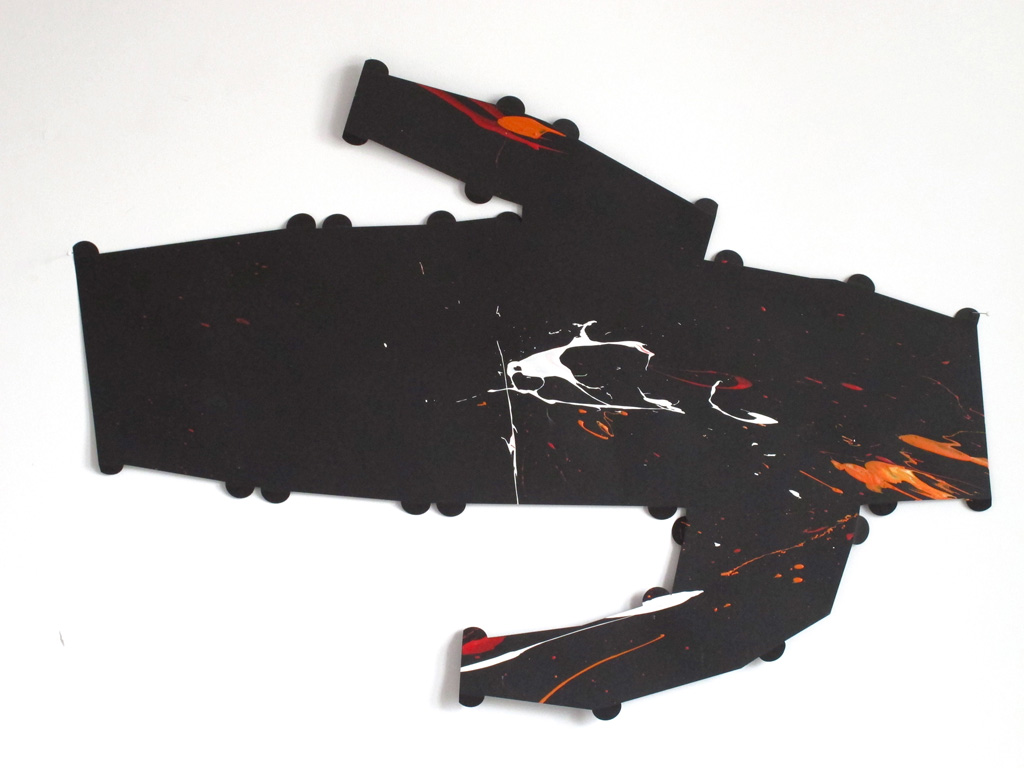
The Instrument Seven drawing pieces are also developed to be more robust and larger targets for the paint. We are no longer discussing the Bird Automata test track in this instrument – the drawing pieces shown here are a media test to push some of the thoughts about what the drawing pieces could achieve. There is a main wooden piece that is protected by a number of slatted screens. as the paint penetrates the screens to cover the wooden piece the slats become more opaque to the flying paint.

Instrument Seven (Nat Chard)

(Above) A detail of the Instrument Seven Drawing Pieces.

Instrument Seven (Nat Chard)

I will post some images of Instrument Seven drawing tomorrow. Below is one of Instrument Seven’s drawings.

Instrument Seven drawing (Nat Chard)

And another one…

Instrument Seven drawing (Nat Chard)

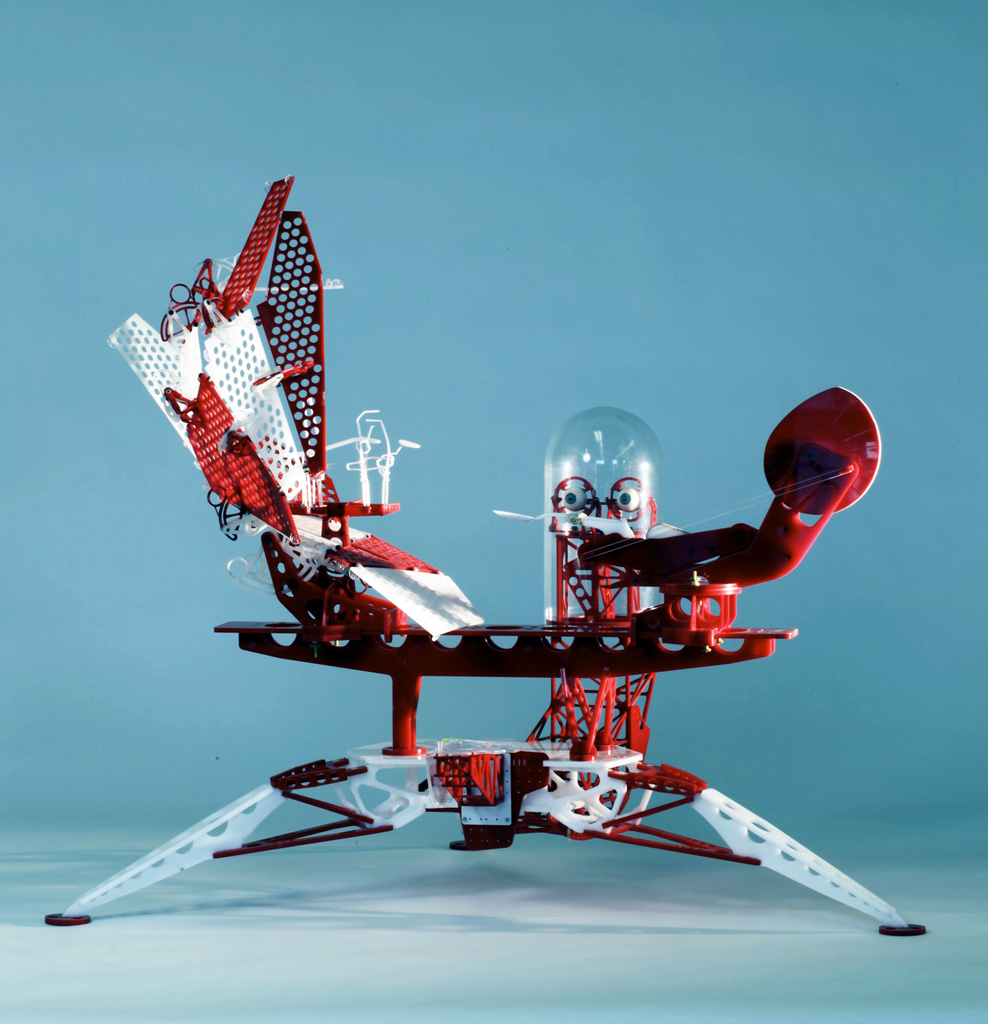
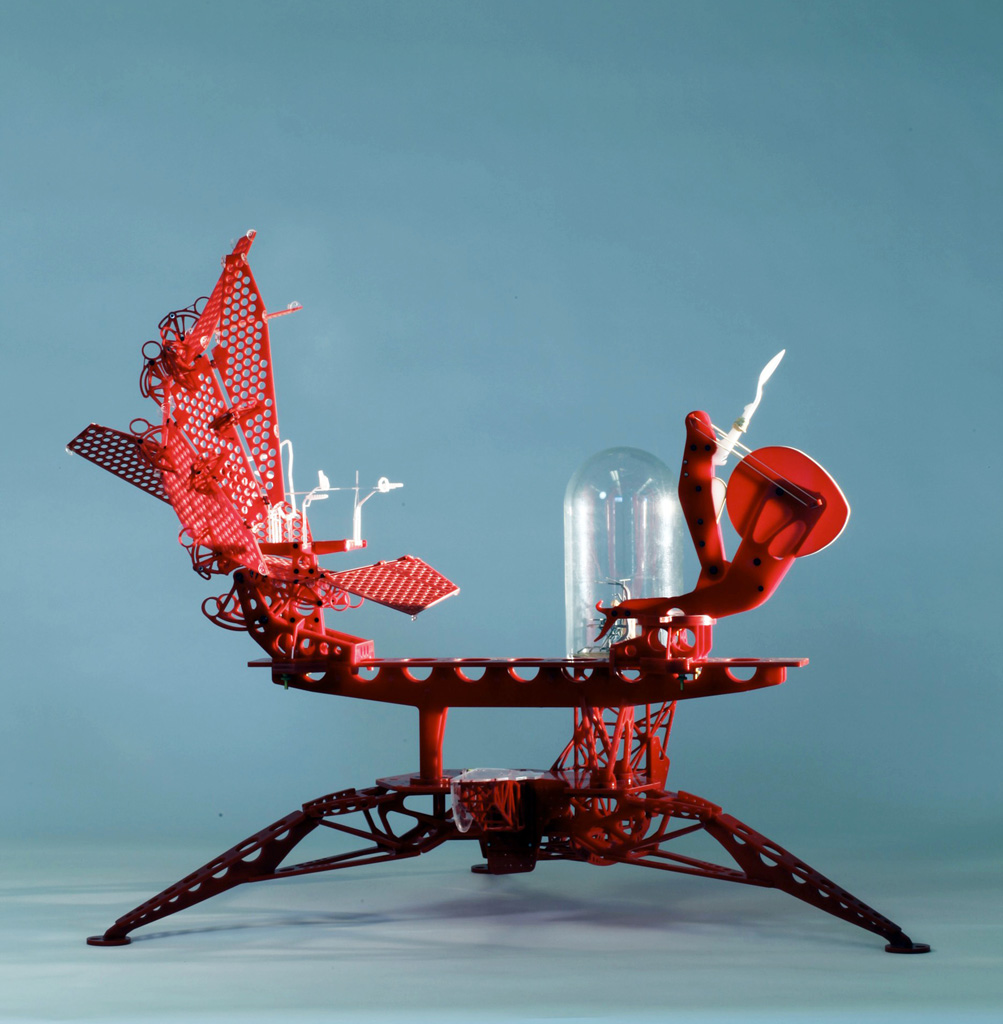
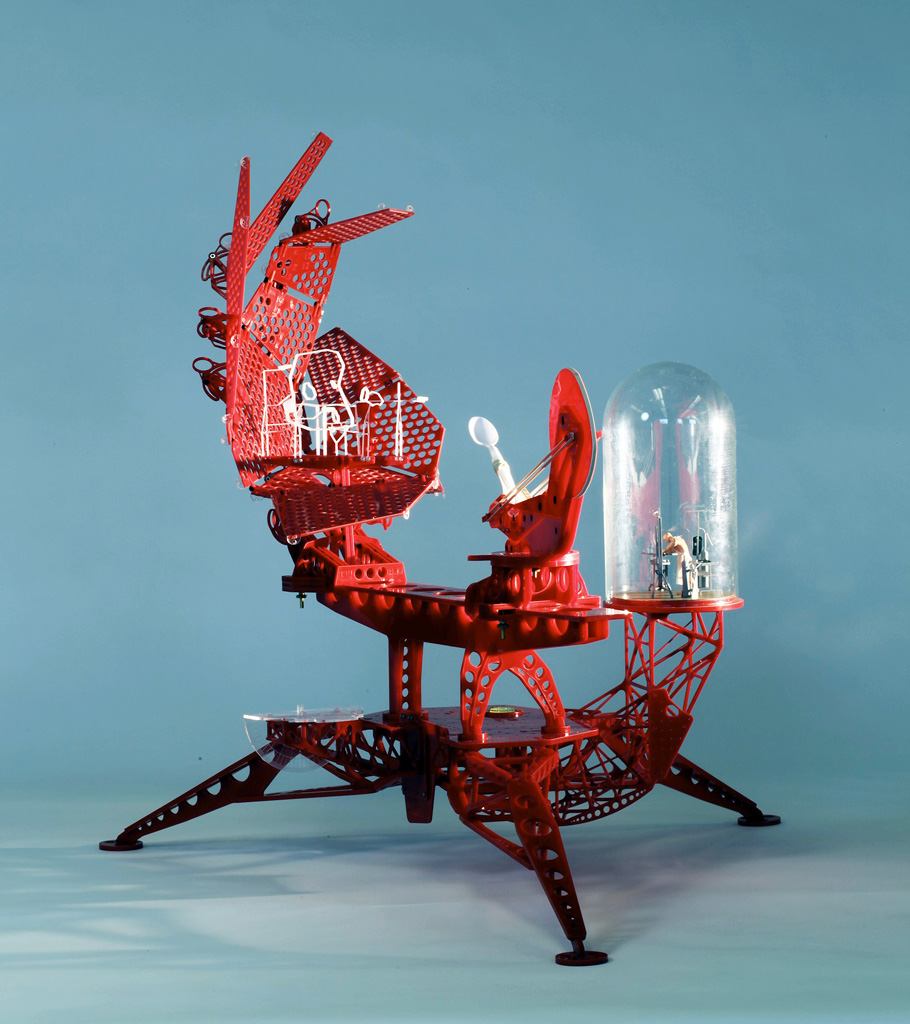
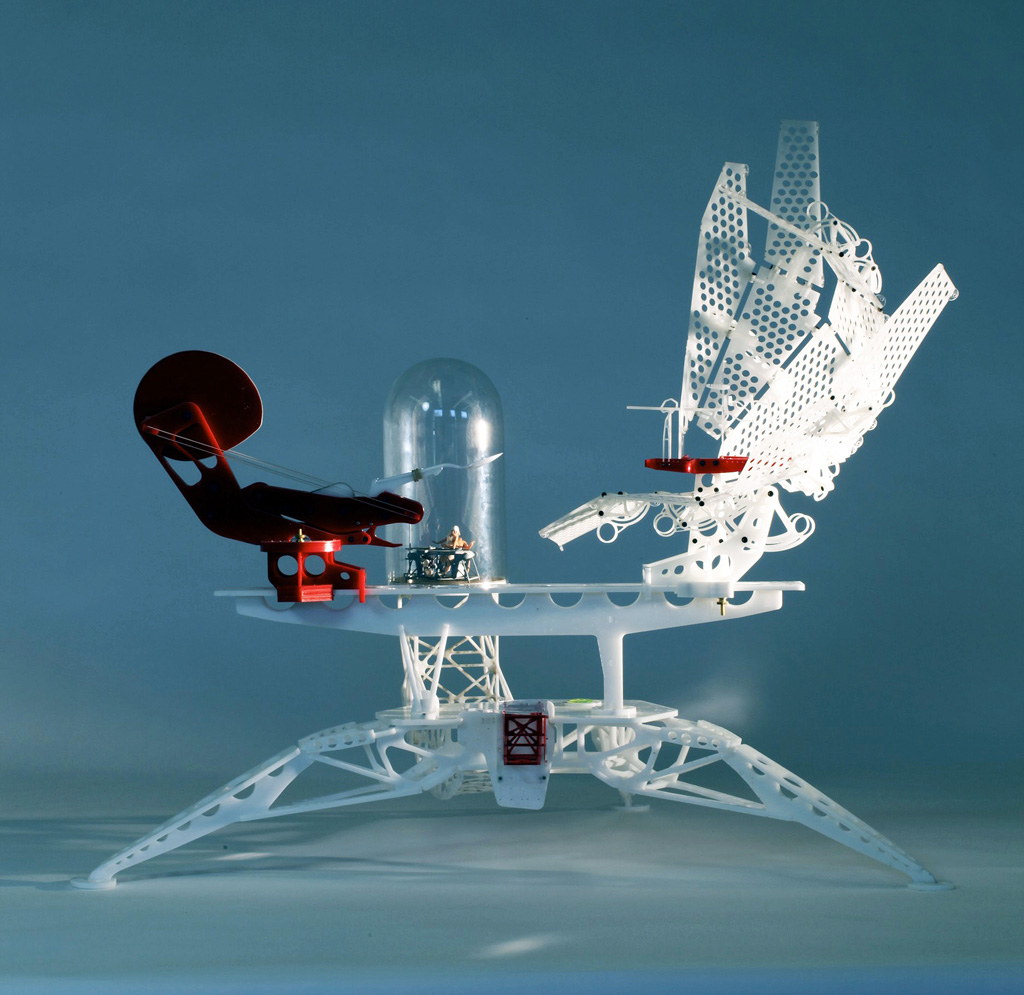
Drawing Instrument Five (Nat Chard)

The earlier pictures of Instrument Five concentrated on two of the four instruments. Here is the whole cast.

Drawing Instrument Five (Nat Chard)

Drawing Instrument Five (Nat Chard)

Drawing Instrument Five (Nat Chard)

Drawing Instrument Five (Nat Chard)

Drawing Instrument Five (Nat Chard)

Drawing Instrument Five (Nat Chard)

Drawing Instrument Five (Nat Chard)Drawing Instrument Five (Nat Chard)

Drawing Instrument Five (Nat Chard)

I will post when possible over the next few days when internet access is possible but there may be some breaks.

Instrument Six set up for direct viewing (Nat Chard)

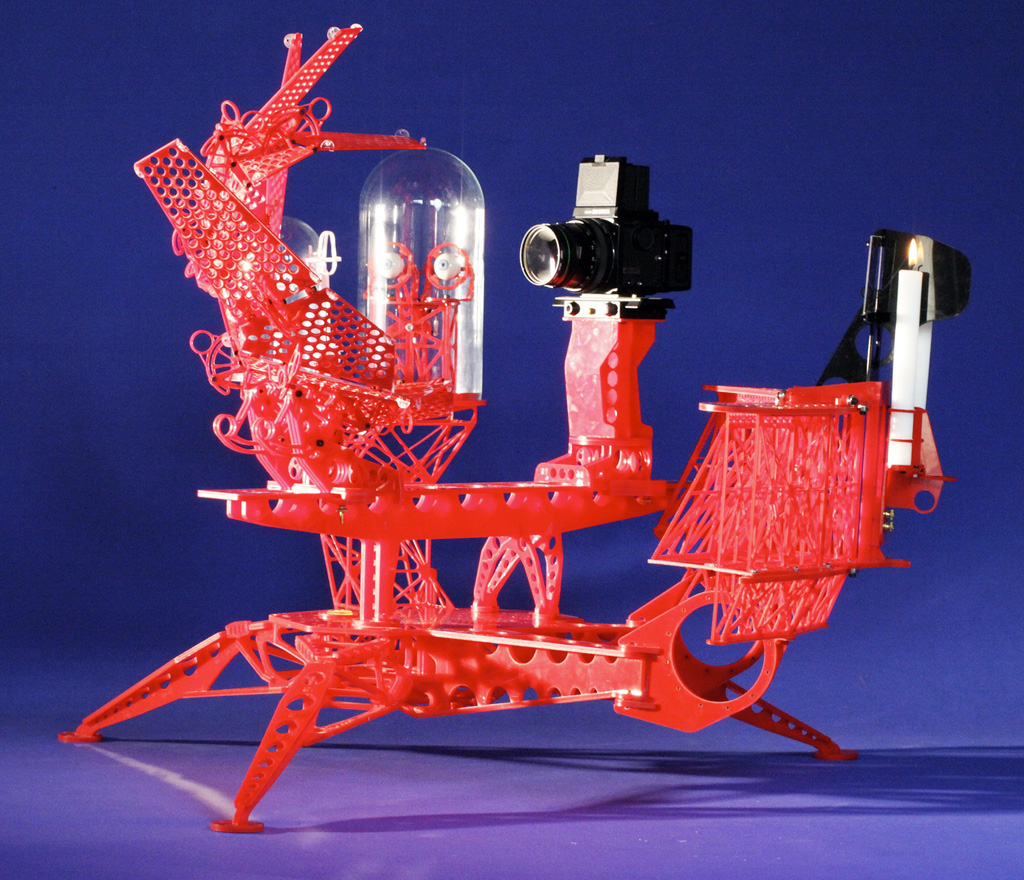
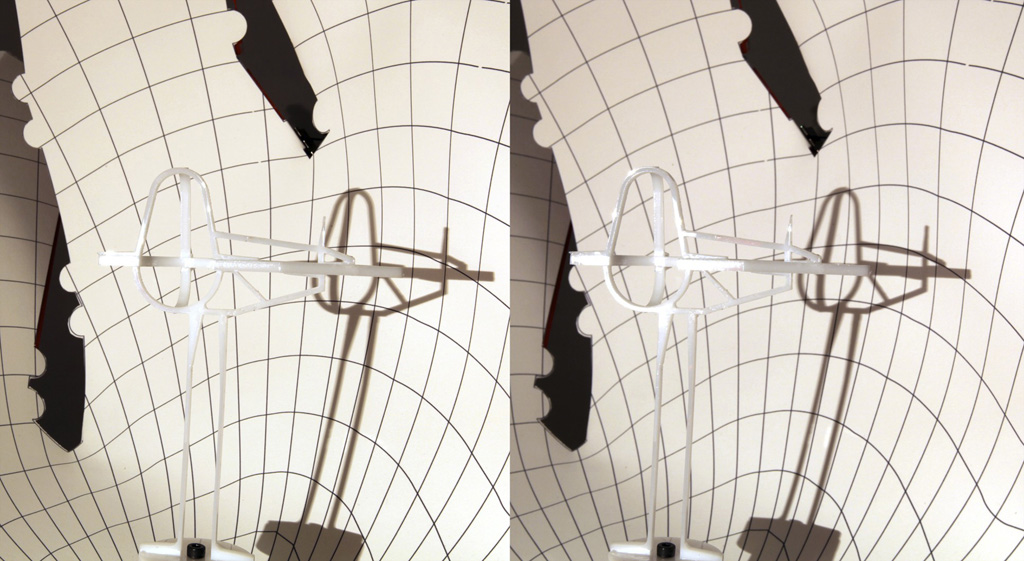
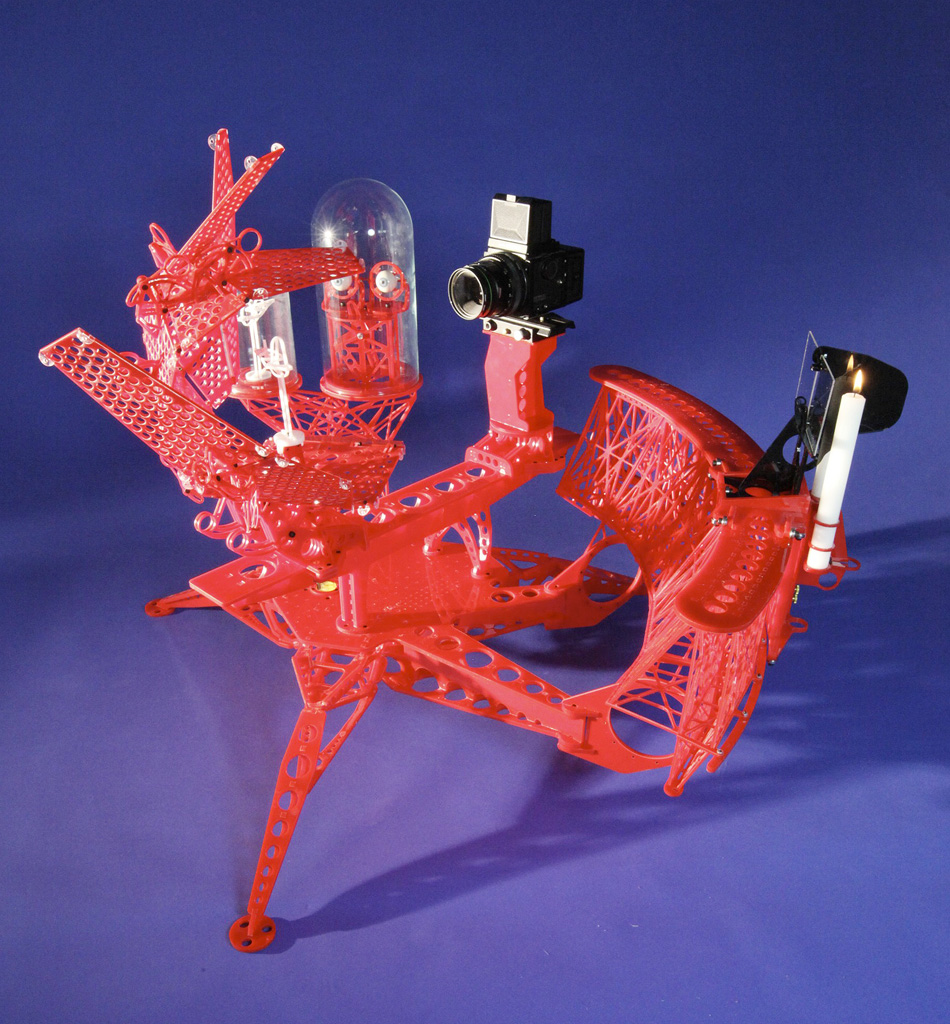
THe shadow in the submarine photographs (previous post) float in the air because there is a parallax between the flashes of each photograph as well as the parallax between the two photographs. Instrument six has an object to cast shadows and a screen. For direct viewing there are two candles (see above) on a track that have a polarising filter for each candle. There is also a mechanism to adjust the distance between the candles. The screen is a material that maintains the polarisation of light in the reflection, and is made for 3D projection. The observer wears polarising glasses and the parallax between the two shadows locate a single shadow in front of the screen. By reversing the filters the shadow can be placed behind the screen.
When taking photographs a single clear light bulb is used on the same track. A left eye image is taken and then the camera shifted 65mm to the right for a series of right eye shots. For each of these the light is moved along the track progressively, so that when they are each combined with the left eye picture, they place the shadow at different depths.

Instrument Six, set up for direct viewing (Nat Chard)

Instrument Six, set up for direct viewing (Nat Chard)

Instrument Six set up in photographic mode (Nat Chard)

Instrument Six set up in photographic mode (Nat Chard)

Instrument Six set up in photographic mode (Nat Chard)

Instrument Six set up in photographic mode (Nat Chard)

Instrument Six set up in photographic mode (Nat Chard)

Instrument Six set up in photographic mode (Nat Chard)

Shadow from Instrument Six (nat Chard)

To view the shadow in 3D go cross eyed so that the two shadows register one over the other. Try to relax and the 3D image will appear. You will see the shadow sitting a short distance off the surface of the screen. When viewing like this you will see three images with the 3D version in the middle. The lines on the screen are there to help resolve the 3D image and are not needed in the direct viewing version.

Instrument Six (Nat Chard)

Instrument Six is not on the same trajectory as the other instruments, but arrived as a consequence of a conversation about instrument five. I was explaining the drawing pieces to a friend as elements of space that were active.

Drawing Pieces on Instrument Five (Nat Chard)

As an analogy I said that they were a little like the interior of a submarine that was made up entirely of programme and not of passive elements. My friend e-mailed back to say that he had not been in a submarine so I assembled and sent off a pair of stereoscopic photographs I had taken a couple of years earlier showing such a space. After I had sent them I took a closer look at the stereo pair and noticed what was at first an annoying blur hovering in space. Quickly I realised that the annoying blur was on fact the very thing I had been chasing, a paradoxical shadow. It was so obvious how it had occurred that I was annoyed at not thinking of it before. At the time I was working on Instrument Five and stopped work on those instruments to build Instrument Six to play with the possibility of a shadow detached from the surface on which it should by rights be cast. The picture I sent is below but the lower image from another view works at least as well. Tomorrow I will post some more pictures of the instrument and its floating shadows in 3D.

Submarine interior with floating shadow (Nat Chard)

The floating shadow is just to the right of the periscope. If you are new to this blog, yo can view the image in 3D by going cross-eyed. When doing so, place one image over the other until they register. You will see three images, with the 3D image in the middle.  If you are having difficulty pinning it down, try adjusting your horizon slightly to make sure the images are level with each other. The three dimensionality improves if you hold it for a short while.

Submarine interior with floating shadow (Nat Chard)

It is worth persevering with resolving the 3D image – apart from the floating shadows, submarine interiors really come alive in 3D.