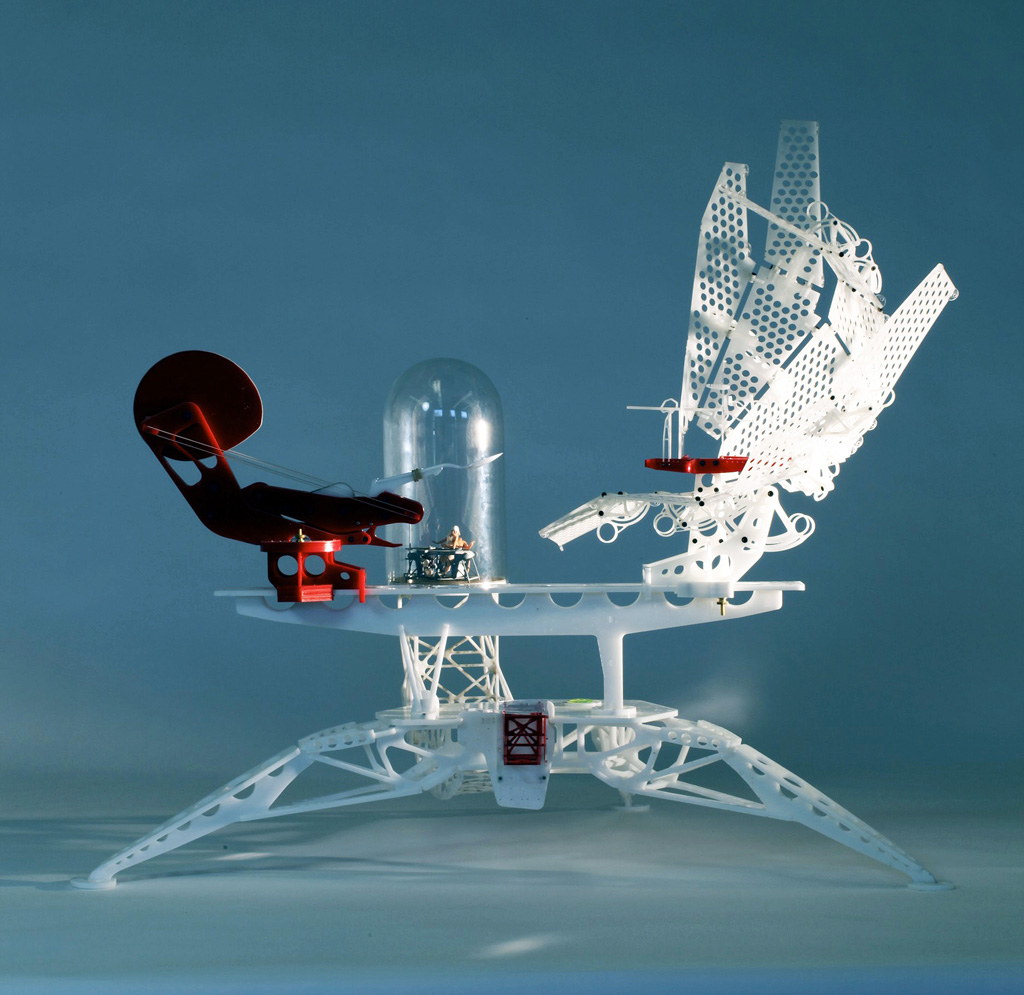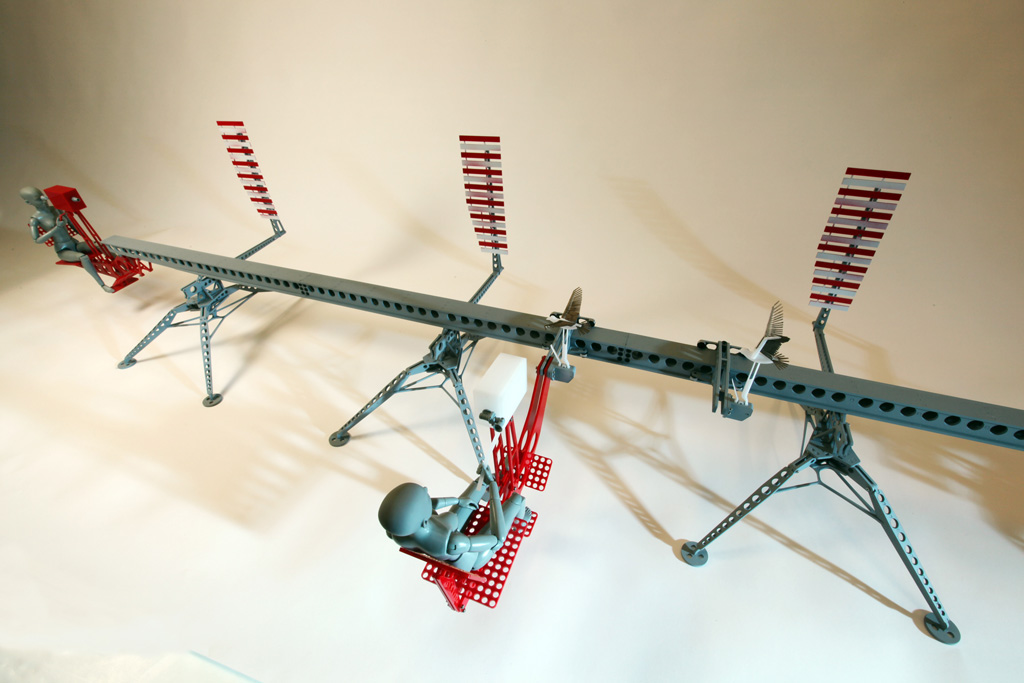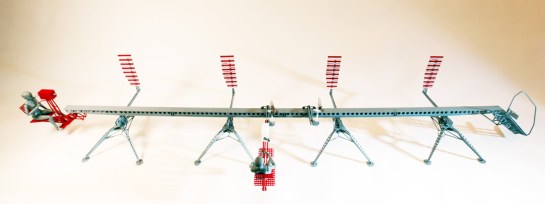
Peepshow Ladders (Nat Chard)

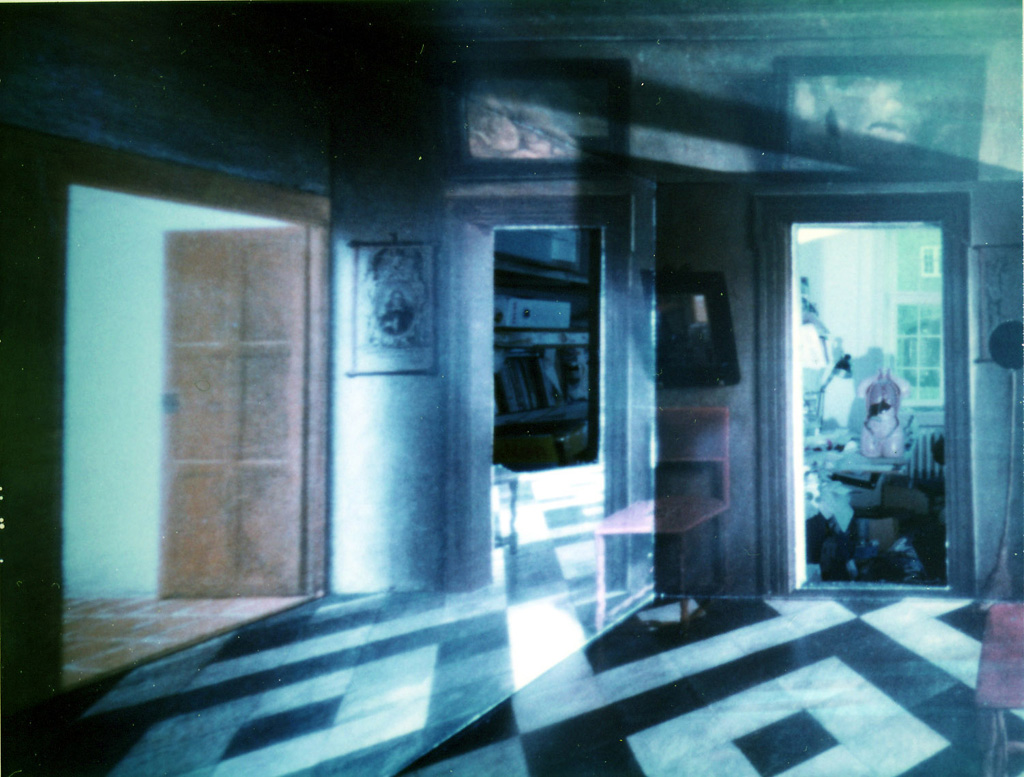
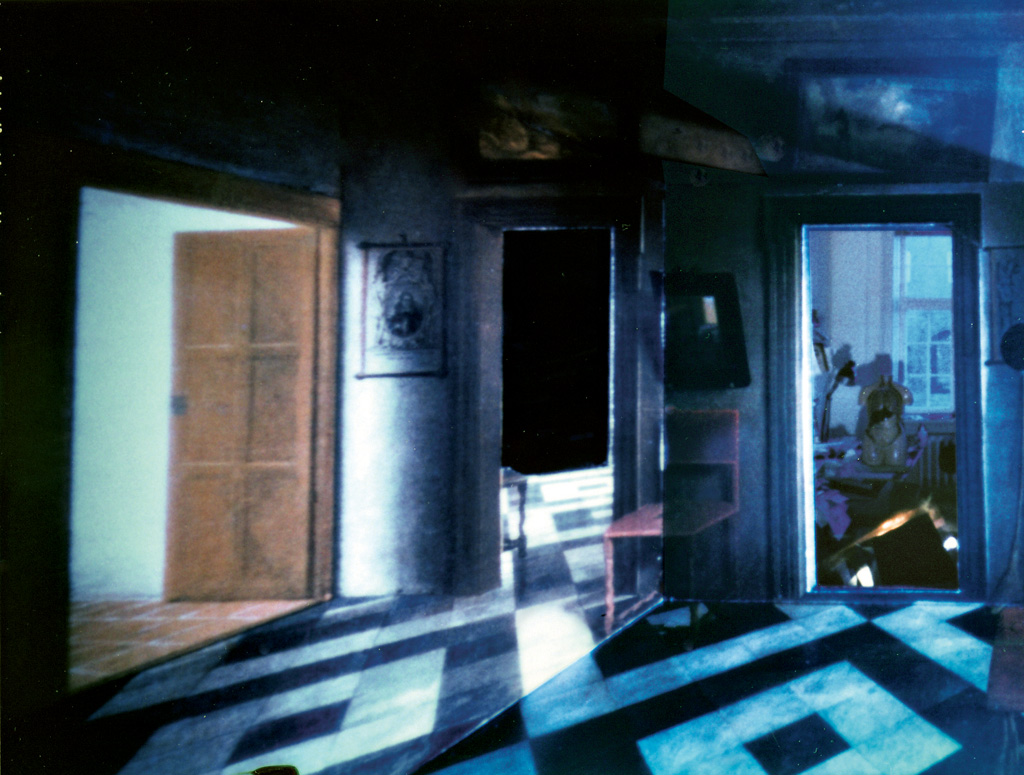
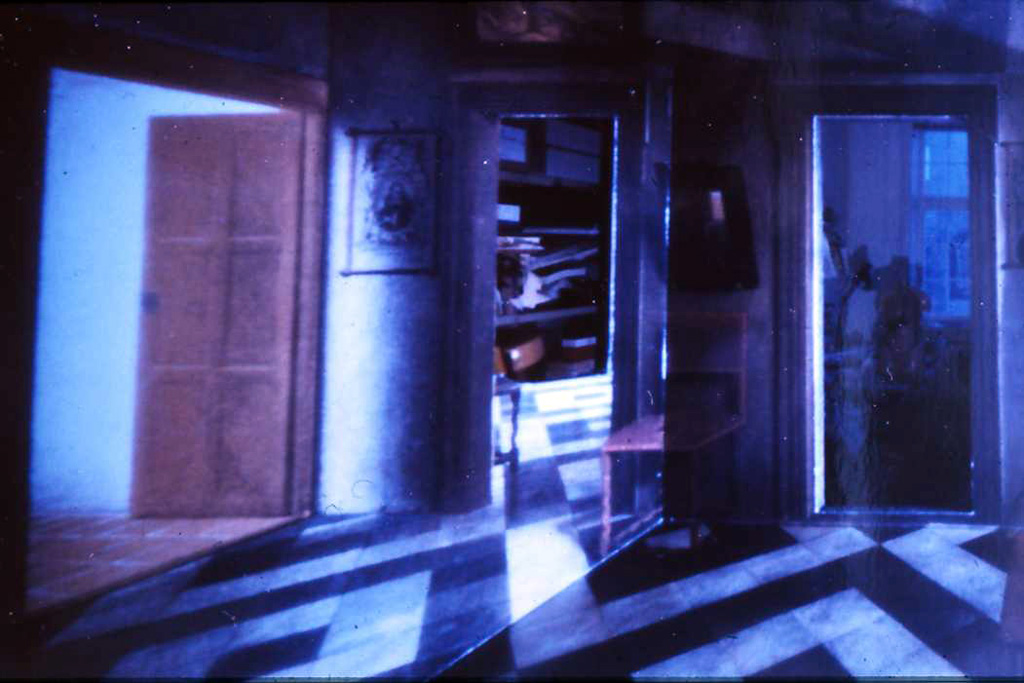
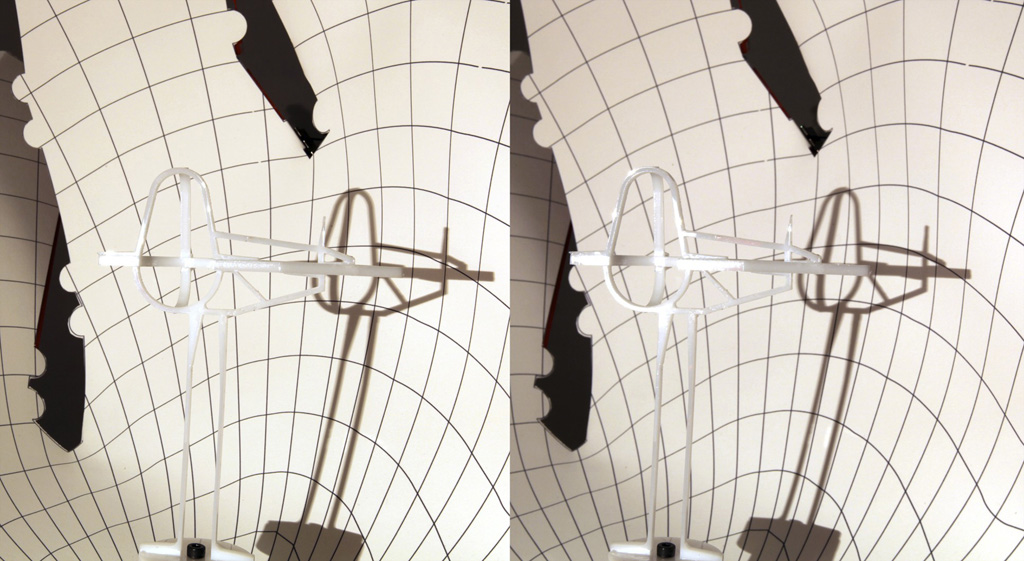
A study for some ladders to hold peep shows for an exhibition. Each peepshow would have openings that would allow a view through to the gallery space or to another peep show or a drawing on the wall. In this way the composite view of the gallery from the ladders would be different from at ground level. The view above has one peep show looking through to the anamorphic projection of another peep show. To discuss the idea, models of Van Hoogstraten’s peepshow were used, although new ones would be made for the exhibition.

Peepshow Ladders (Nat Chard)

Peepshow Ladders (Nat Chard)

3D detail, Tu M' (Marcel Duchamp)

Here are a couple of stereoscopic views of Duchamp’s Tu M’. The painting has a perspectival pictorial structure with three painted shadows of readymades landing on the canvas (not on the objects described in perspectival depth).  A real bottle brush sticks out form the canvas and casts a shadow in the same way as the absent readymades.

Detail Tu M' (Marcel Duchamp)

The pictures are taken from two different horizons.If you are new to this blog, to resolve the stereoscopic pair of images, go cross eyed so that a feature in one image corresponds to the same feature in the other, and try to relax until the depth emerges. If you are having difficulty seeing it, reduce the size of the image on the screen.

Van Hoogstraten in Nat's Office

This is a short post as I am away at the moment, but this is a model of Samuel Van Hoogstraten’s peep show (from the National Gallery, London) with the doors removed so that you look through it into my office. The photograph is taken with a camera I built to take the ideal picture to resolve the anamorphic view. The camera is built with a lot of shift to achieve this and to fill the frame. In the peep show there is a disturbance between pictorial and material space and this is played on with a (real) light coming through the doors that lands on the ceiling of the box. The furthest part of the ceiling of the box pictorially represents the wall of the room, so the light appears to land on the inside surface of the exterior wall it comes through. More paradoxical shadows. As we implicitly believe light, this disturbance takes a moment or two to register.

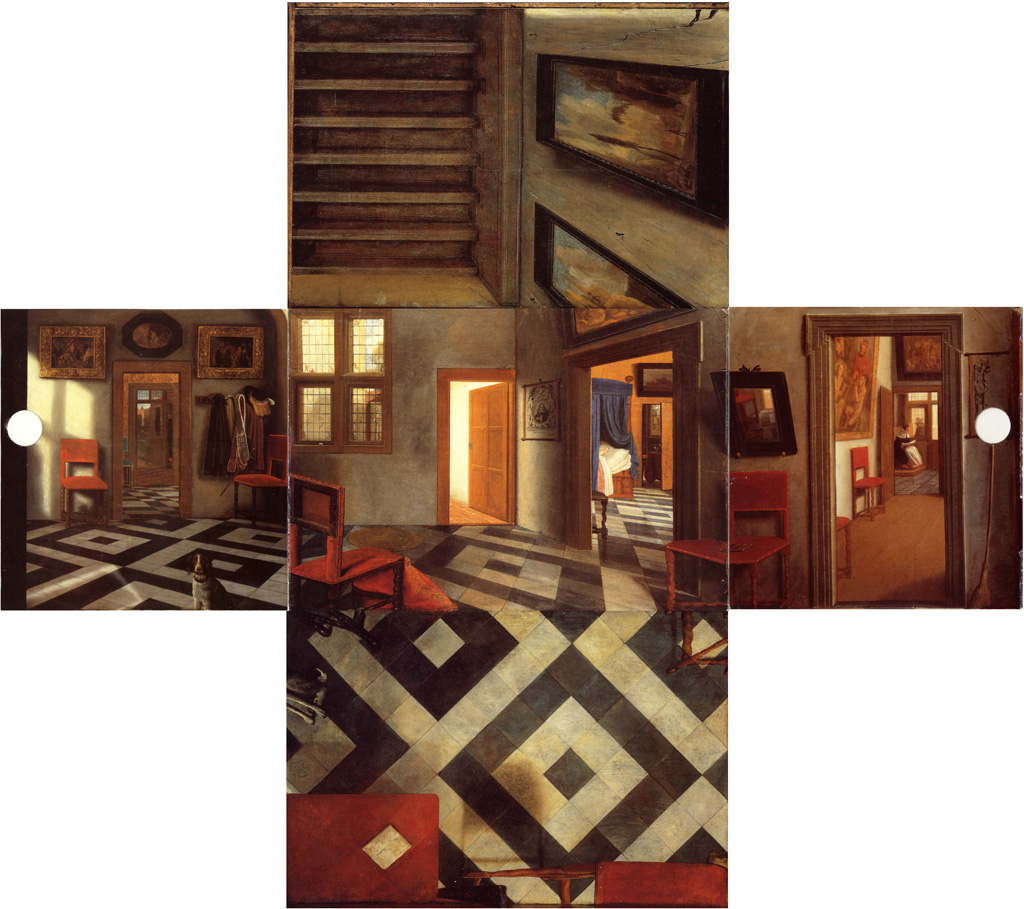
Van Hoostraten's peepshow unfolded

The unfolded view of the peepshow shows the anamorphic distortions of the room to get it to make sense when folded into a box. The two peep holes can be seen at either end.

Van Hoogstraten's peepshow in Nat's office

Van Hoogstraten's peepshow in Nat's office

There are some views looking back the other way that I will dig out.

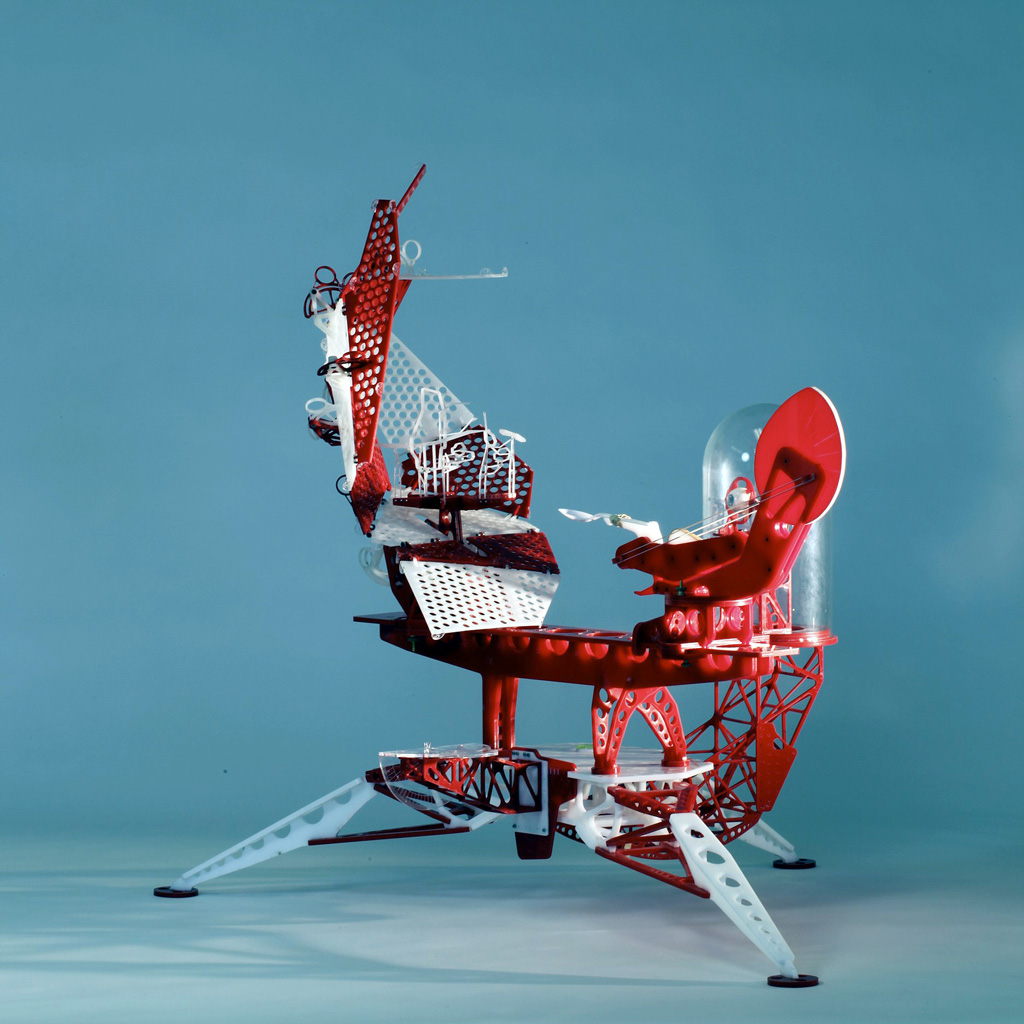
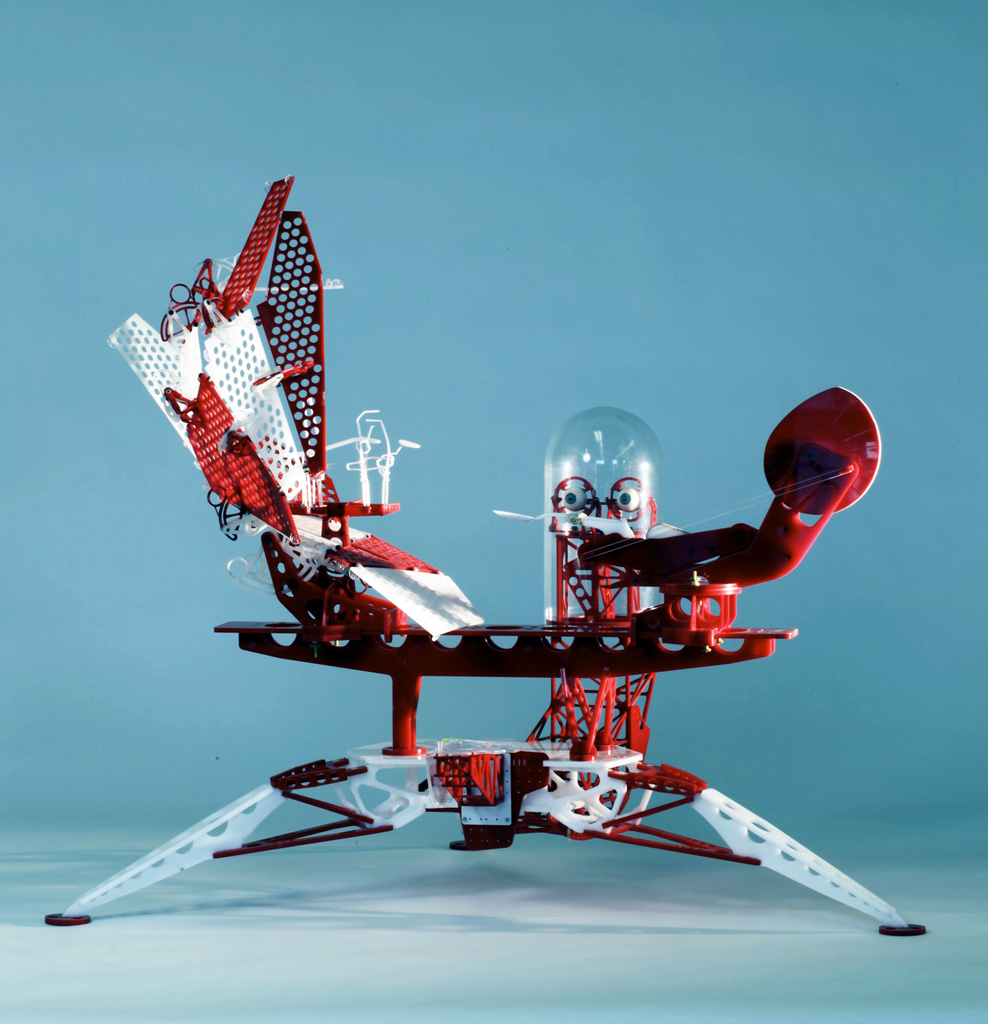
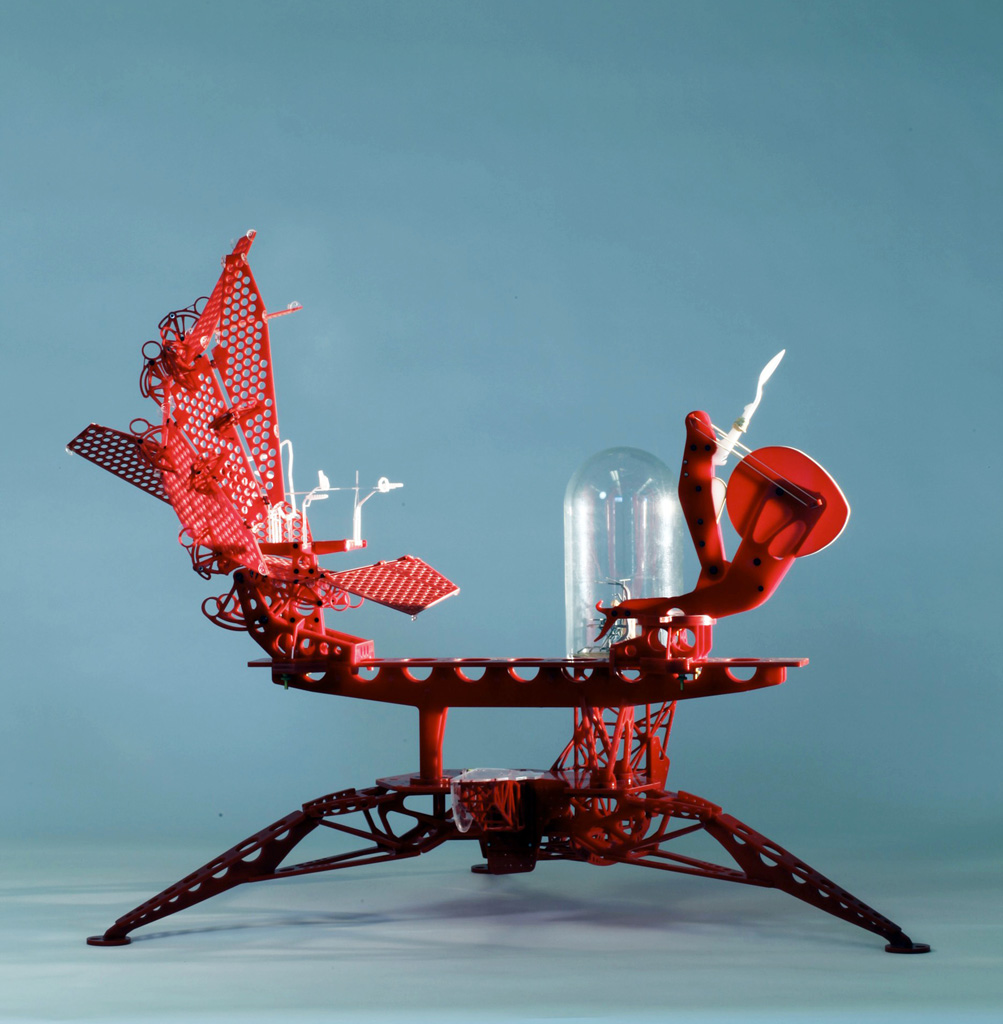
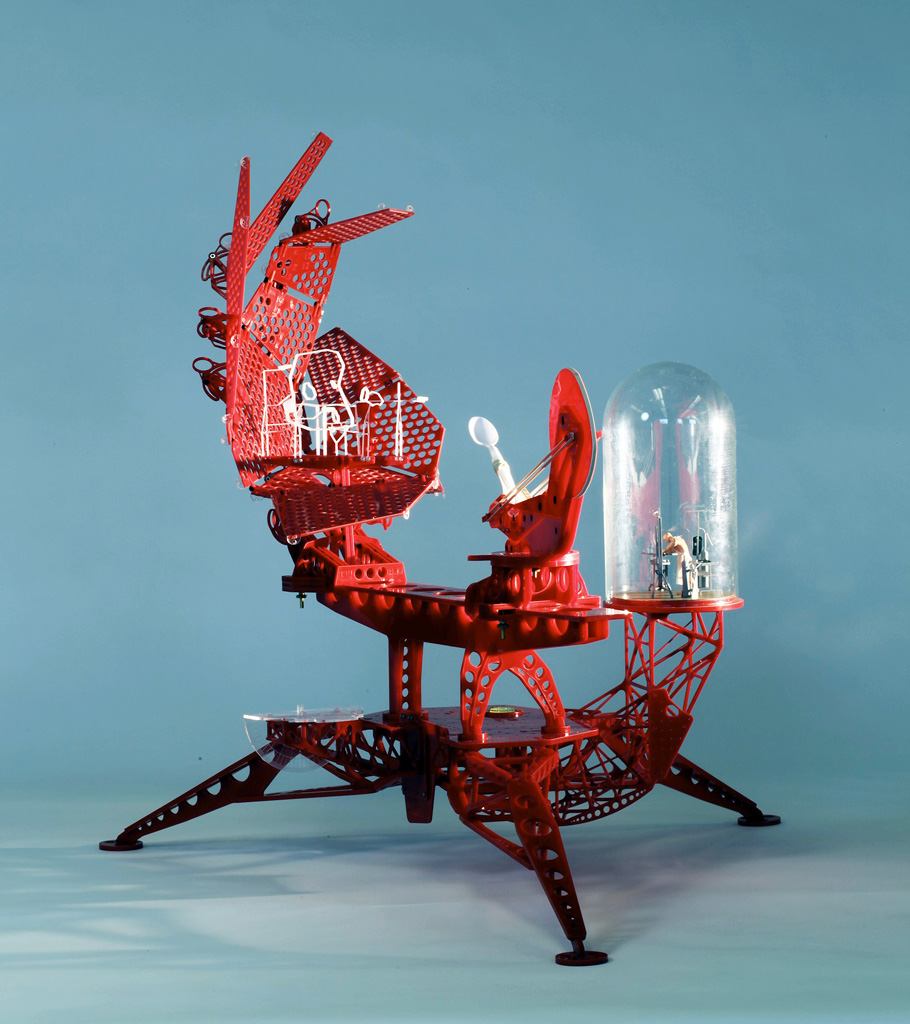
Drawing Instrument Five (Nat Chard)

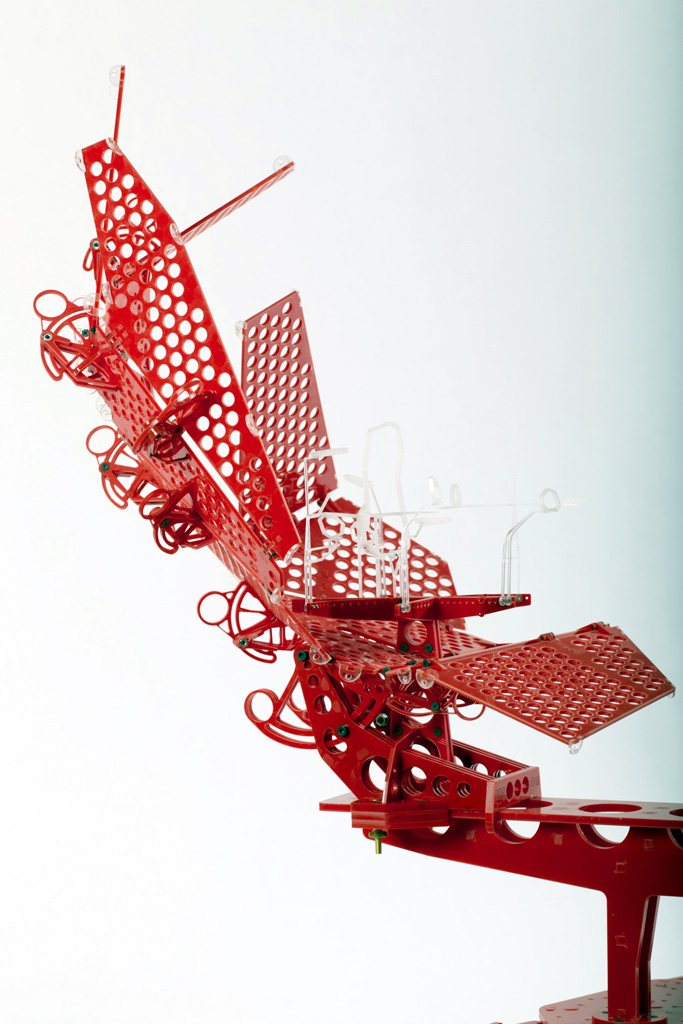
The earlier pictures of Instrument Five concentrated on two of the four instruments. Here is the whole cast.

Drawing Instrument Five (Nat Chard)

Drawing Instrument Five (Nat Chard)

Drawing Instrument Five (Nat Chard)

Drawing Instrument Five (Nat Chard)

Drawing Instrument Five (Nat Chard)

Drawing Instrument Five (Nat Chard)

Drawing Instrument Five (Nat Chard)Drawing Instrument Five (Nat Chard)

Drawing Instrument Five (Nat Chard)

I will post when possible over the next few days when internet access is possible but there may be some breaks.

Instrument Six set up for direct viewing (Nat Chard)

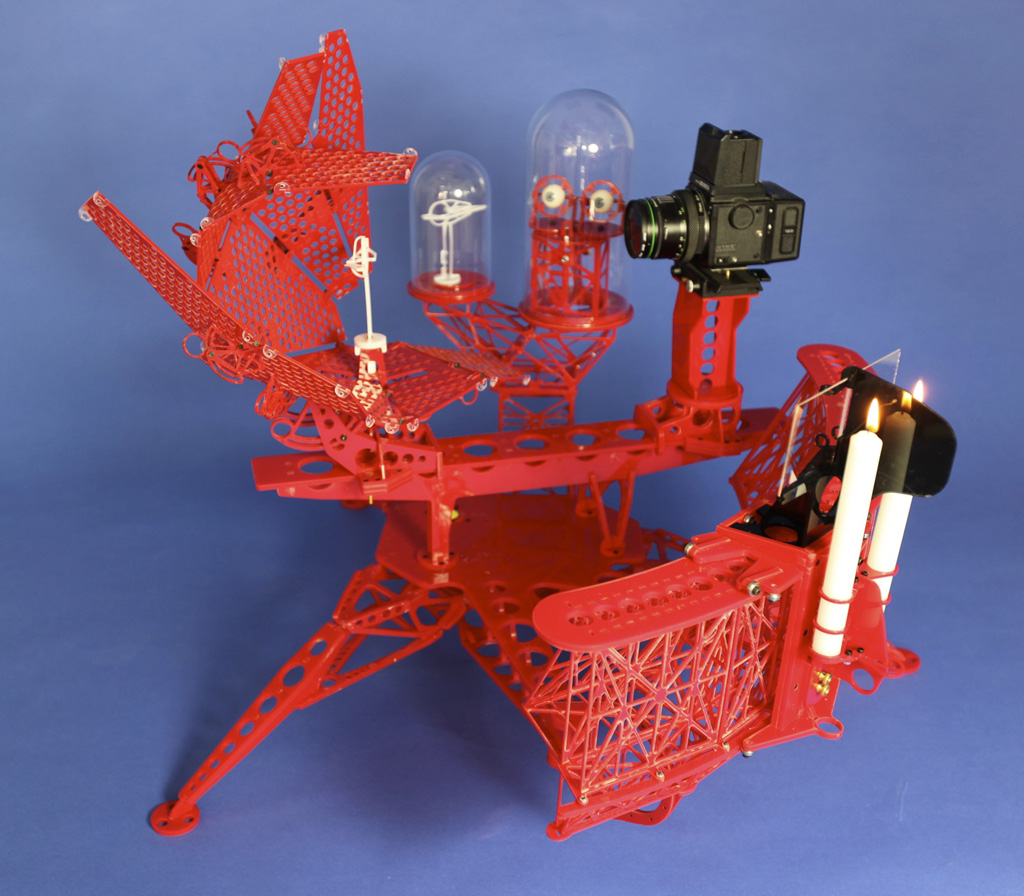
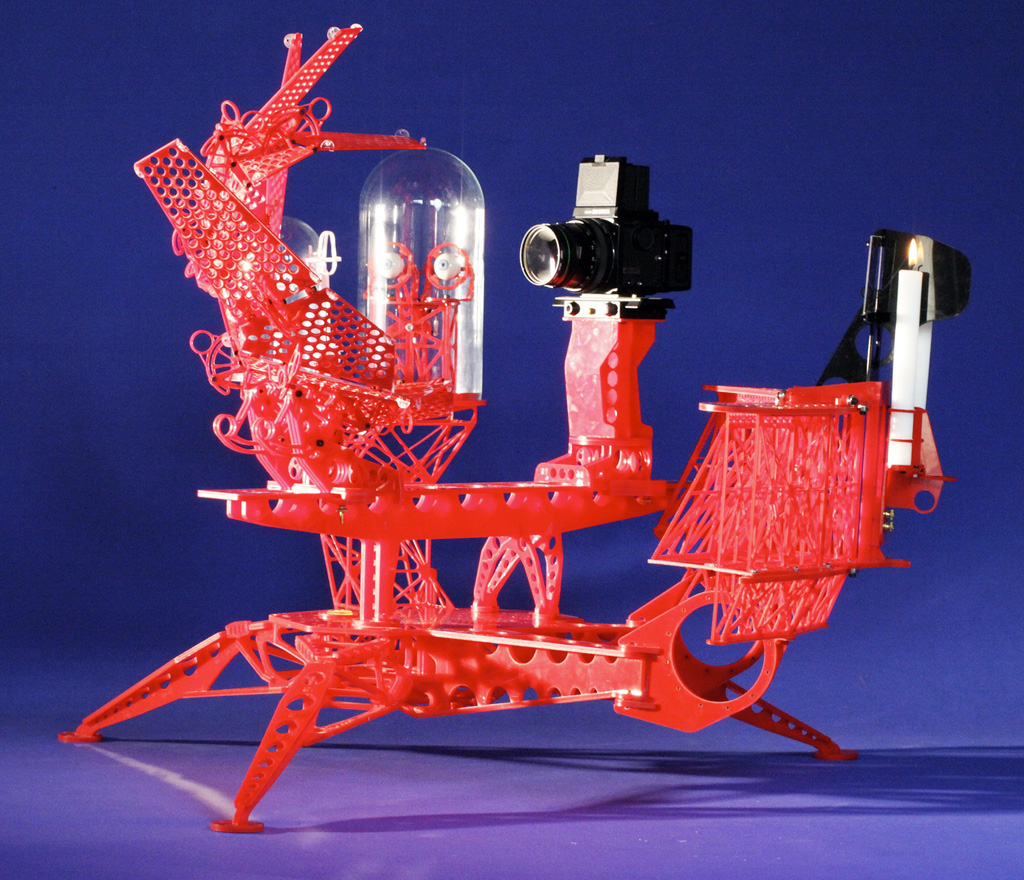
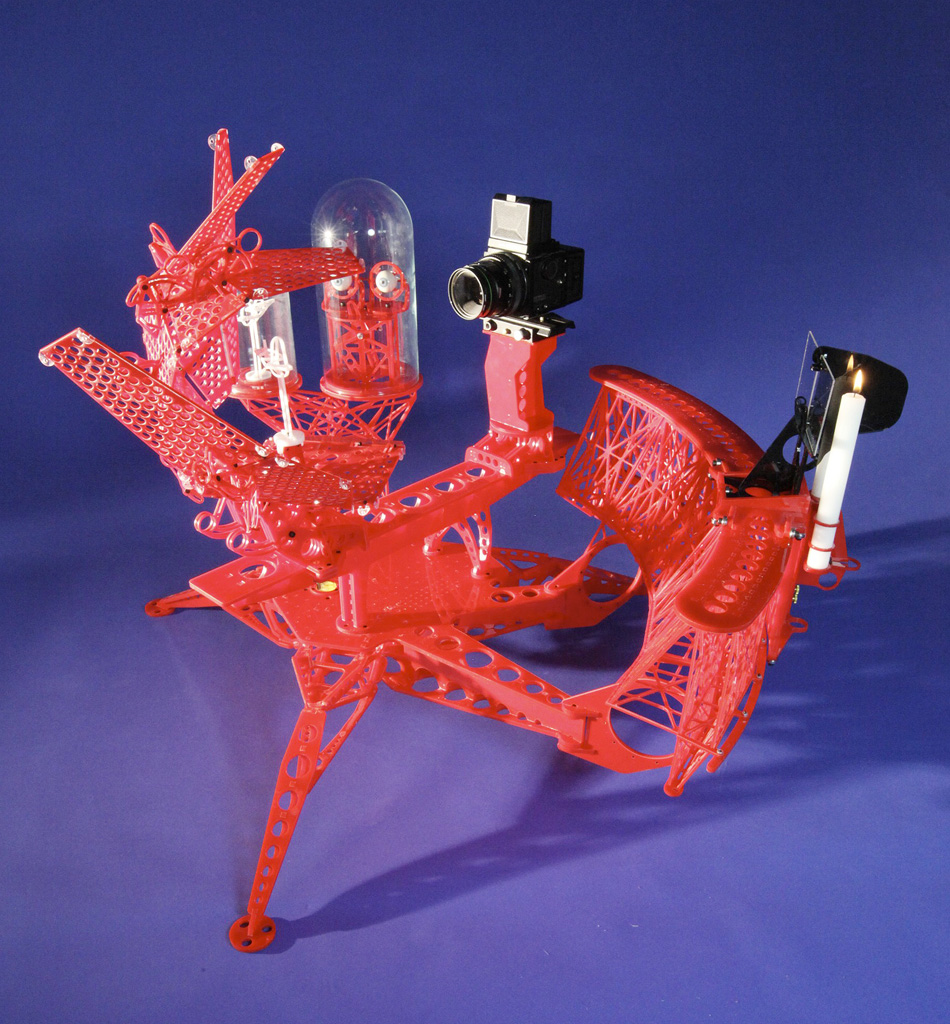
THe shadow in the submarine photographs (previous post) float in the air because there is a parallax between the flashes of each photograph as well as the parallax between the two photographs. Instrument six has an object to cast shadows and a screen. For direct viewing there are two candles (see above) on a track that have a polarising filter for each candle. There is also a mechanism to adjust the distance between the candles. The screen is a material that maintains the polarisation of light in the reflection, and is made for 3D projection. The observer wears polarising glasses and the parallax between the two shadows locate a single shadow in front of the screen. By reversing the filters the shadow can be placed behind the screen.
When taking photographs a single clear light bulb is used on the same track. A left eye image is taken and then the camera shifted 65mm to the right for a series of right eye shots. For each of these the light is moved along the track progressively, so that when they are each combined with the left eye picture, they place the shadow at different depths.

Instrument Six, set up for direct viewing (Nat Chard)

Instrument Six, set up for direct viewing (Nat Chard)

Instrument Six set up in photographic mode (Nat Chard)

Instrument Six set up in photographic mode (Nat Chard)

Instrument Six set up in photographic mode (Nat Chard)

Instrument Six set up in photographic mode (Nat Chard)

Instrument Six set up in photographic mode (Nat Chard)

Instrument Six set up in photographic mode (Nat Chard)

Shadow from Instrument Six (nat Chard)

To view the shadow in 3D go cross eyed so that the two shadows register one over the other. Try to relax and the 3D image will appear. You will see the shadow sitting a short distance off the surface of the screen. When viewing like this you will see three images with the 3D version in the middle. The lines on the screen are there to help resolve the 3D image and are not needed in the direct viewing version.

Instrument Six (Nat Chard)

Instrument Six is not on the same trajectory as the other instruments, but arrived as a consequence of a conversation about instrument five. I was explaining the drawing pieces to a friend as elements of space that were active.

Drawing Pieces on Instrument Five (Nat Chard)

As an analogy I said that they were a little like the interior of a submarine that was made up entirely of programme and not of passive elements. My friend e-mailed back to say that he had not been in a submarine so I assembled and sent off a pair of stereoscopic photographs I had taken a couple of years earlier showing such a space. After I had sent them I took a closer look at the stereo pair and noticed what was at first an annoying blur hovering in space. Quickly I realised that the annoying blur was on fact the very thing I had been chasing, a paradoxical shadow. It was so obvious how it had occurred that I was annoyed at not thinking of it before. At the time I was working on Instrument Five and stopped work on those instruments to build Instrument Six to play with the possibility of a shadow detached from the surface on which it should by rights be cast. The picture I sent is below but the lower image from another view works at least as well. Tomorrow I will post some more pictures of the instrument and its floating shadows in 3D.

Submarine interior with floating shadow (Nat Chard)

The floating shadow is just to the right of the periscope. If you are new to this blog, yo can view the image in 3D by going cross-eyed. When doing so, place one image over the other until they register. You will see three images, with the 3D image in the middle.  If you are having difficulty pinning it down, try adjusting your horizon slightly to make sure the images are level with each other. The three dimensionality improves if you hold it for a short while.

Submarine interior with floating shadow (Nat Chard)

It is worth persevering with resolving the 3D image – apart from the floating shadows, submarine interiors really come alive in 3D.

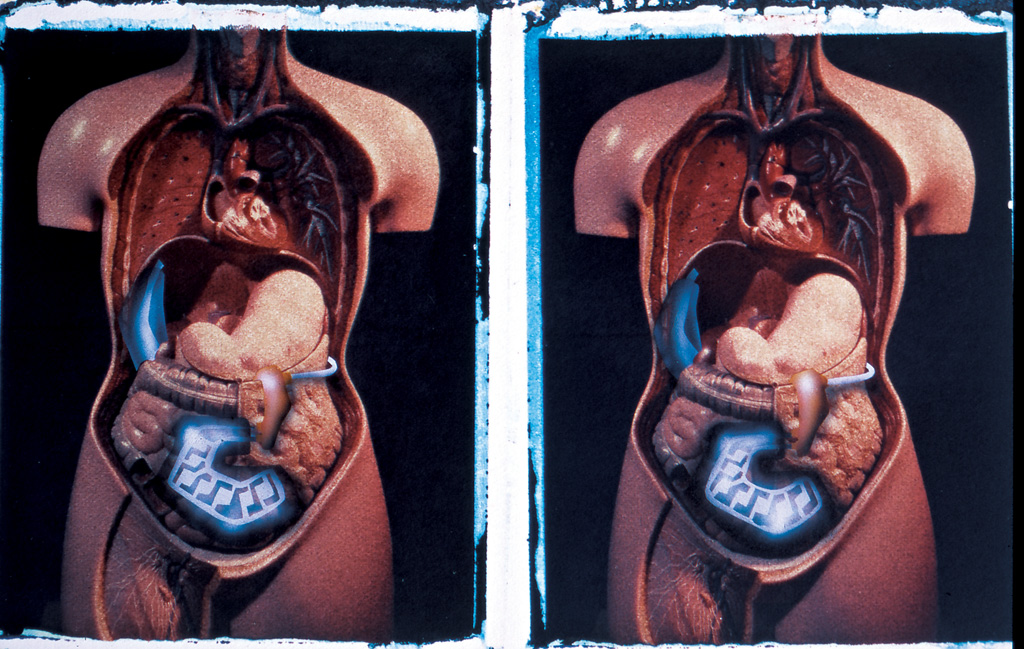
Body project thee X-ray (Nat Chard)

Body project thee X-ray (Nat Chard)

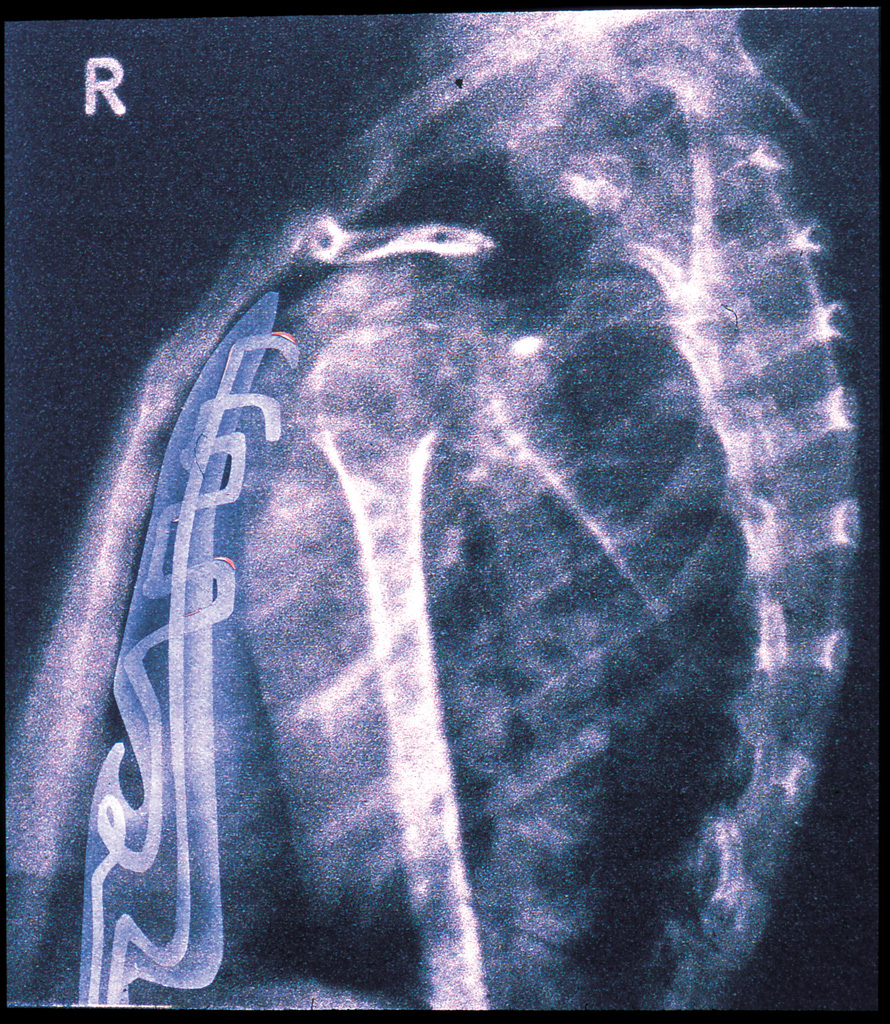
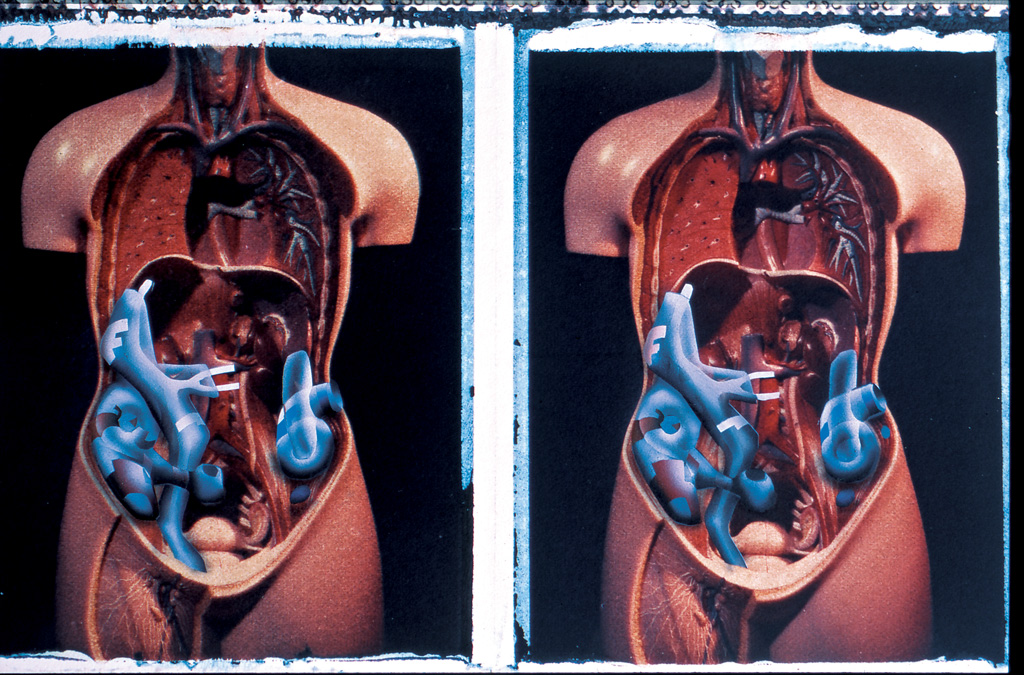
There are more drawing instruments to come, but I thought that I would mix things up with the last of the body projects (so far…).The third body project, from 2002, was an update on the second project and was initiated by two considerations. One was that medical technology had got ahead of the earlier project, especially with the development of left ventricular assist pumps that was much more compact than the circulatory pumps I had drawn. I had been working on the basis of a low pressure high volume pump to avoid blood clots and cell damage around the moving parts, but the new technology seemed to have overcome this problem. The whole system is much smaller, although the energy conversion technology is still a fantasy. Also, I had moved to Copenhagen where the winters were noticeably colder than in London and I realised how site specific the second body project had been. This version played greater emphasis on the thermal performance of the system to cope with the climate in Copenhagen. There were some minor variations where parts that I had previously thought important were edited and some parts were combined with others to improve the packaging. Conceptually, it is the same project.

As before, the pairs of drawings are stereoscopic so can be seen in 3D when you resolve them by going cross-eyed. THe drawings are airbrushed on Polaroid transfers.

Layer1, third body project (Nat Chard)

Layer2, third body project (Nat Chard)

Layer 3, third body project (Nat Chard)

Layer 4, third body project (Nat Chard)

Layer 5, third body project (Nat Chard)

Layer 6, third body project (Nat Chard)

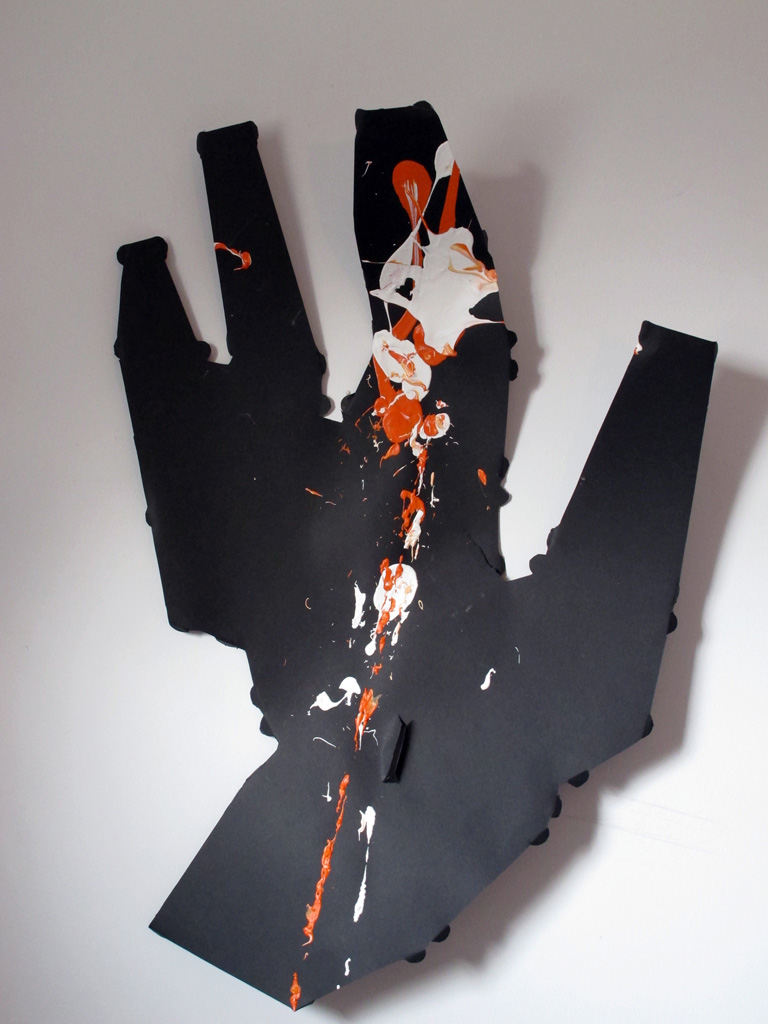
Drawing Instrument Five Drawing (Nat Chard)

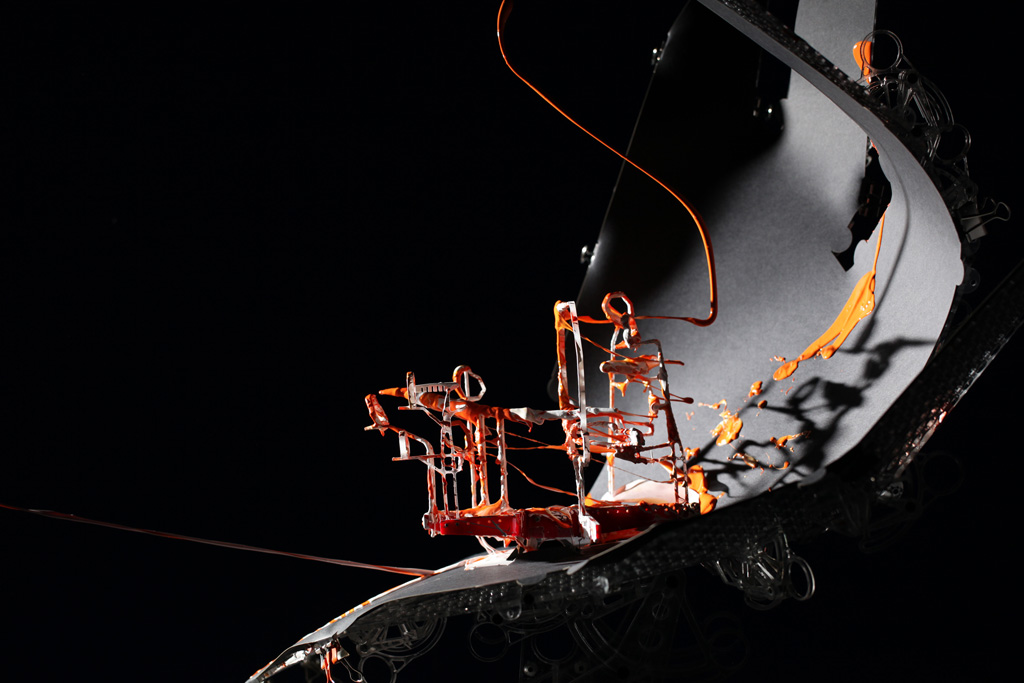
The earlier Instrument Five drawings were mostly media tests to learn and practice the instrument. The drawings in this post are discussions of a more developed version of the Bird Automata Test Track.

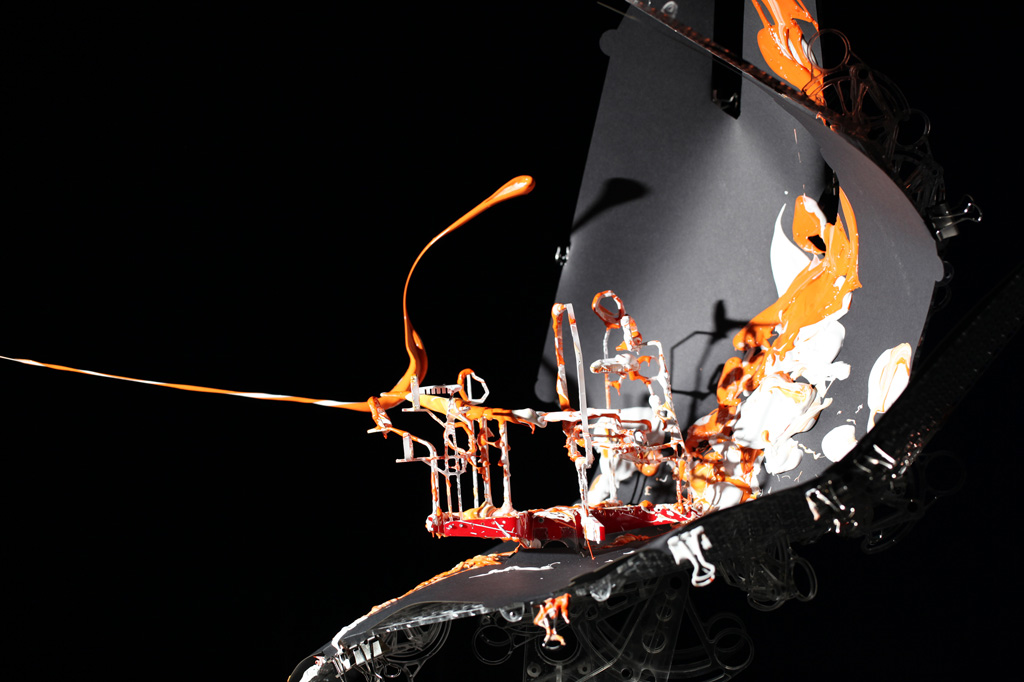
Drawing Instrument Five Drawing (Nat Chard)

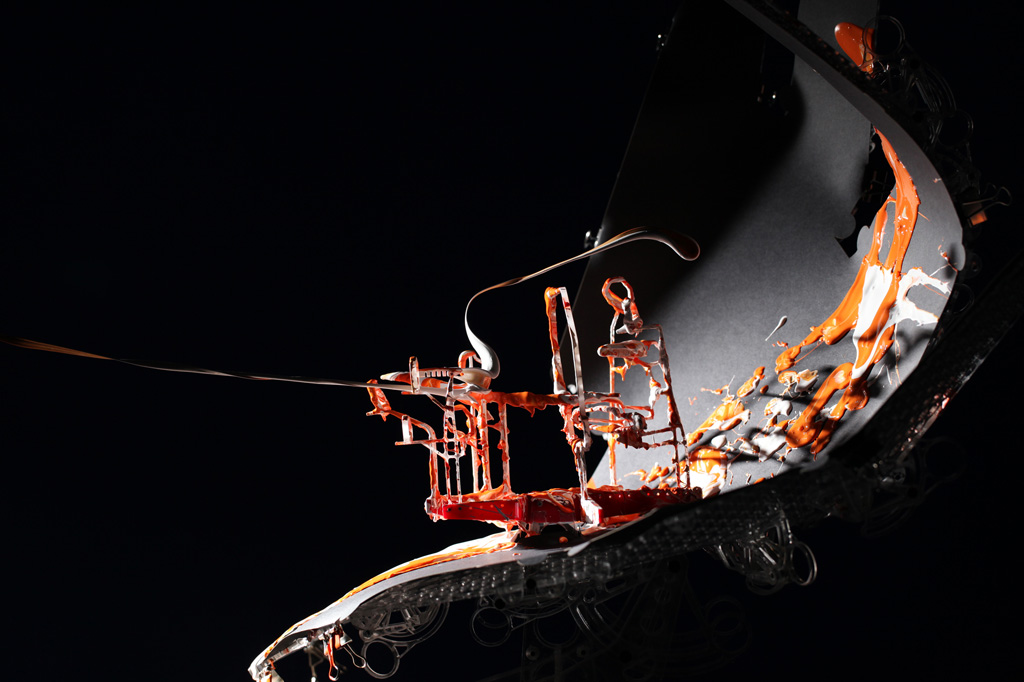
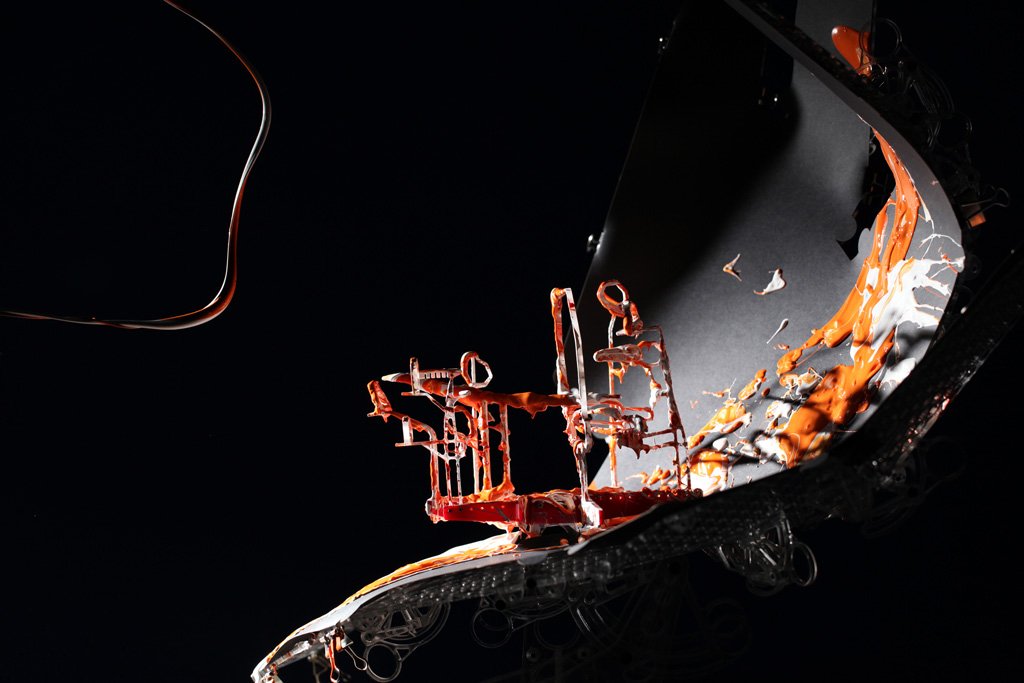
(Above) The flying paint discusses a particular flight. The new more developed beam can be seen running horizontally in the middle of the frame, with the paint flying just above it. You can see one of the hoop-like drawing pieces has caught a meniscus of paint that will burst and make its own splatter after the event.

Drawing Instrument Five Drawing (Nat Chard)

Drawing Instrument Five Drawing (Nat Chard)

Drawing Instrument Five in the process of drawing (Nat Chard)

Drawing Instrument Five in the process of drawing (Nat Chard)

Drawing Instrument Five in the process of drawing (Nat Chard)

Drawing Instrument Five in the process of drawing (Nat Chard)

Drawing Instrument Five in the process of drawing (Nat Chard)

Drawing Instrument Five in the process of drawing (Nat Chard)

Bird Automata Test Track (Nat Chard)

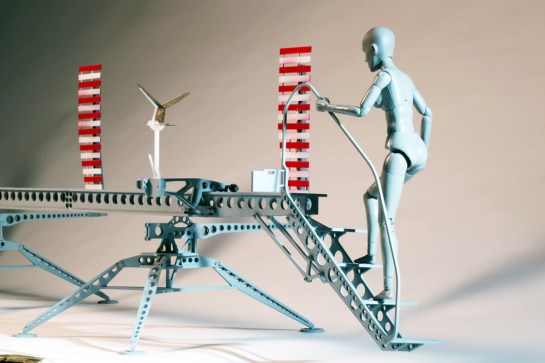
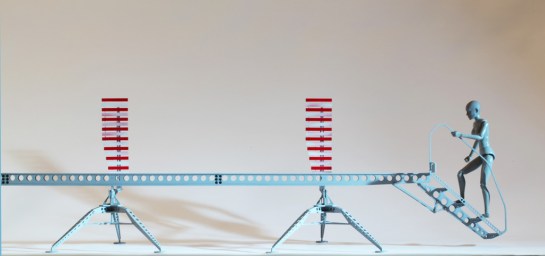
The different versions of Instrument Five discuss a development of the project shown in this model. One of the limiting agents on an indeterminate condition is typology. The embodied knowledge in things carries with it embedded behaviours. I have visited quite a number of research establishments where new architectural questions bring a combination of new architectures but often with borrowed bits from elsewhere. One such place in Cape Kennedy where NASA launches most of its rockets. Along the coast is a compressed archeology of space flight architecture. At one end is a nipple on the concrete apron and a pole to hold a bleeder tube. This is the launch architecture for the captured German V2 rockets after the war. It is generic, portable, un-sited and does not discuss the body. After passing a succession of ruined Mercury and  Gemini launch sites (as well as an early Apollo site) you come to the space shuttle launch pads, formerly used for the giant Saturn Five rockets of the Apollo programme. These emerge out of the landscape and are tied to it by the gravel roads that lead to the Vertical Assembly Building. In less than forty years a highly developed architecture emerged particular to a new venture.

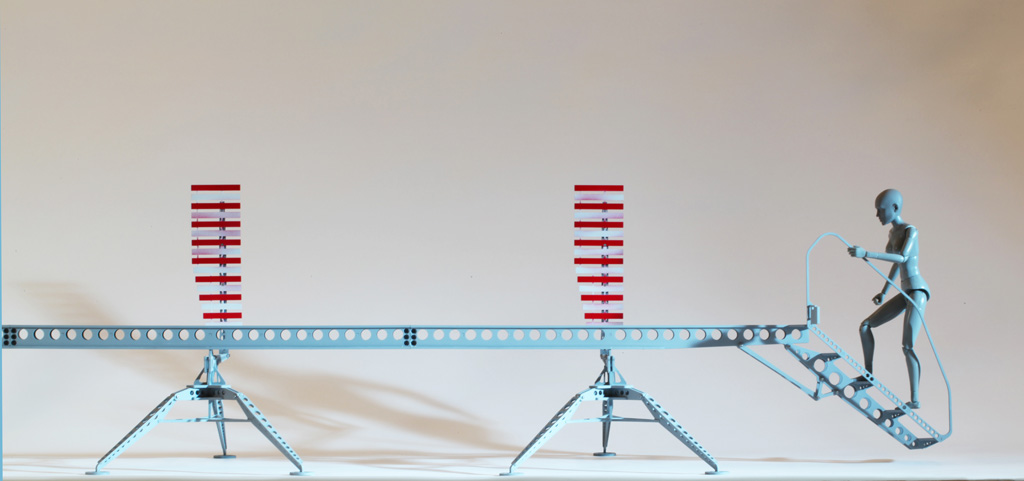
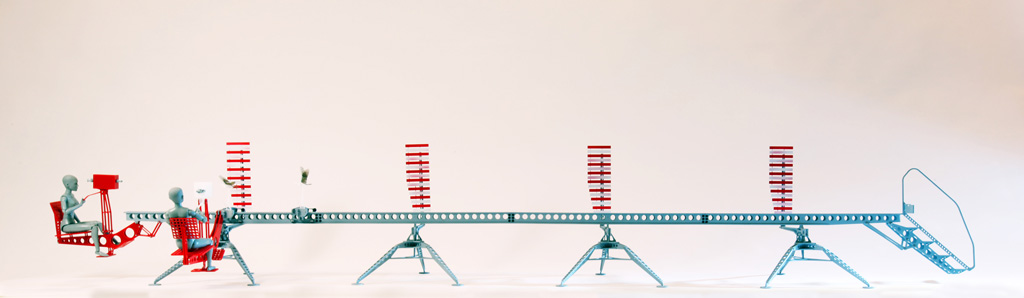
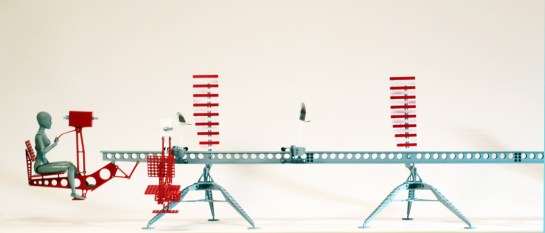
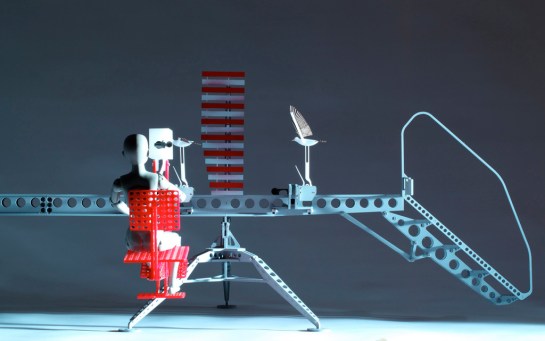
The Bird Automata Test Track  is the “before” model for the drawings in Instrument Five. Or the drawings in Instrument Five try to develop what is started in this model. It is at the V2 stage – generic, without a site, portable, and the only acknowledgement of people is in an access stair and the seating positions for the cameras.

Why a Bird Automata Test Track? The speculation is that if architecture was more of an automaton – if it had the capability to also be awkward, teasing, silly, precisely helpful, sometimes sulk and sometimes playful, for example, then it could be in a position to nurture a far more indeterminate condition than one that is more fixed in its relationship to our occupation. The test track is the first step – how might we behave with automata, how can I examine the idea of an automaton before looking at it as architecture, those sorts of questions.

Bird Automata Test Track (Nat Chard)
Bird Automata Test Track (Nat Chard)

Bird Automata Test Track (Nat Chard)
Bird Automata Test Track (Nat Chard)
Bird Automata Test Track (Nat Chard)

Bird Automata Test Track (Nat Chard)

Bird Automata Test Track (Nat Chard)
Bird Automata Test Track (Nat Chard)

Bird Automata Test Track (Nat Chard)

Bird Automata Test Track Birds (Nat Chard)

The image above is of the birds that can be clipped in to the track trolleys for the animated films of the rack in action.