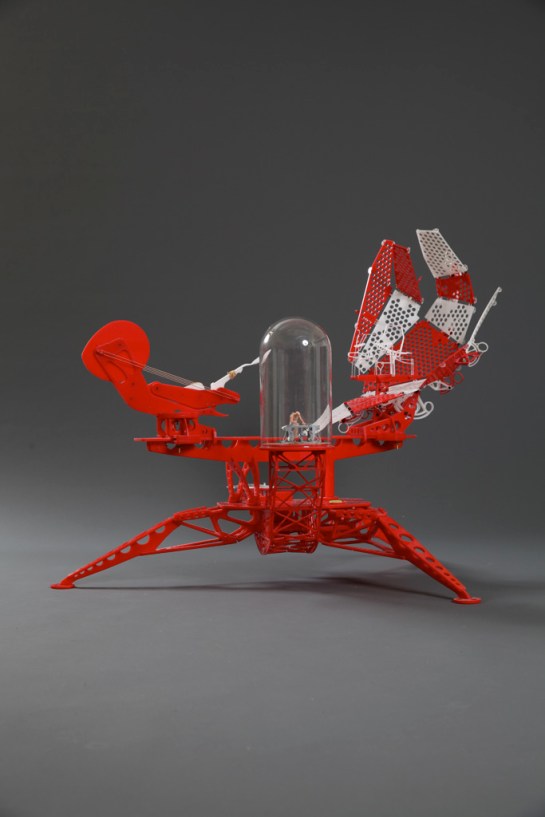
Instrument Five (Nat Chard)

Instrument Five (Nat Chard)
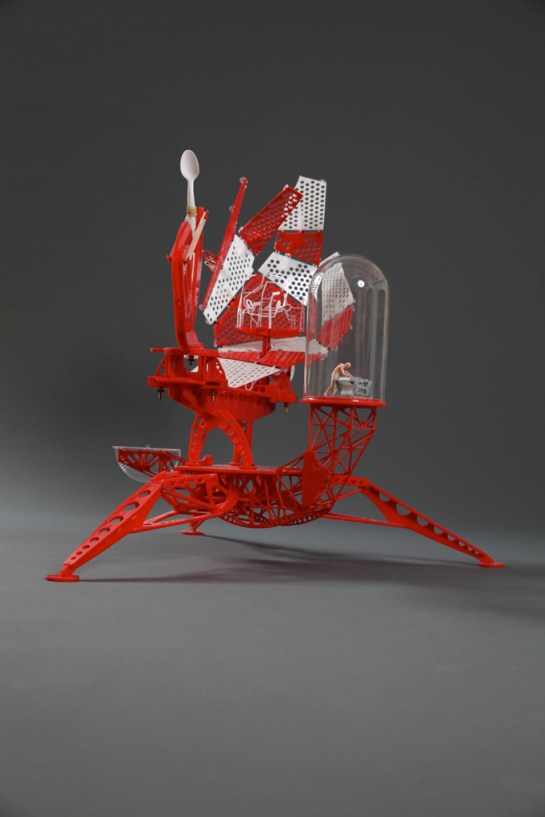
Instrument Five (Nat Chard)
Some Views of Instrument Five.
Instrument Five (Nat Chard)
Instrument Five (Nat Chard)
Instrument Five (Nat Chard)
Some Views of Instrument Five.
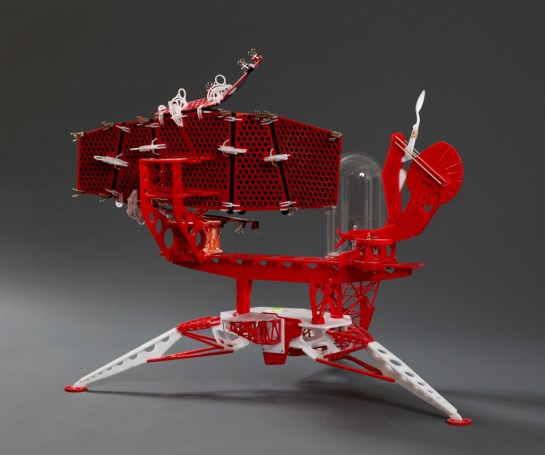
Instrument Seven (Nat Chard)
A few more recent shots of Instrument Seven, showing the back of the folding picture plane (above) and a couple more views.
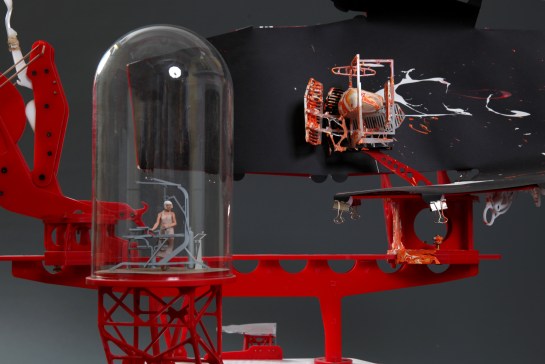
Instrument Seven (Nat Chard)
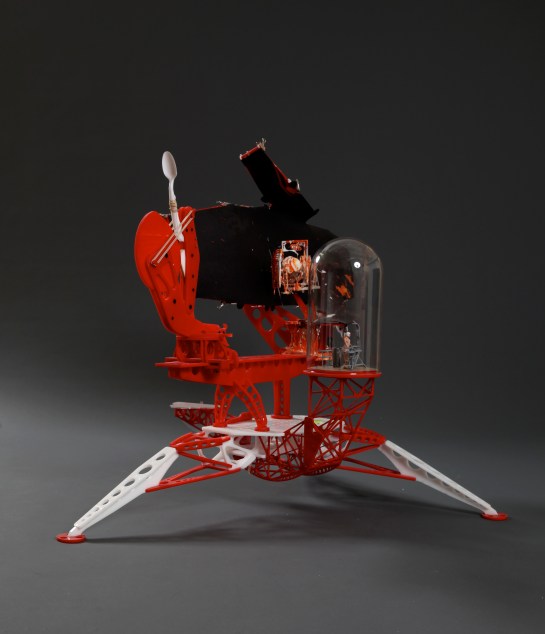
Instrument Seven (Nat Chard)
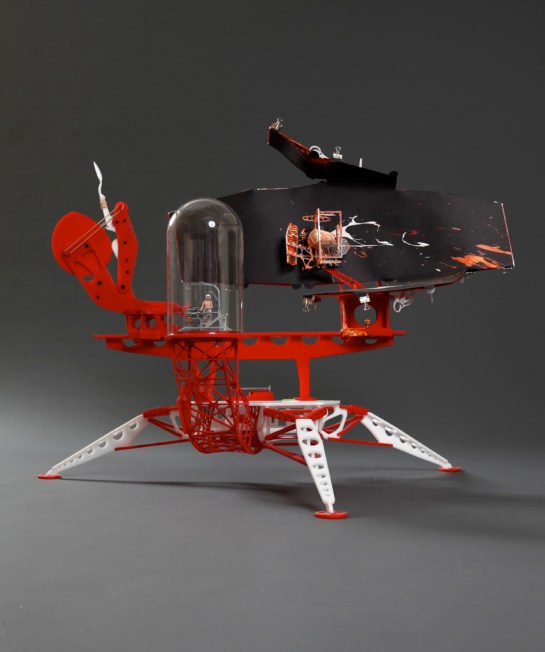
Instrument Seven (Nat Chard)
A picture of Instrument Seven with a drawing, after receiving paint thrown by another instrument. The paper follows the folds of the picture plane support (behind) which has tabs to match those on the paper and they are held together with bulldog clips. You can see how little of the main throw of paint lands on the drawing (unlike Instrument Five) and instead it catches just the splatter of paint that collides with the drawing pieces.
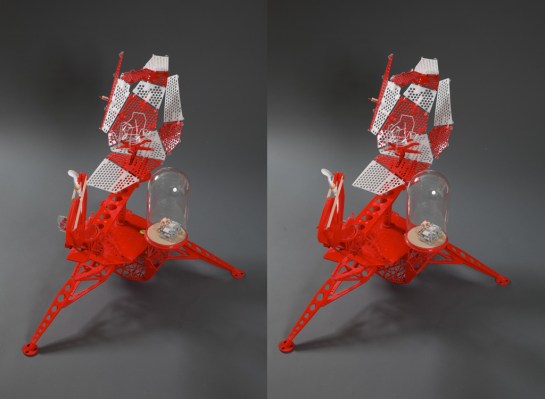
Instrument Five (Nat Chard)
Another of the new pictures – this time Instrument Five in stereo.
Usual process for resolving the stereo image.

Instrument 6 (Nat Chard)

Instrument 6 (Nat Chard)
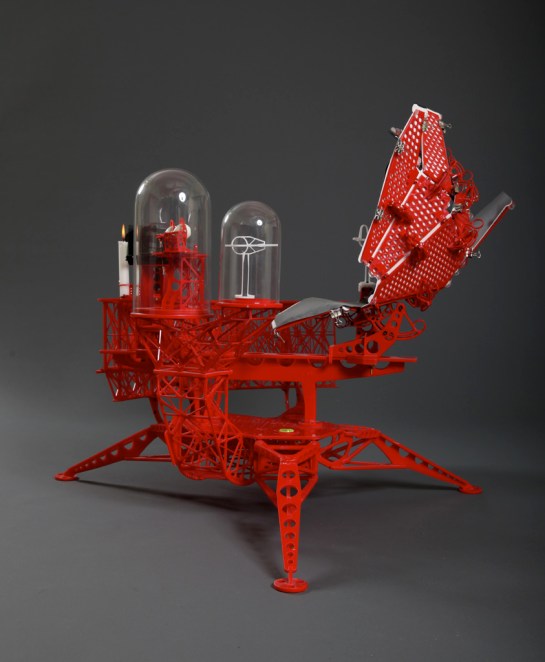
Instrument 6 (Nat Chard)

Instrument 6 (Nat Chard)
I have been reshooting Instrument Six – the earlier photographs were too saturated. Here are some tests. The surface on the folding picture plane is a material that retains polarisation, made by Da-Lite Screens. The instrument is seen here in real time mode – to see a shadow floating off the surface on which it should, by rights, land.

Instrument Three (Nat Chard)

Instrument Three (Nat Chard)
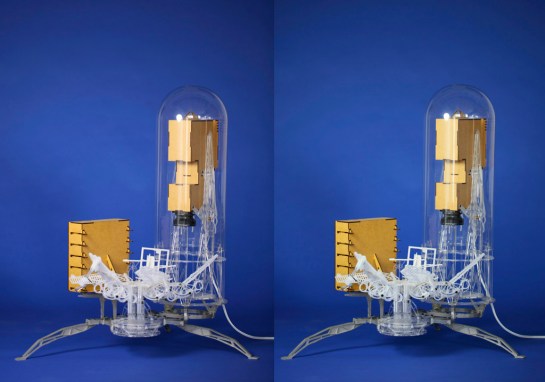
Instrument Three (Nat Chard)
Looking through some photographs I found some of the stereoscopic shots I had made of the instruments. Here are a few of Instrument Three.
See also:
https://natchard.com/2011/09/14/drawing-instrument-three/
https://natchard.com/2011/12/26/more-instrument-three/
To view the images in three dimensions, go cross-eyed until you can register one image over the other. You may need to reduce the size of the images a little and perhaps tilt your head a little to keep the horizons together. When you have the image, try to relax to get the full stereoscopic depth.
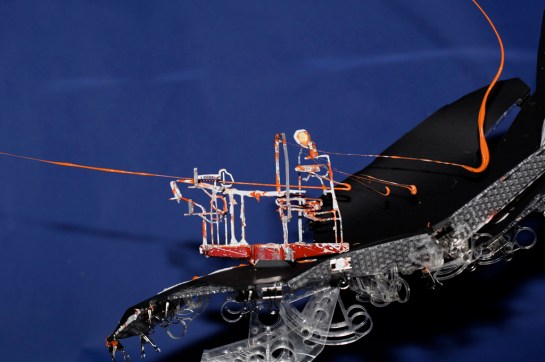
Instrument Five
A couple of extra pictures of Instrument Five in action, with a very laid back picture plane to draw out the throw of paint. Notice the meniscus of paint on the top right drawing piece (above) that is still there for the subsequent white paint throw (below).

Instrument Five
See also:
https://natchard.com/2011/10/16/more-instrument-five-2/
https://natchard.com/2011/09/28/more-instrument-five/
https://natchard.com/2011/09/24/drawing-instrument-five-developed-drawings/
https://natchard.com/2011/09/21/drawing-instrument-five-first-drawings/

Geometric Models
Some Geometrical models an a drawer in the Musée des Arts et Métiers’s reserve collection.
Normal procedure for viewing the stereoscopic pairs

Paint throw from Instrument Five
I’m not sure if I posted this photograph before, it is a high-speed flash photograph from the Instrument No.5 series. I have been looking back over these to understand how to make the new drawings and like the range of paint to drawing piece / picture plane engagement. Almost the whole story held in one image. The strands of paint connecting the drawing pieces to the picture plane also show a promising range of discussions. Note the meniscus of paint in the upper right hand drawing piece ring.
If you click on the image you will see it a little bit larger.
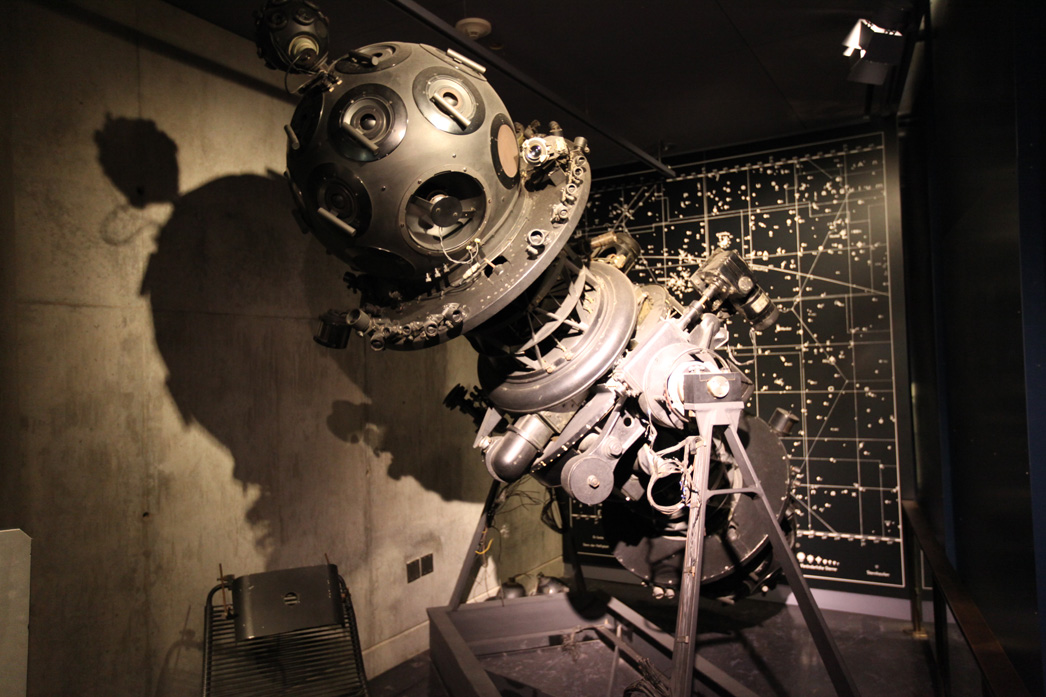
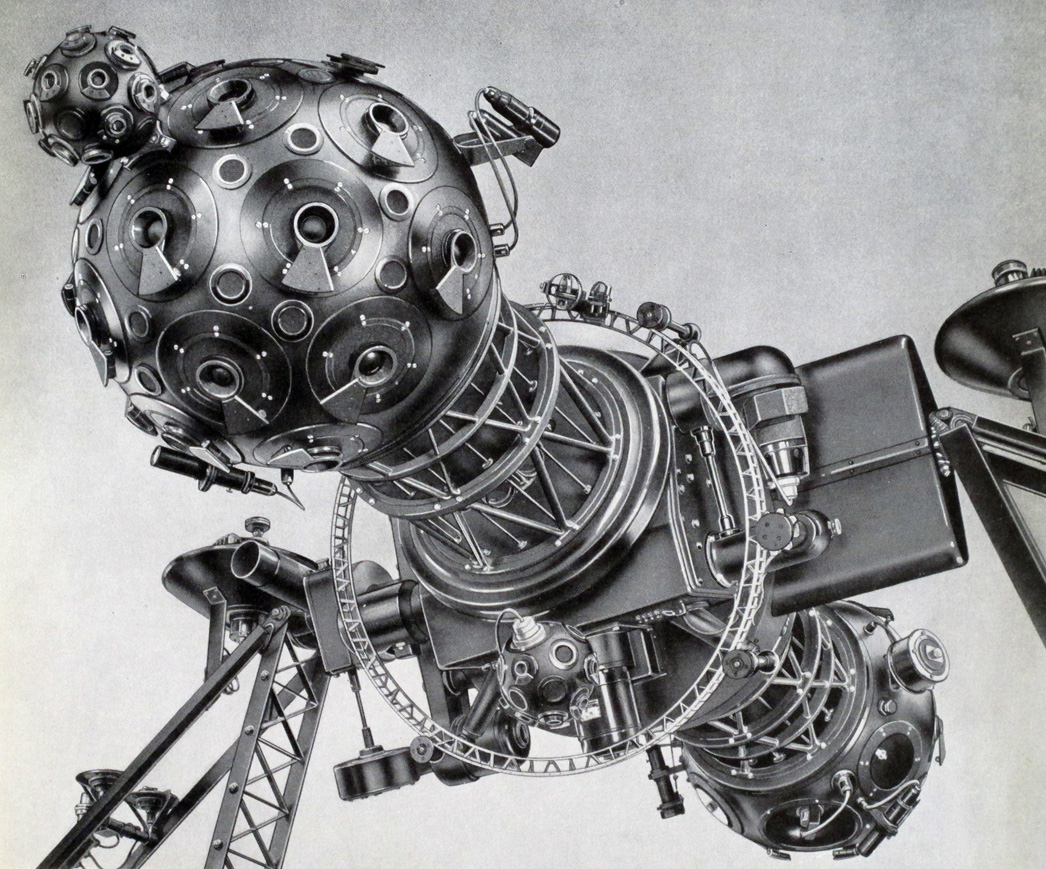
Griffith Observatory, Los Angeles
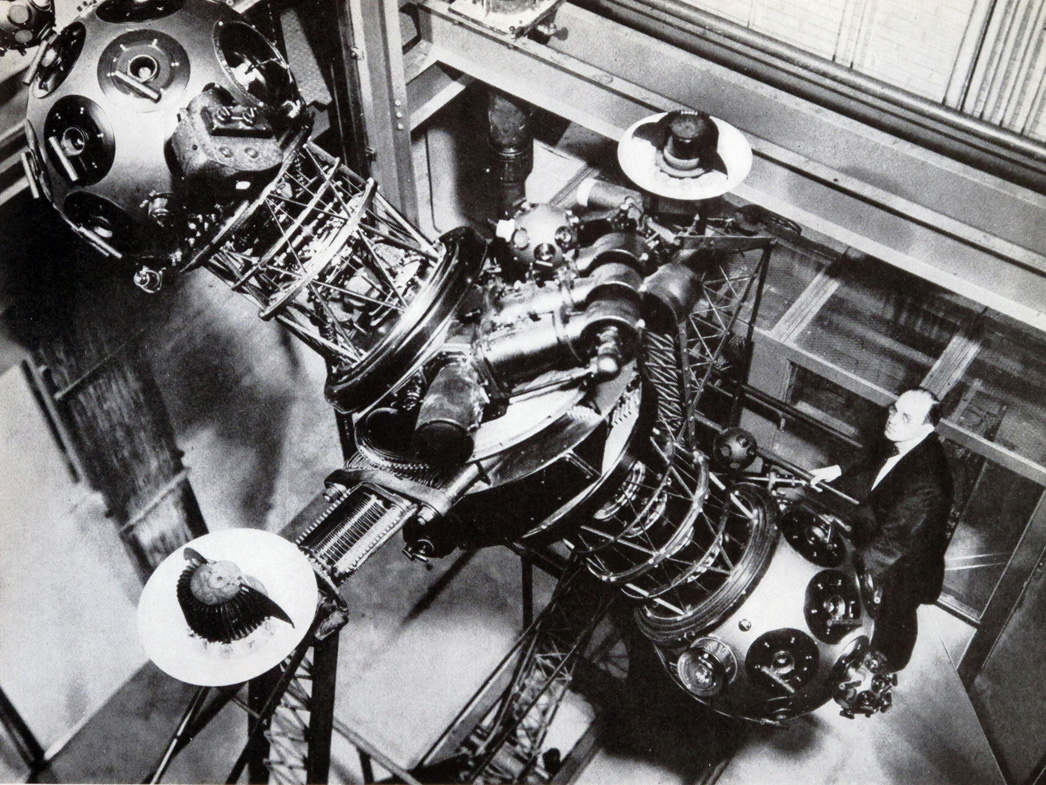
I have to admit a weakness for planetarium projectors. I started looking at planetaria more seriously around the same time as I was researching dioramas. The combination of material and pictorial space was resonant with the dioramas with the added pleasure of the temporal dimension. Added to that is the projector, an analogue computer able to register the night sky in either hemisphere to represent any moment over a several thousand year span. As instruments they embody a knowledge and understanding of astronomy. Some of the mechanisms are under precise control while others, such as the eyelids on the spherical projectors at either end just fall with gravity with weights to stop the sky below the horizon being projected onto the audience, are dependent on the situation of the projector. I am working on a simple analogue computer at the moment for the new drawing instruments and the planetarium projectors, along with the Norden bombsight, have been helpful for finding my way.
The projector above is from the Griffith Observatory in Los Angeles, which has been replaced by a digital version. The images below are from the book Captured Stars.
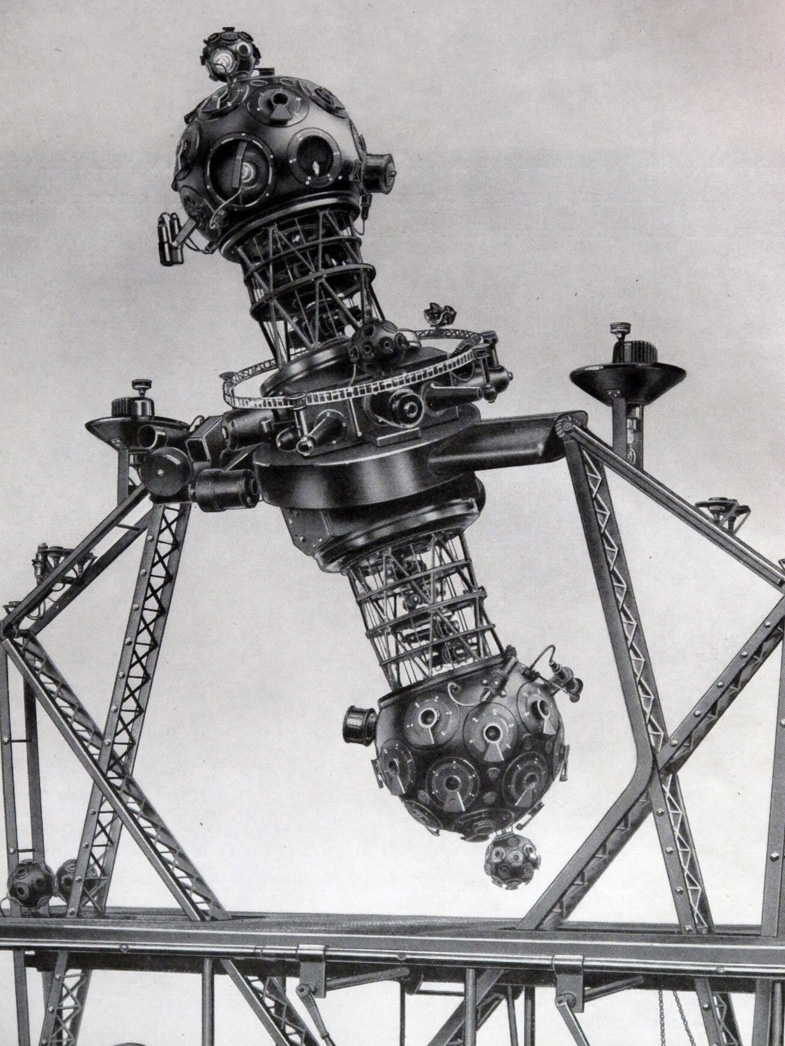
Planetarium Projector
Planetarium Projector
Planetarium Projector
You might be interested in the Mel Bochner and Robert Smithson article structured around the (old) Planetarium at the American Museum of Natural History in New York in Art Voices Fall 1966, discussed in an article in the September 2006 Artforum by Mel Bachner.
 Nat Chard