Archive

Monthly Archives: November 2012

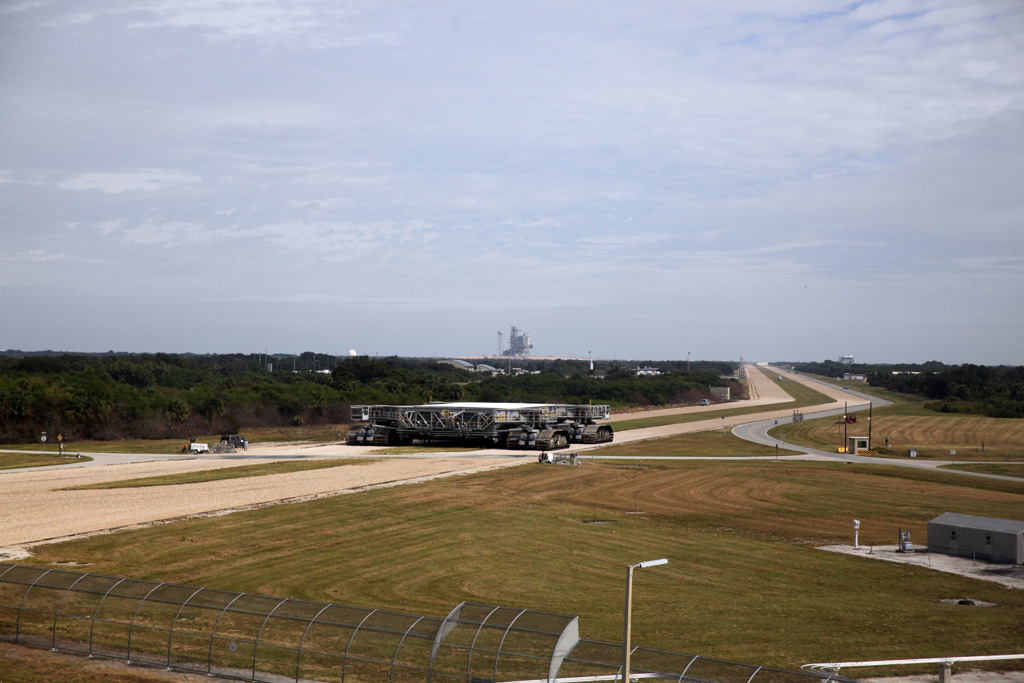
Crawler seen from Launch Control Centre

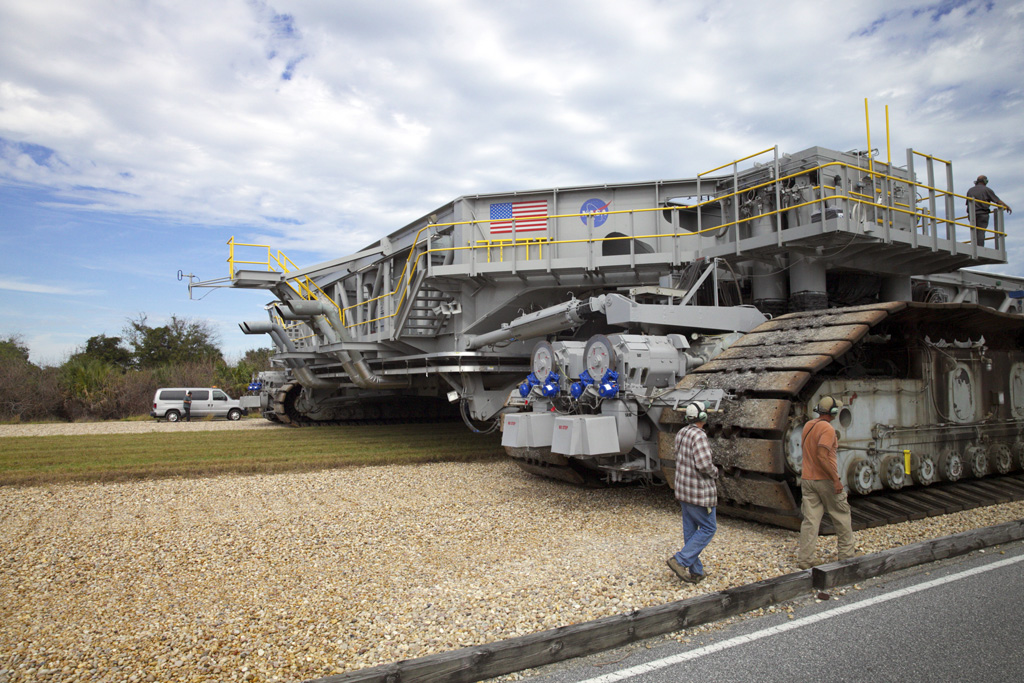
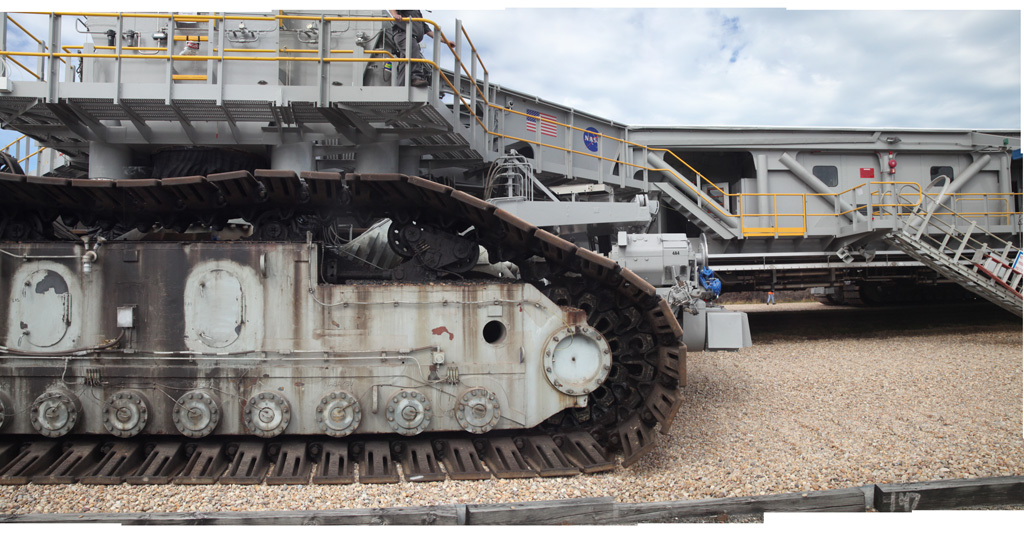
The crawler carried the Saturn Five rockets of the Apollo program and the Space shuttles to the launch sites, keeping the load level as it climbed the hill up to the launch pad. Here is a view of a naked crawler (without the steel box that holds the rocket during launch) crawling towards the launch sites. We were told it was testing its new disc brakes. The view is from the launch control centre.

Crawler

It runs on a bed of rocks buried six feet in the ground.

Crawler

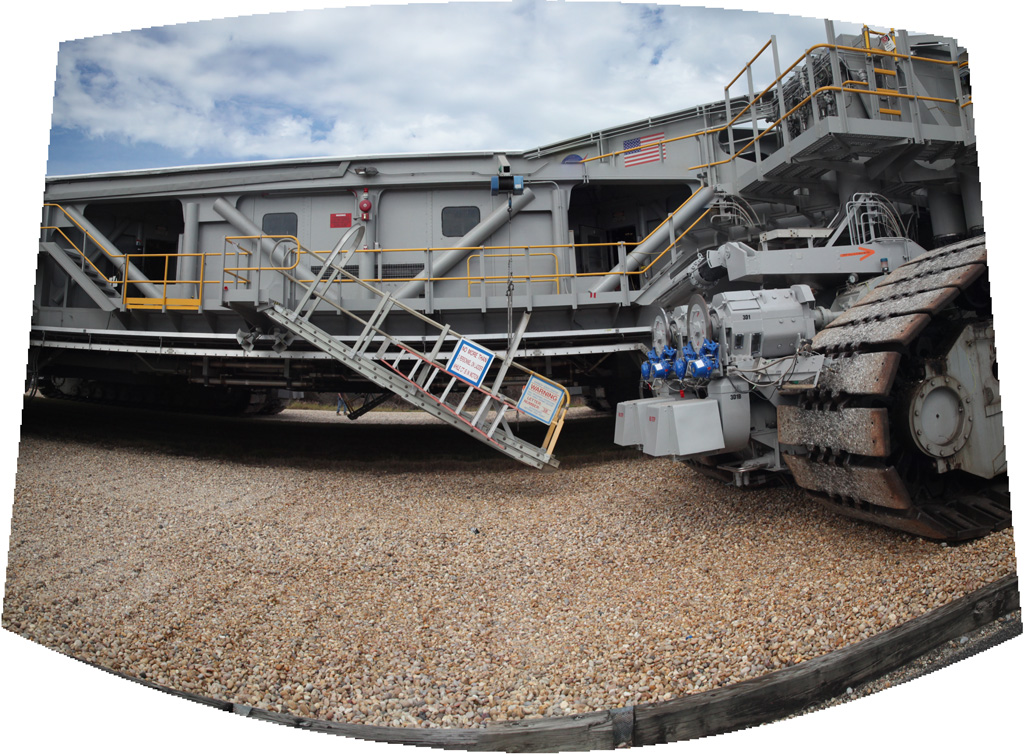
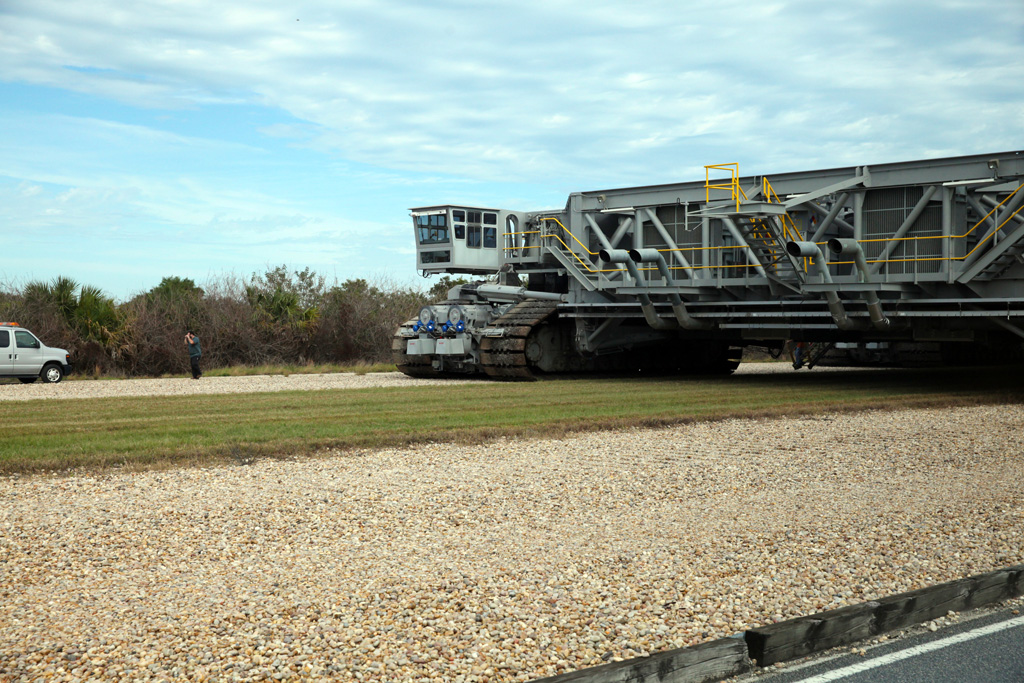
You can see the new disk brakes at the end of the engines, with the callipers painted bright blue

Crawler

Crawler

Crawler


I will post a few more pictures of the crawler when I have a minute.

Saturn Five Rocket Motor

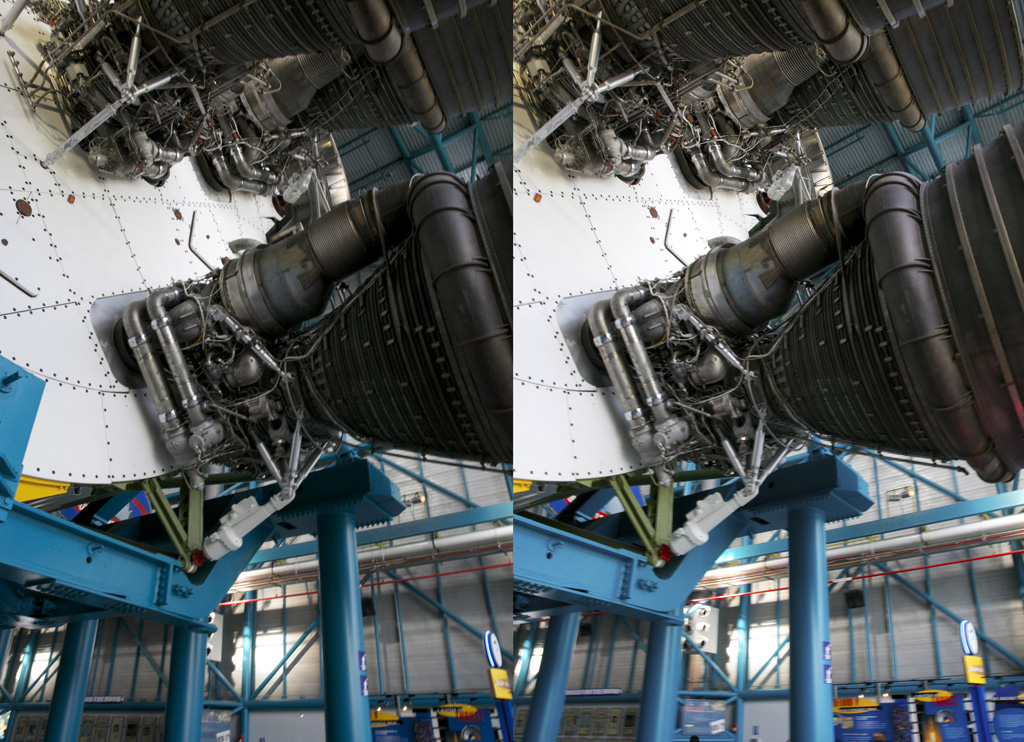
Rocket motors from the giant Saturn Five rockets, the lowest stage above and the middle stage below.

Usual procedure for viewing them in 3D. The lower image works well and is quite an easy one to register, if you normally have trouble getting the three dimensions.

Saturn Five Rocket Motors

De-mating crane

When the Space Shuttles landed in California they were flown back to Cape Canaveral on top of a modified Boeing 747. The De-mating crane is there to separate the two craft.

As usual, to view the stereoscopic pair go cross-eyed until a common feature in both images resolves into one image in the moddle. Try to relax to get the full stereoscopic depth. You will see three images when the images are resolved – concentrate on the middle one. If you have difficulty doing this, make the image smaller until you find it easy to locate one image over the other.

Blast Deflector

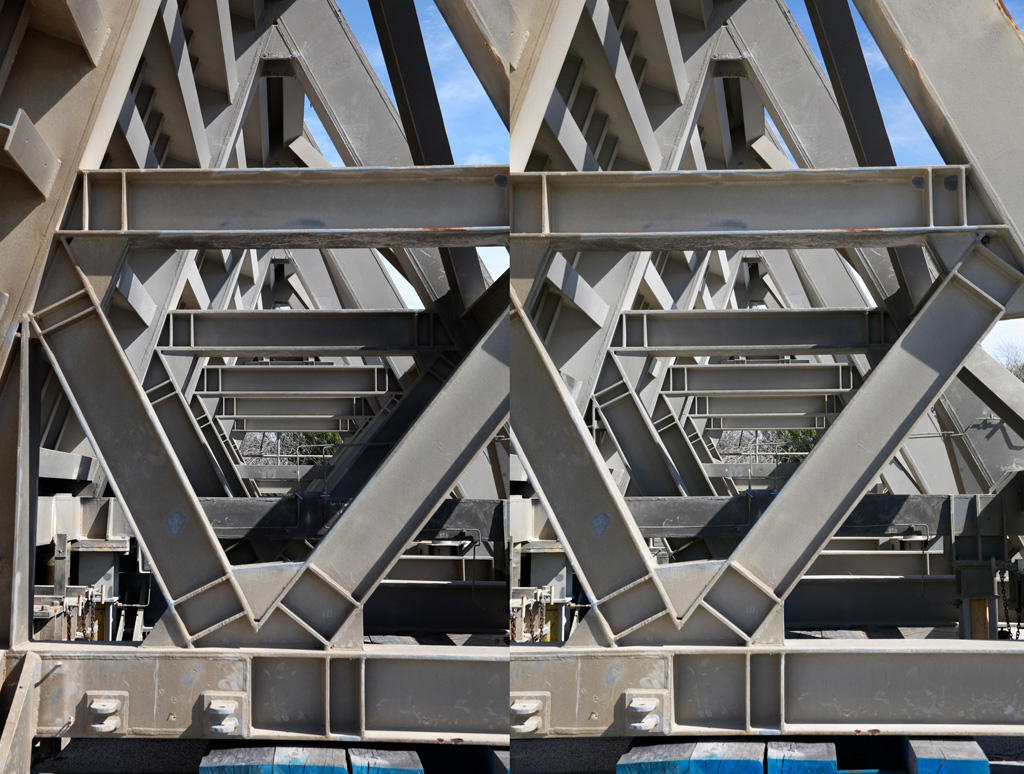
Scorch marks on the blast deflector witness the heat and force from the space shuttle rocket motors. The structure behind the deflector is shown below. The deflector fills the gap between the hole in the portable pad and the flame trench.

Blast deflector structure

Blast deflector structure


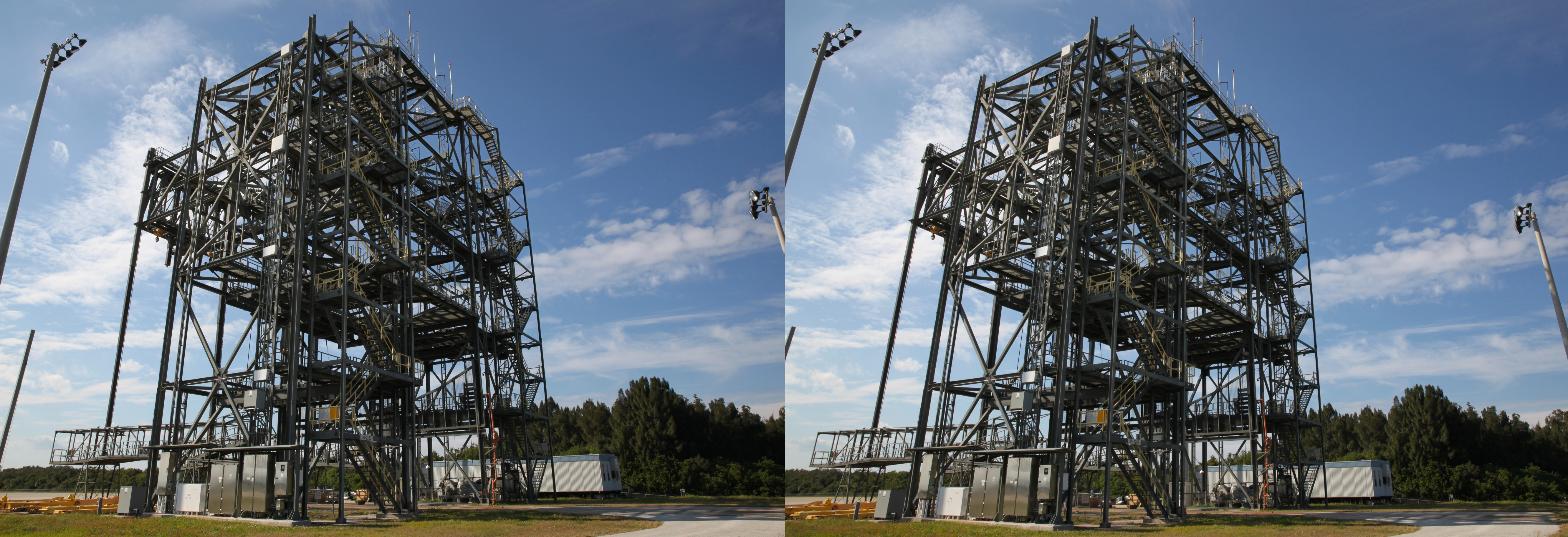
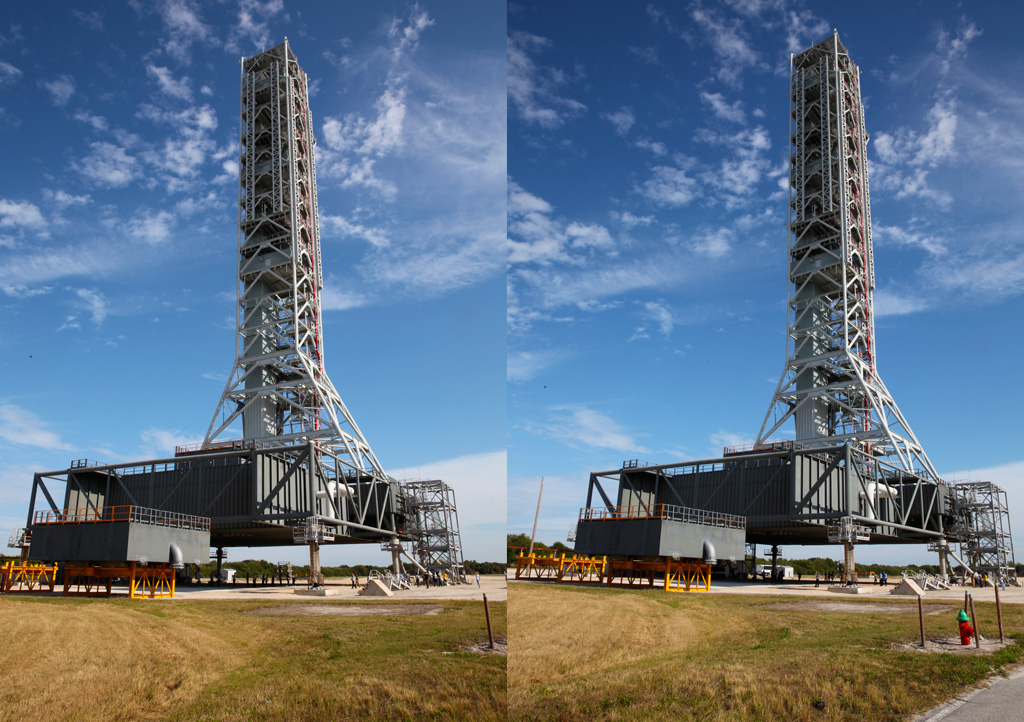
New Launch Tower

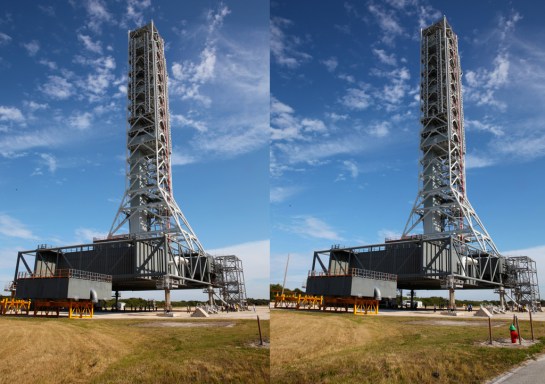
More from Cape Canaveral – this new launch tower, similar to the Apollo versions, is for NASA’s new generation of heavy lifting rockets. It sits on the crawlers (I will post some pictures of one in the next few days) and carries the rocket to the launch site. This tower will fit in the Vehicle Assembly building in the previous posts, and if you look at the people here to give scale, that might give some idea of the size of the VAB. The last image might be  a little hard to register in 3D, but the spatial sense of the ground plane works well once you get it.

Edit: I was back at Cape Canaveral and was told this time that the tower was built for a program that was cancelled and will be adapted for the next generation of rockets. While the main infrastructure at Cape Canaveral was constructed around the Apollo program, that huge investment now frames the new programmes, as it is too expensive to build new launch sites and make the VAB larger.
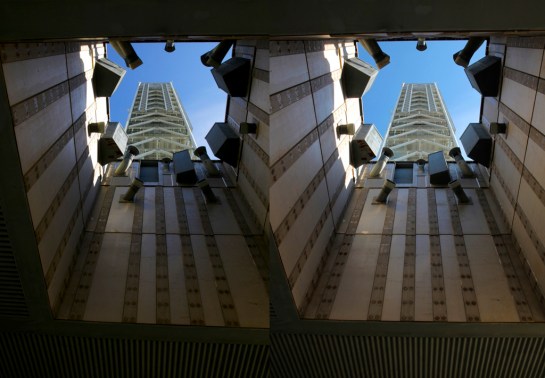
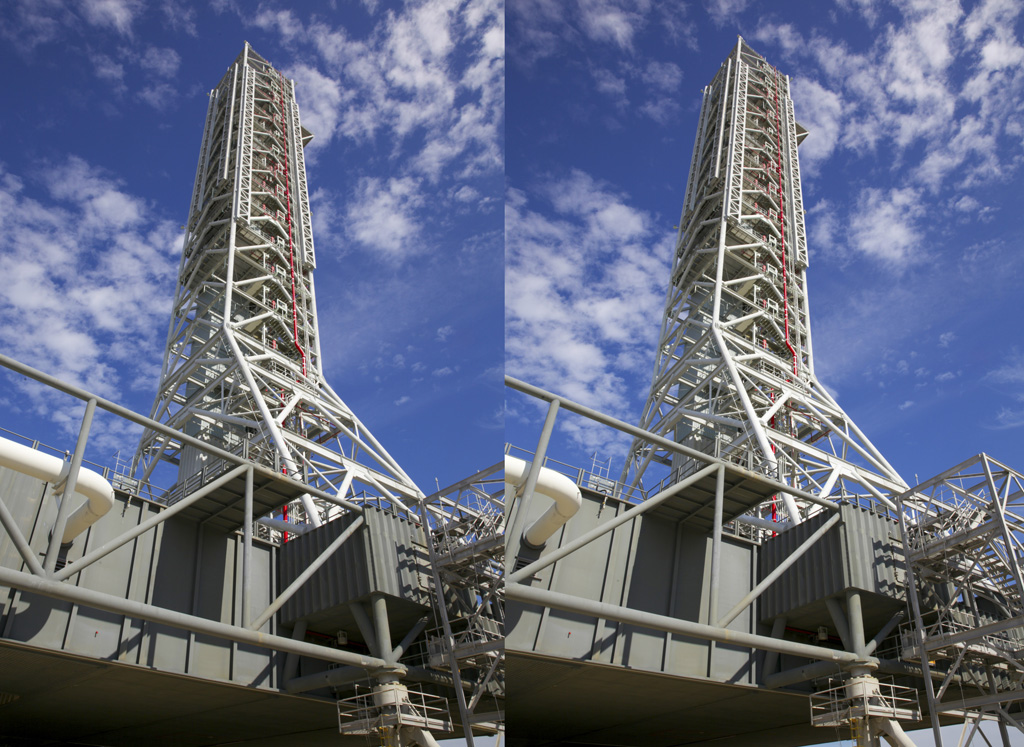
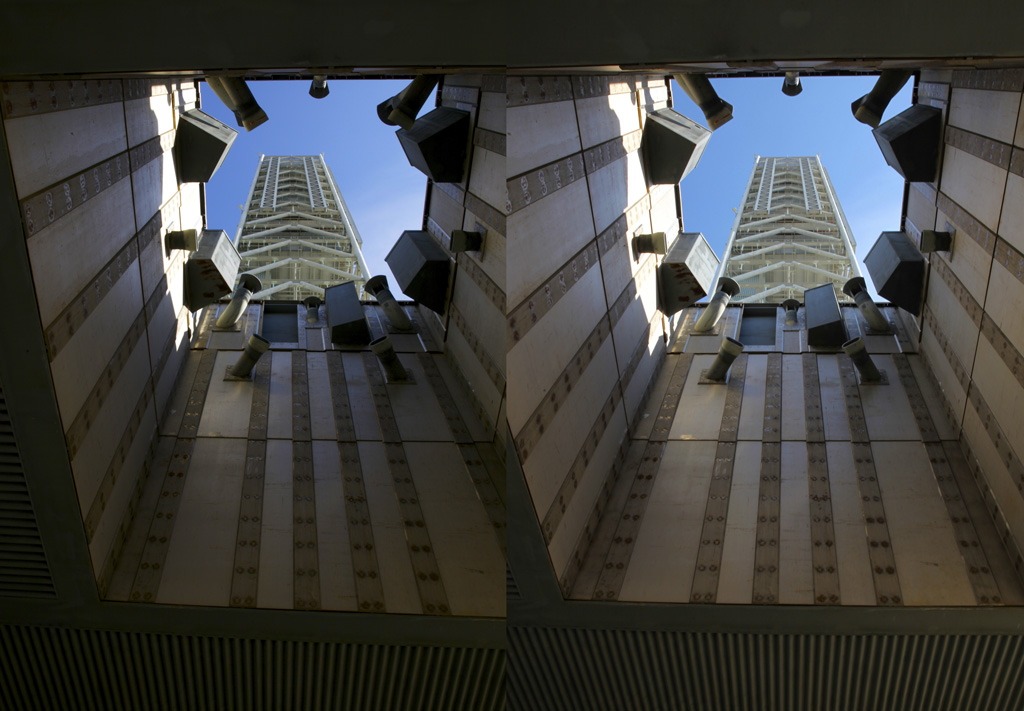
View through hole that takes the rocket blast

The view above shows the tower form the hold in the portable pad that takes the blast form the rocket engines. The spouts around the edge shoot huge volumes of water under the rockets for two purposes. One is to cook the structure in the intense heat. The other is to absorb the low frequency sound that would otherwise bounce back and destroy the rocket.
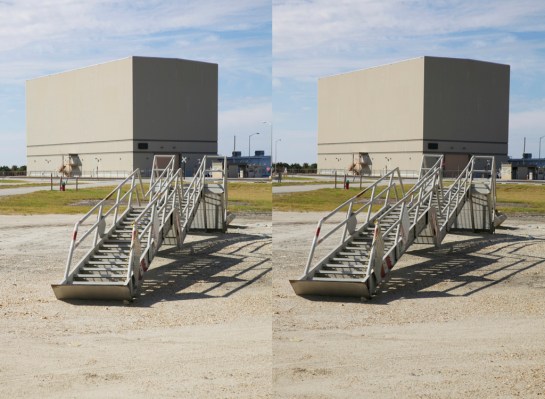
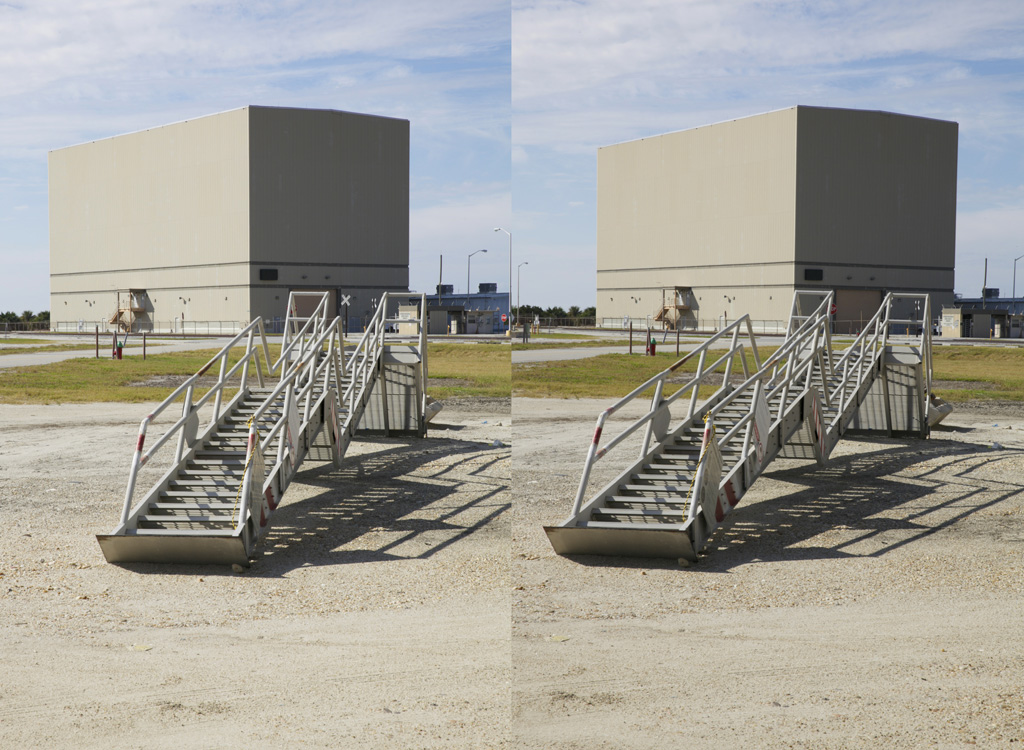
Stair

A stair to provide access to the pad, presumably when it is in position – there was a service and access tower at the parking position to provide a stair while the tower is in storage.
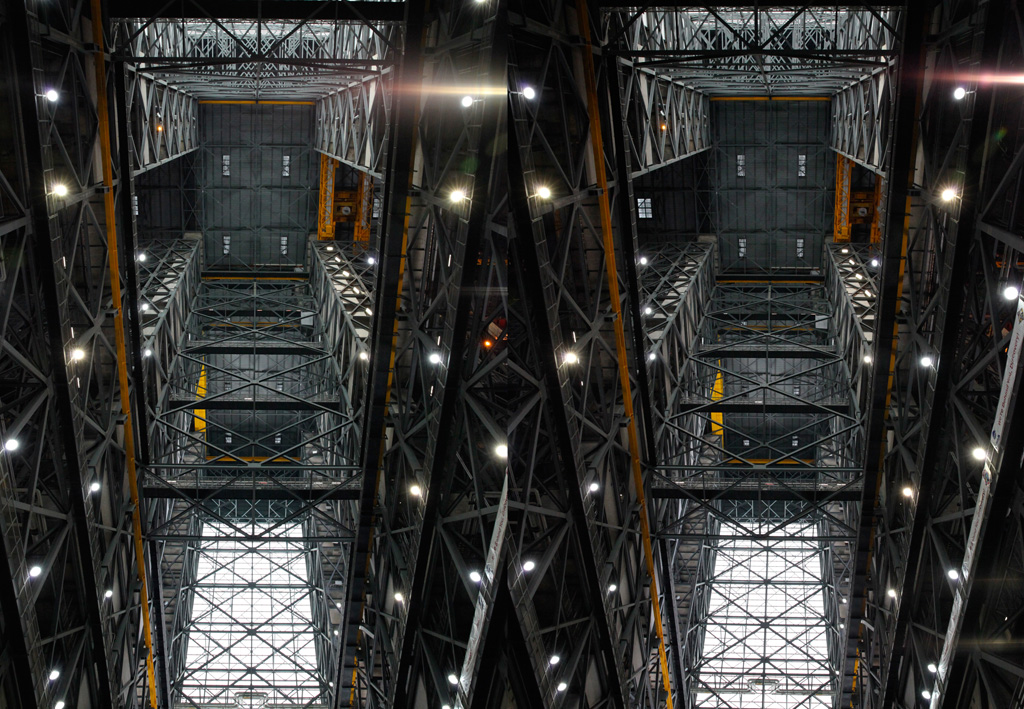
VAB

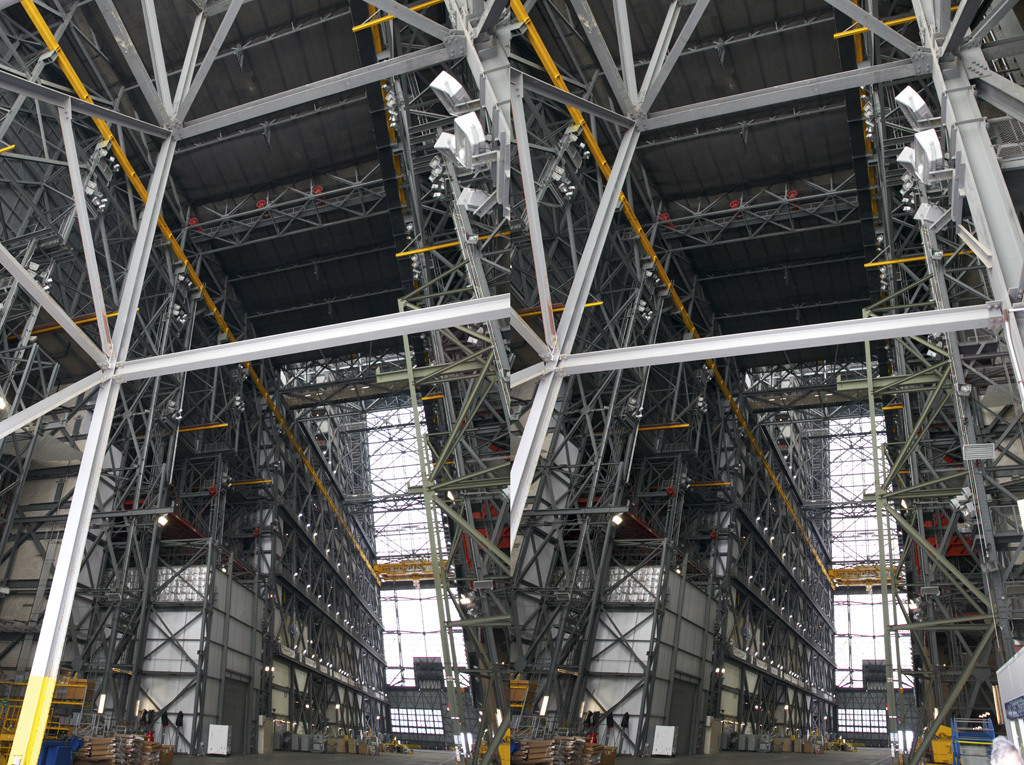
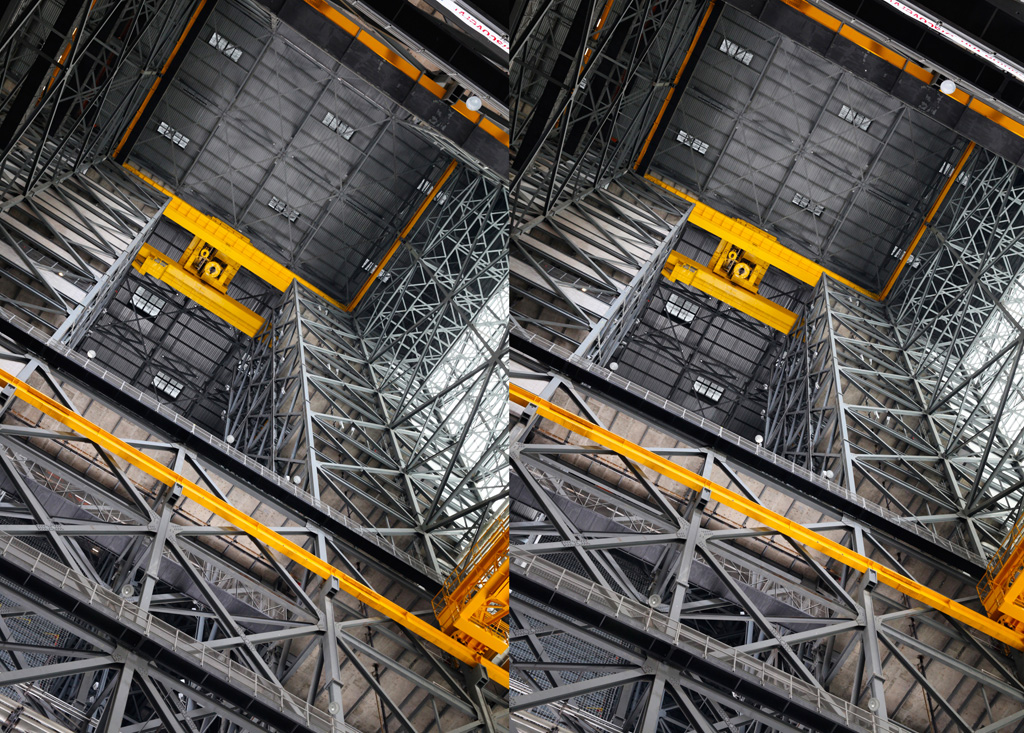
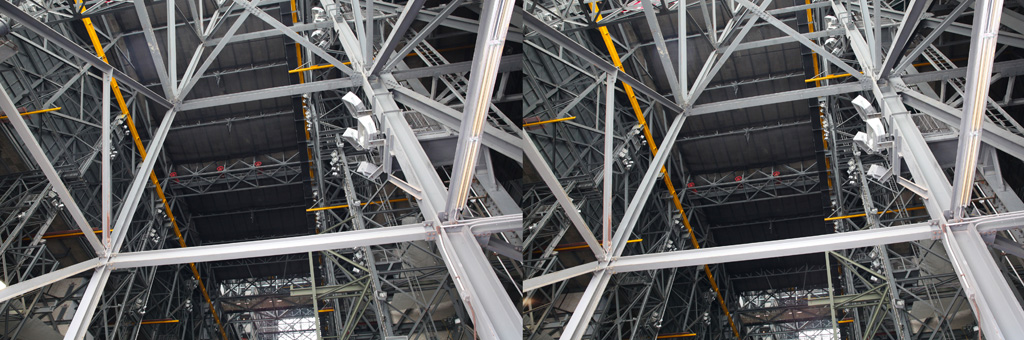
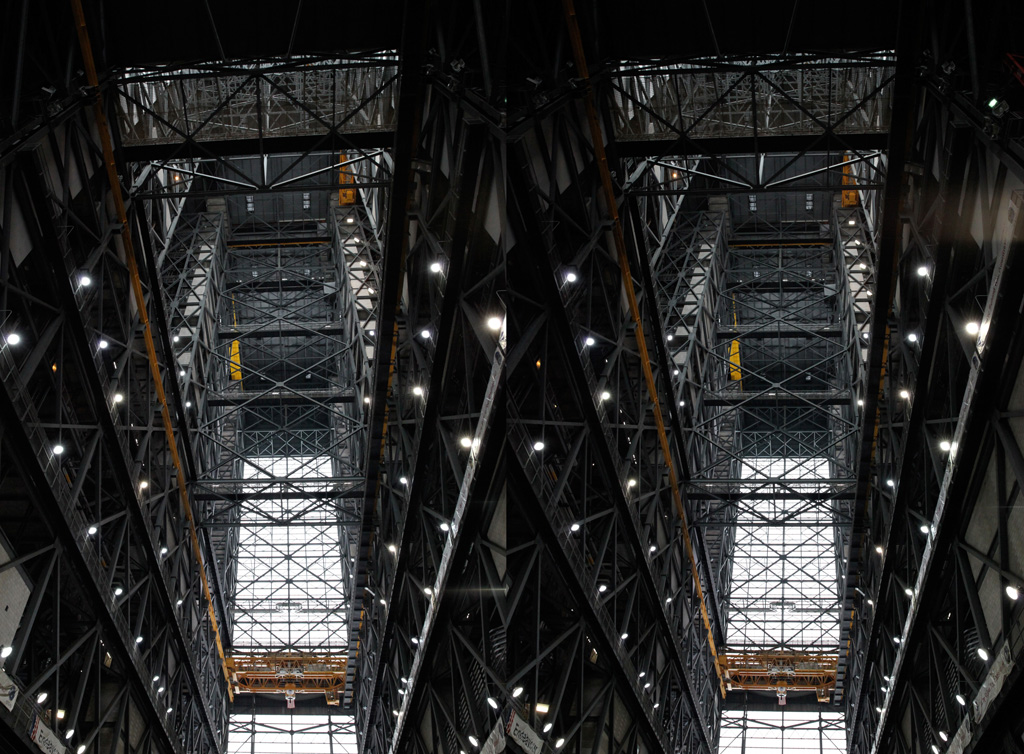
The vast space of the Vehicle Assembly Building at Cape Canaveral.

Usual process fo stereoscopic viewing – go cross-eyed until the images register over each other, concentrate on the central image of the three that will appear and try to relax. Adjust your horizon slightly of you are having problems registering the images.

Rocket transporter

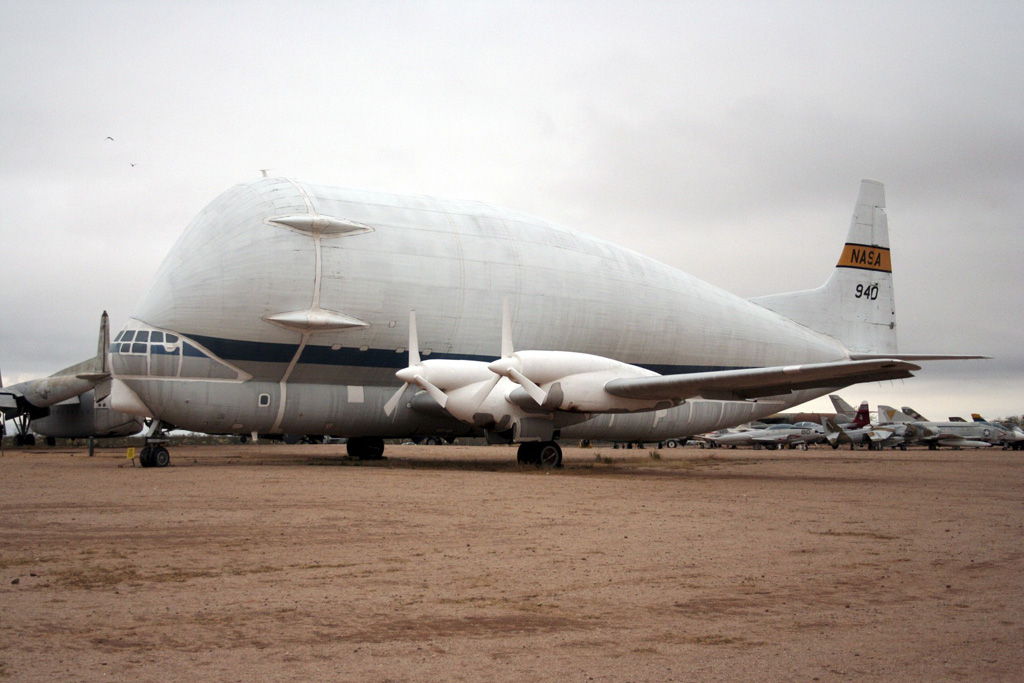
Today I am visiting the Cape Canaveral launch sites – I will post something after the visit – but in anticipation here is a ‘plane to transport sections of the Saturn Five rocket for the Apollo program.  The picture is taken at PIMA in Tucson.