Blast Deflector

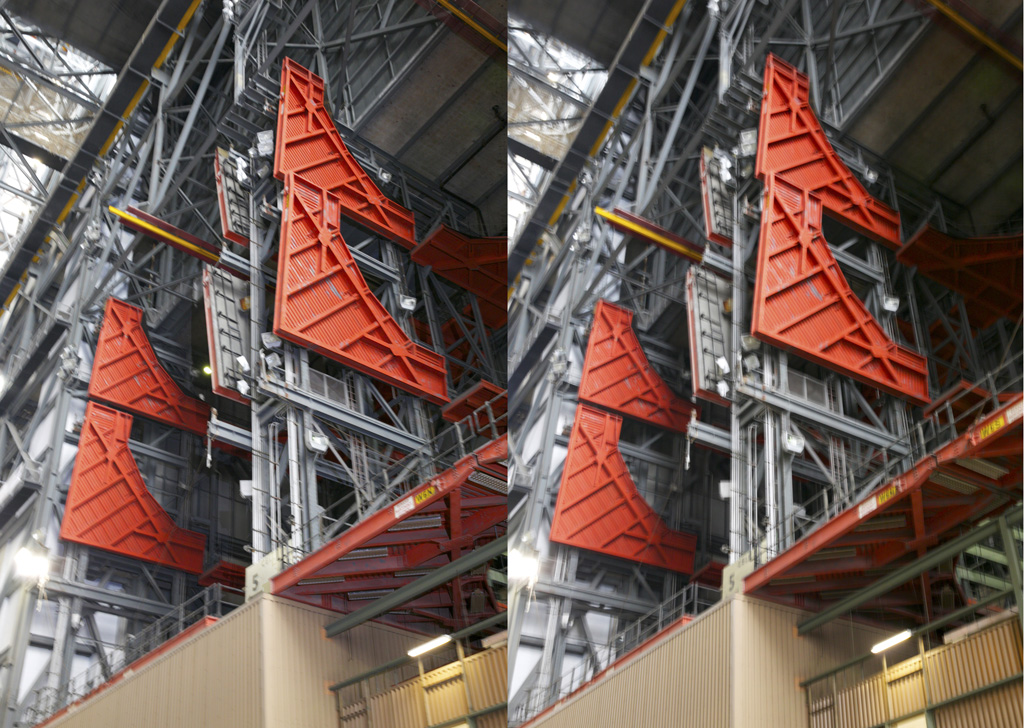
Scorch marks on the blast deflector witness the heat and force from the space shuttle rocket motors. The structure behind the deflector is shown below. The deflector fills the gap between the hole in the portable pad and the flame trench.

Blast deflector structure

Blast deflector structure


New Launch Tower

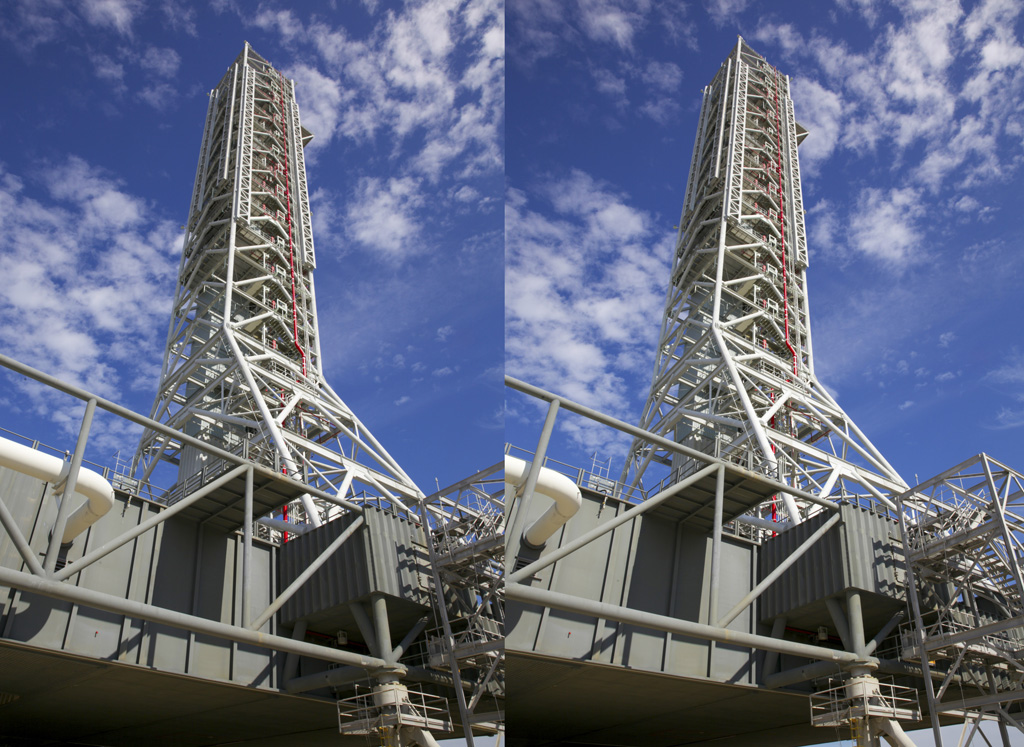
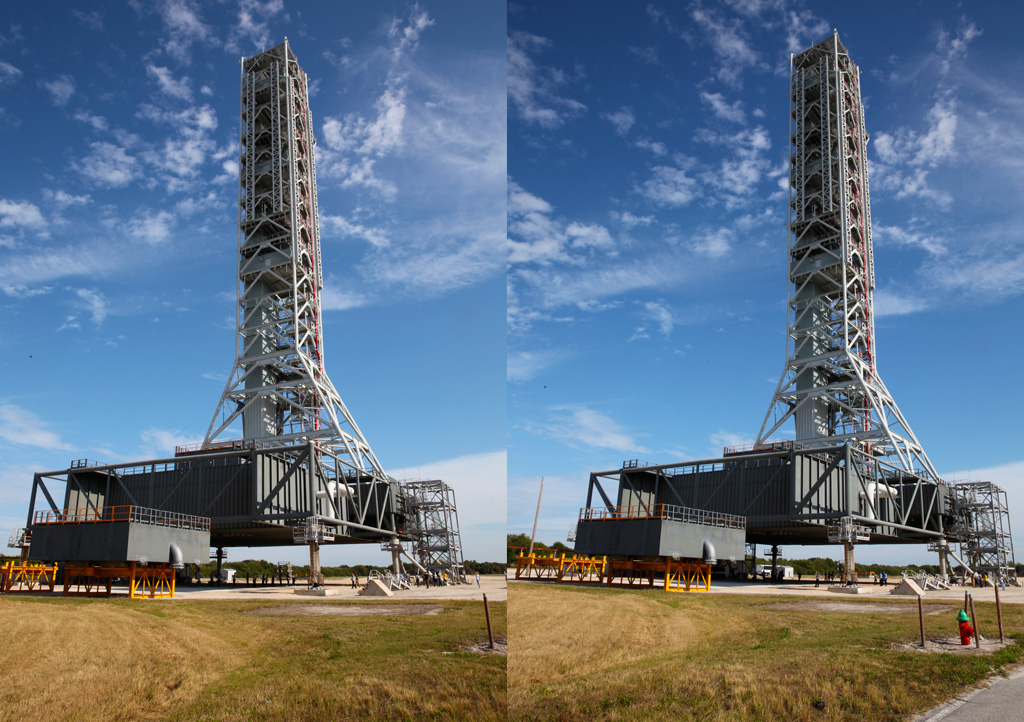
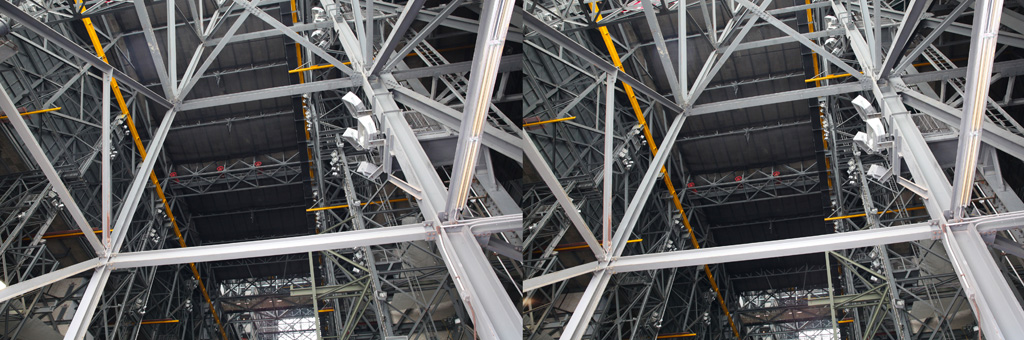
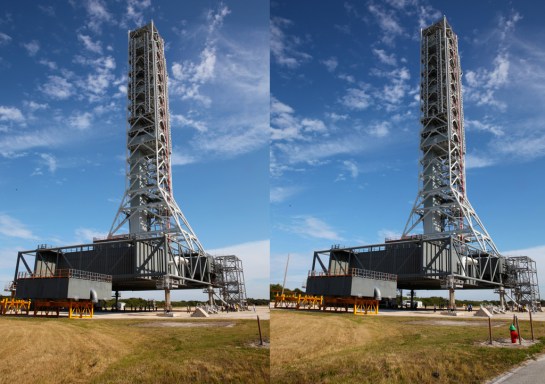
More from Cape Canaveral – this new launch tower, similar to the Apollo versions, is for NASA’s new generation of heavy lifting rockets. It sits on the crawlers (I will post some pictures of one in the next few days) and carries the rocket to the launch site. This tower will fit in the Vehicle Assembly building in the previous posts, and if you look at the people here to give scale, that might give some idea of the size of the VAB. The last image might be  a little hard to register in 3D, but the spatial sense of the ground plane works well once you get it.

Edit: I was back at Cape Canaveral and was told this time that the tower was built for a program that was cancelled and will be adapted for the next generation of rockets. While the main infrastructure at Cape Canaveral was constructed around the Apollo program, that huge investment now frames the new programmes, as it is too expensive to build new launch sites and make the VAB larger.
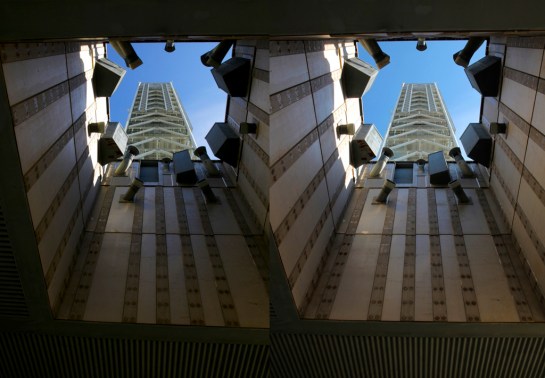
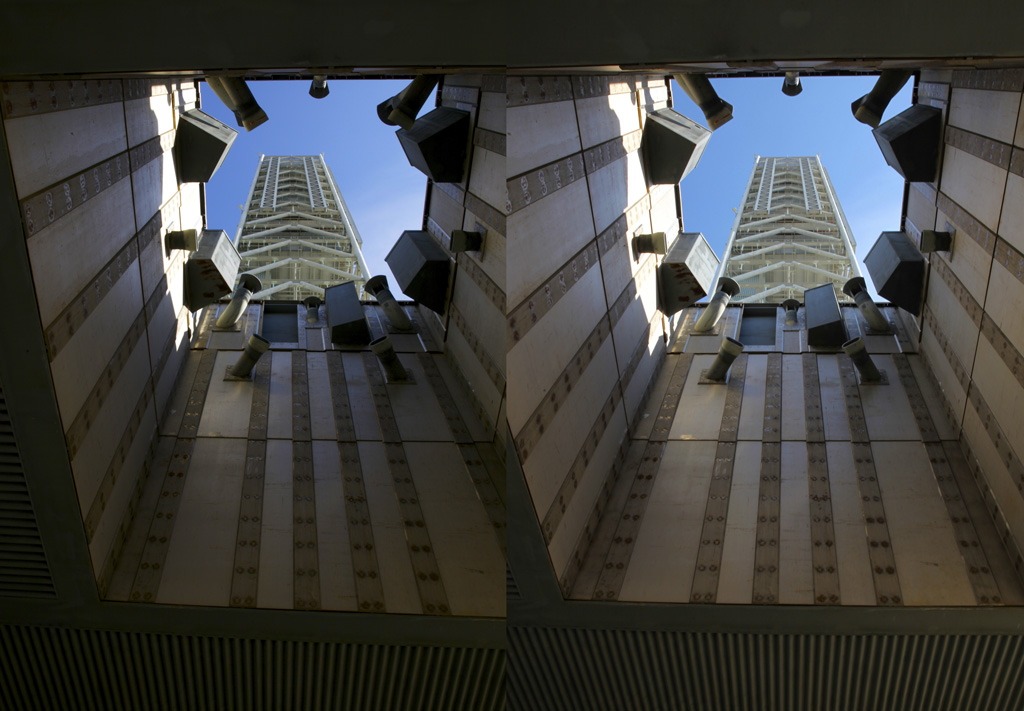
View through hole that takes the rocket blast

The view above shows the tower form the hold in the portable pad that takes the blast form the rocket engines. The spouts around the edge shoot huge volumes of water under the rockets for two purposes. One is to cook the structure in the intense heat. The other is to absorb the low frequency sound that would otherwise bounce back and destroy the rocket.
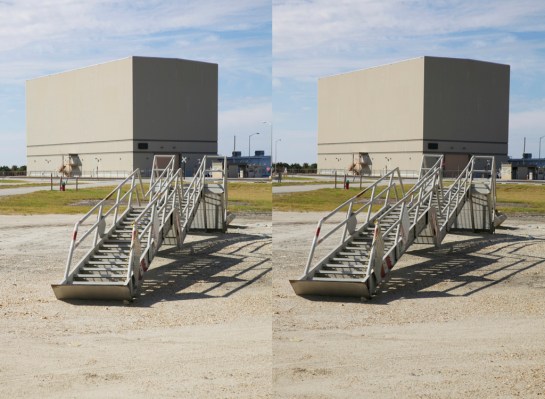
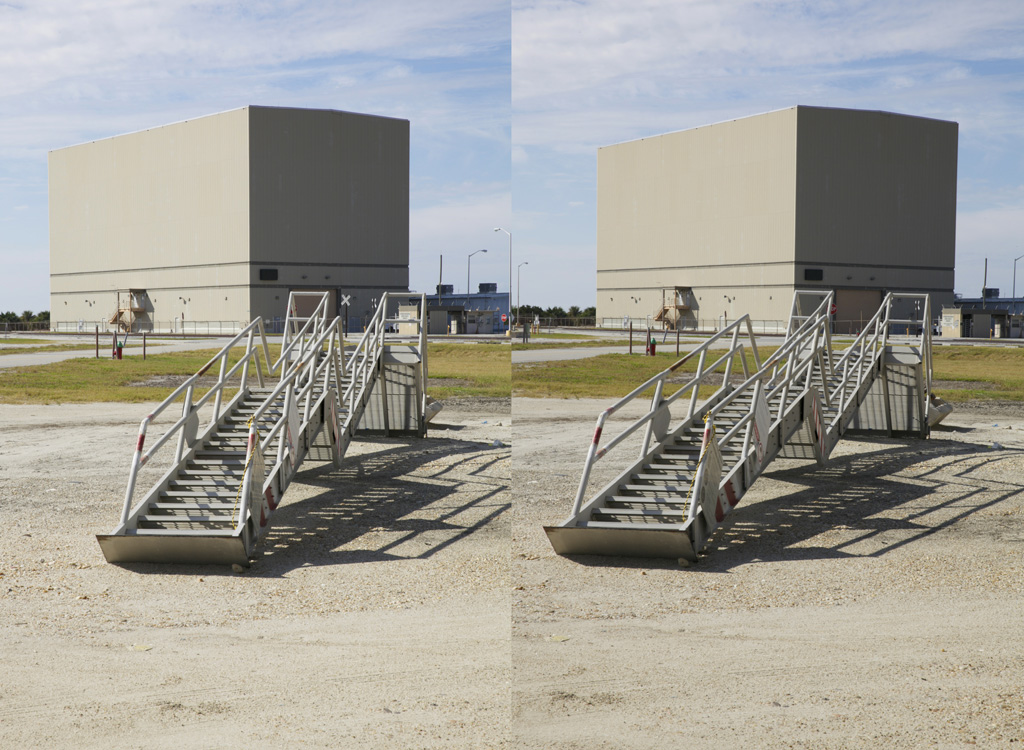
Stair

A stair to provide access to the pad, presumably when it is in position – there was a service and access tower at the parking position to provide a stair while the tower is in storage.

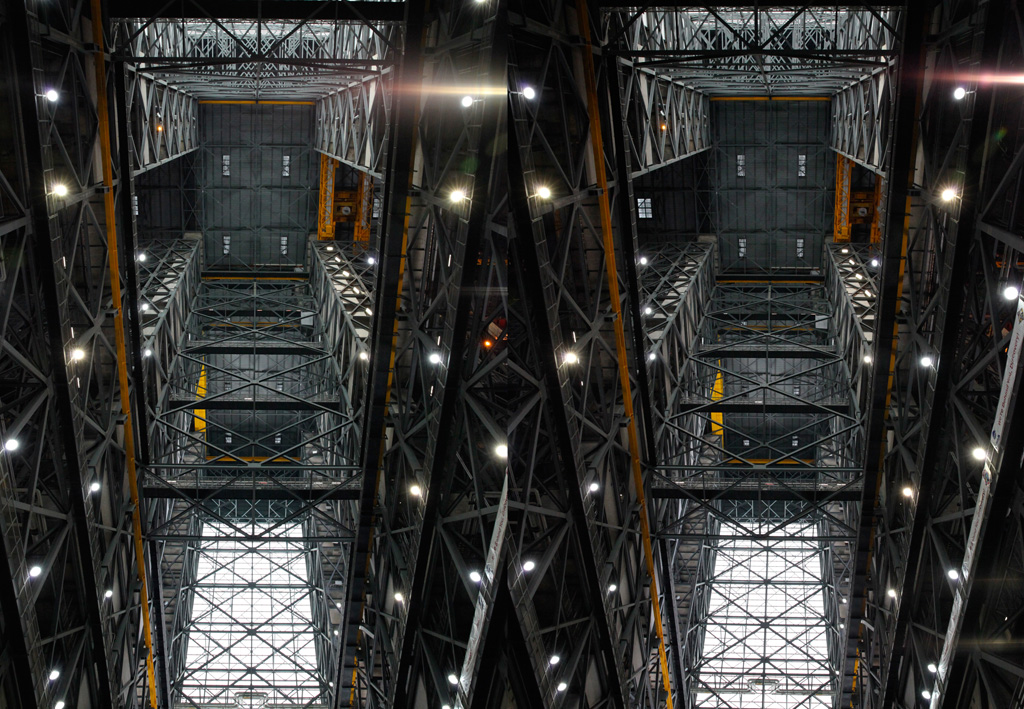
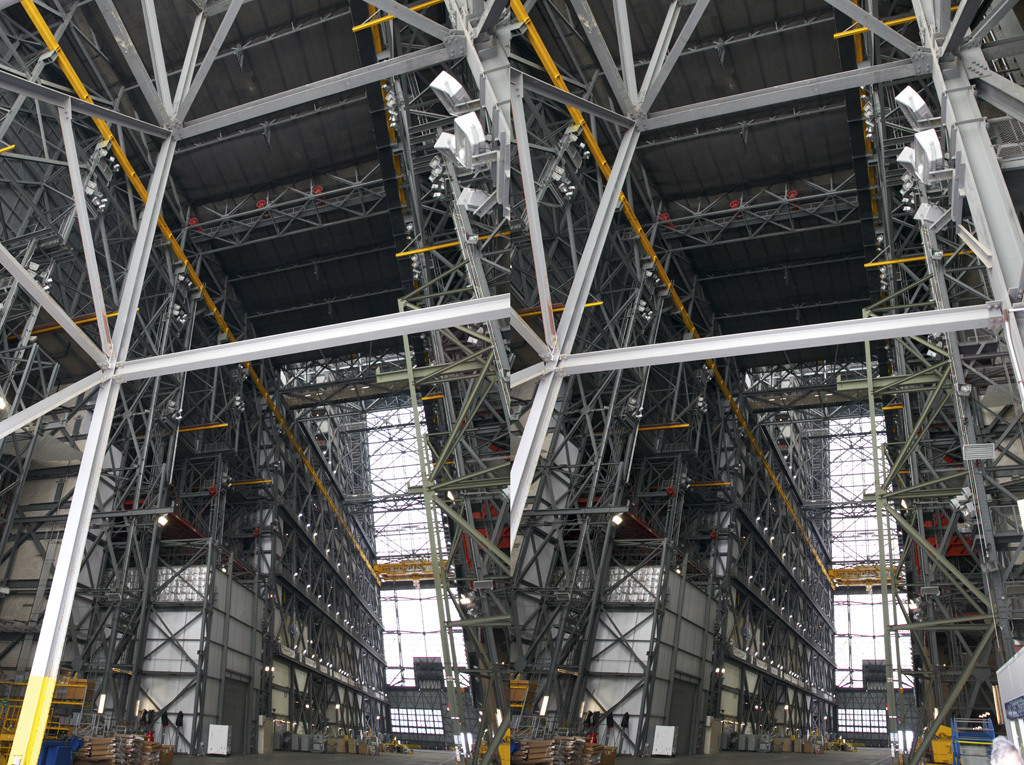
VAB

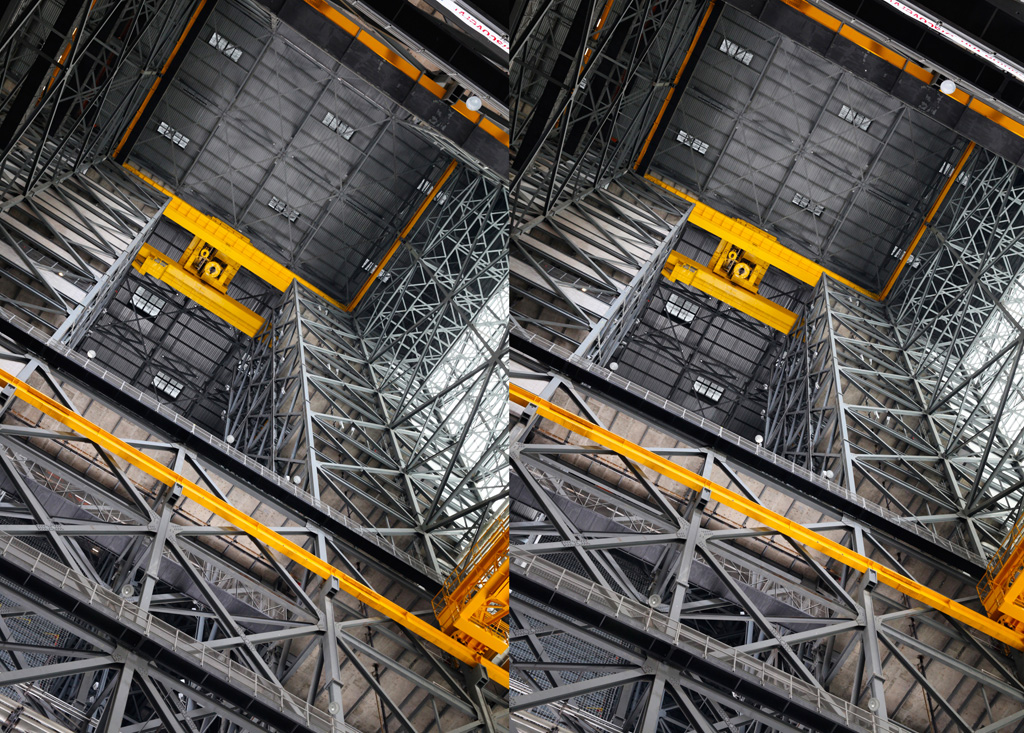
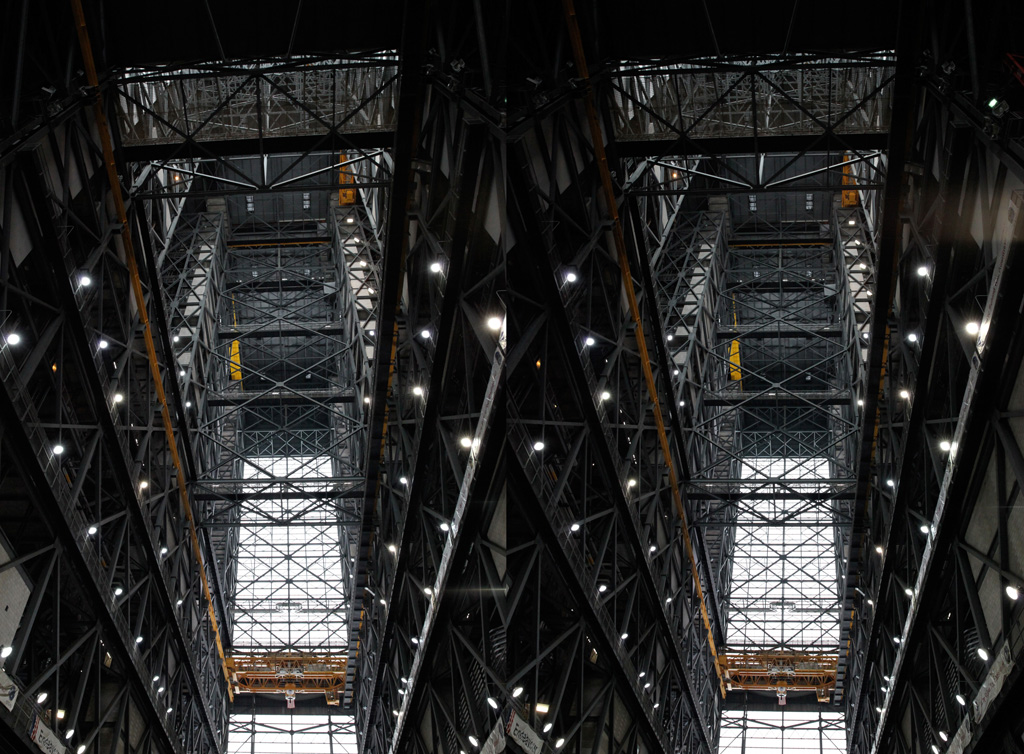
The vast space of the Vehicle Assembly Building at Cape Canaveral.

Usual process fo stereoscopic viewing – go cross-eyed until the images register over each other, concentrate on the central image of the three that will appear and try to relax. Adjust your horizon slightly of you are having problems registering the images.

Rocket transporter

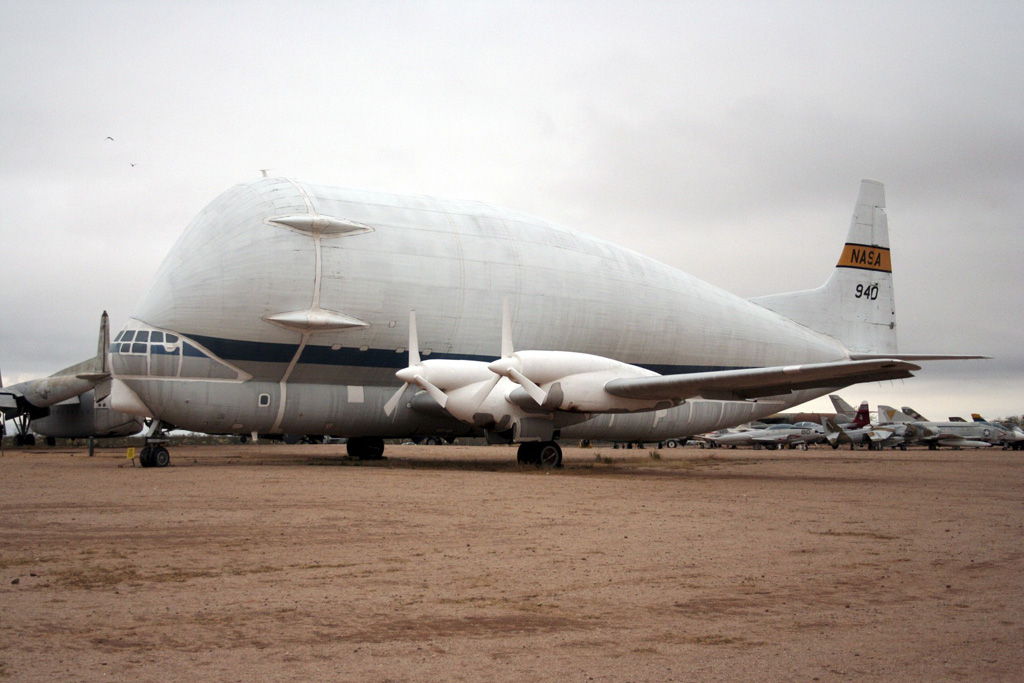
Today I am visiting the Cape Canaveral launch sites – I will post something after the visit – but in anticipation here is a ‘plane to transport sections of the Saturn Five rocket for the Apollo program.  The picture is taken at PIMA in Tucson.

House

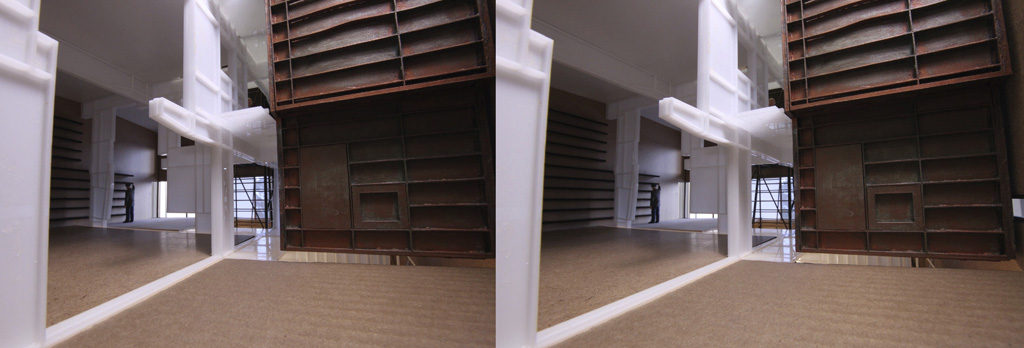
A couple of stereoscopic views of a model for a house. It is a sanitised version of the project due to the   circumstances that led to this model. The original ceiling became part of another model – I just came across these pictures that I took a while ago as it was sitting on my desk and I threw a couple of pieces of MDF on for the snaps. There are lots of missing pieces, to be held by the white steel armature.

House

Written Instructions

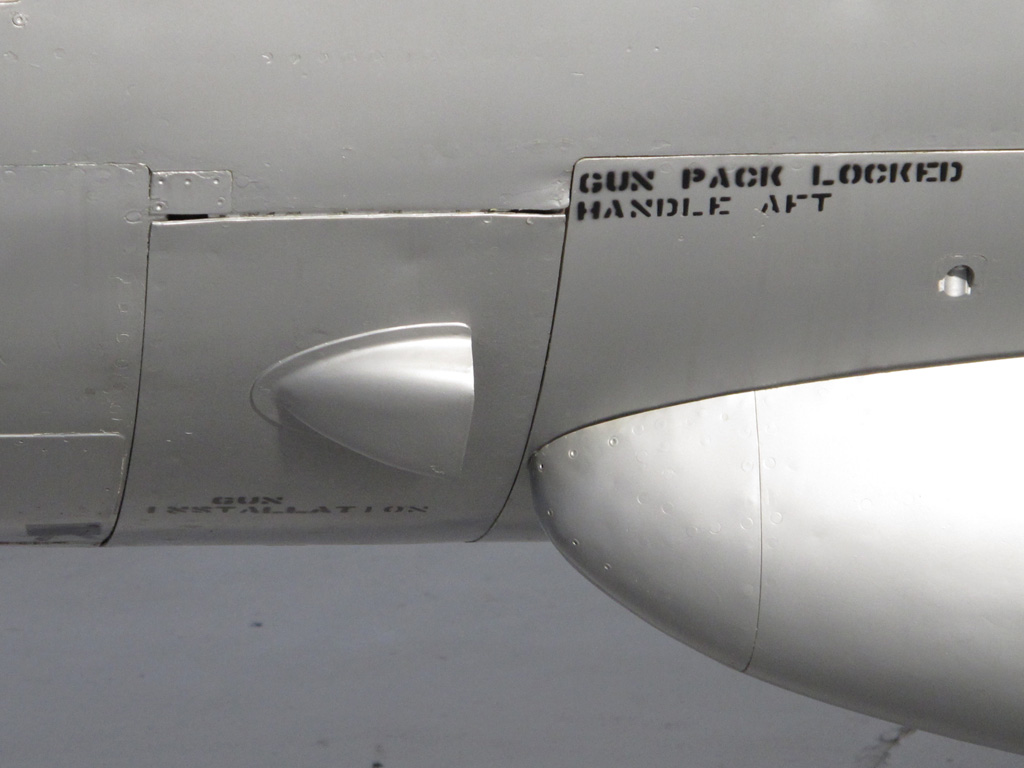
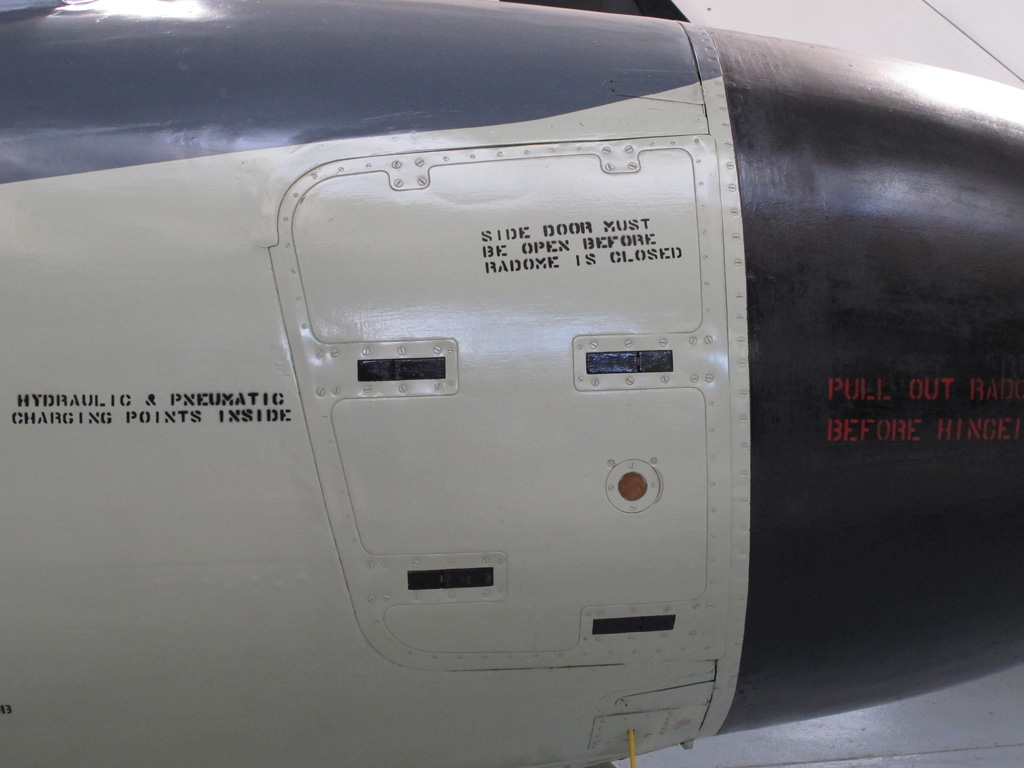
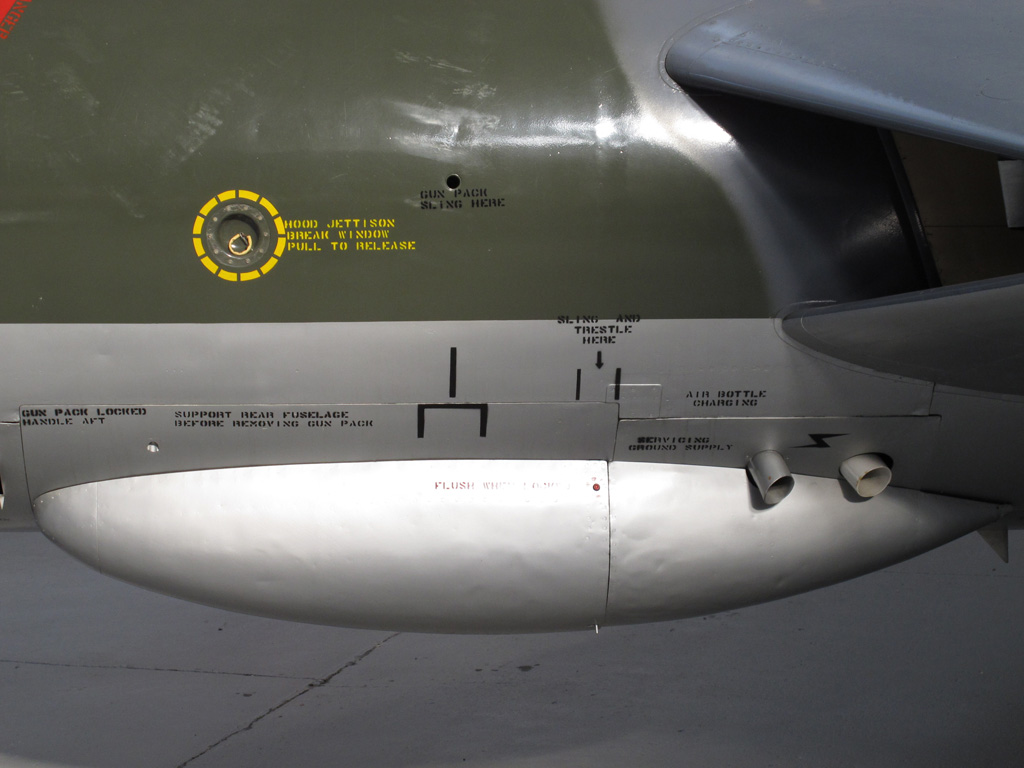
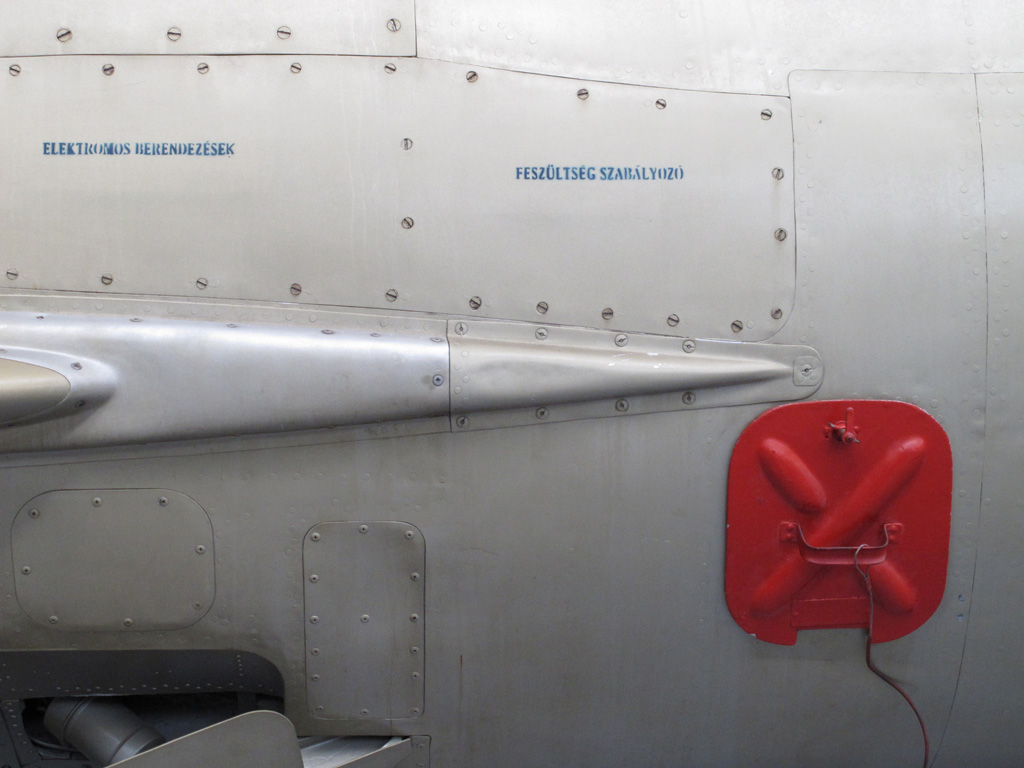
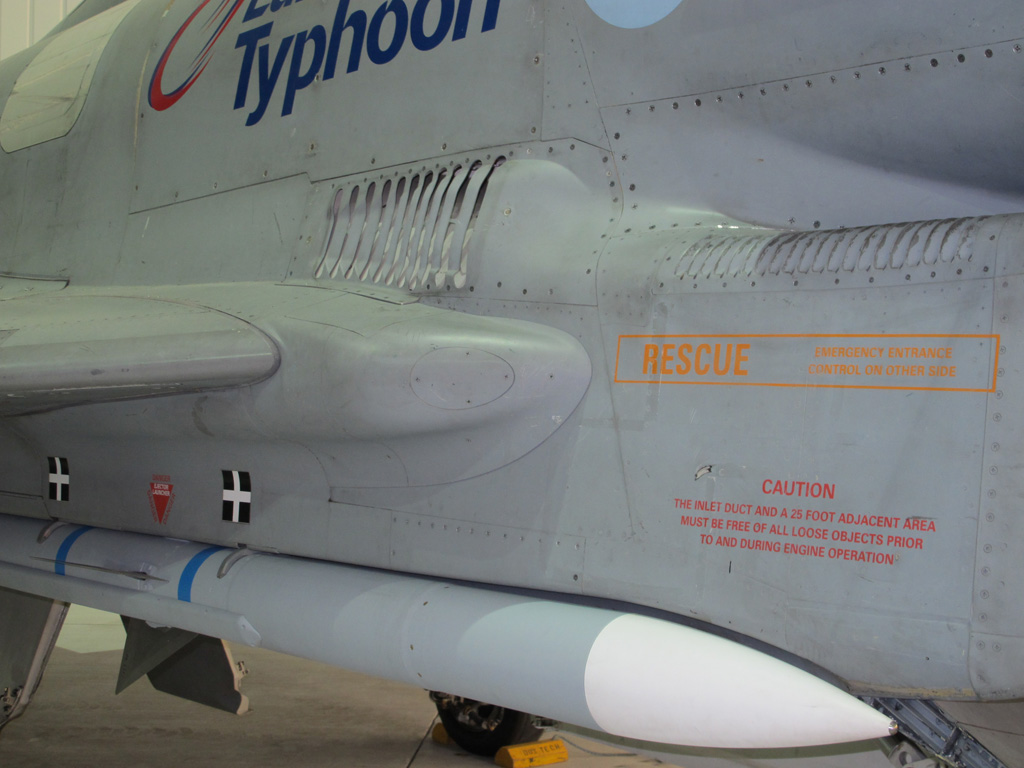
More written instructions on aeroplanes. Many are accompanied by sub-programs that cannot be accommodated by the general form of the fuselage and are contained in bumps or revealed by vents.

Written Instructions

Written Instructions

Written Instructions

Written Instructions


Comparative Anatomy

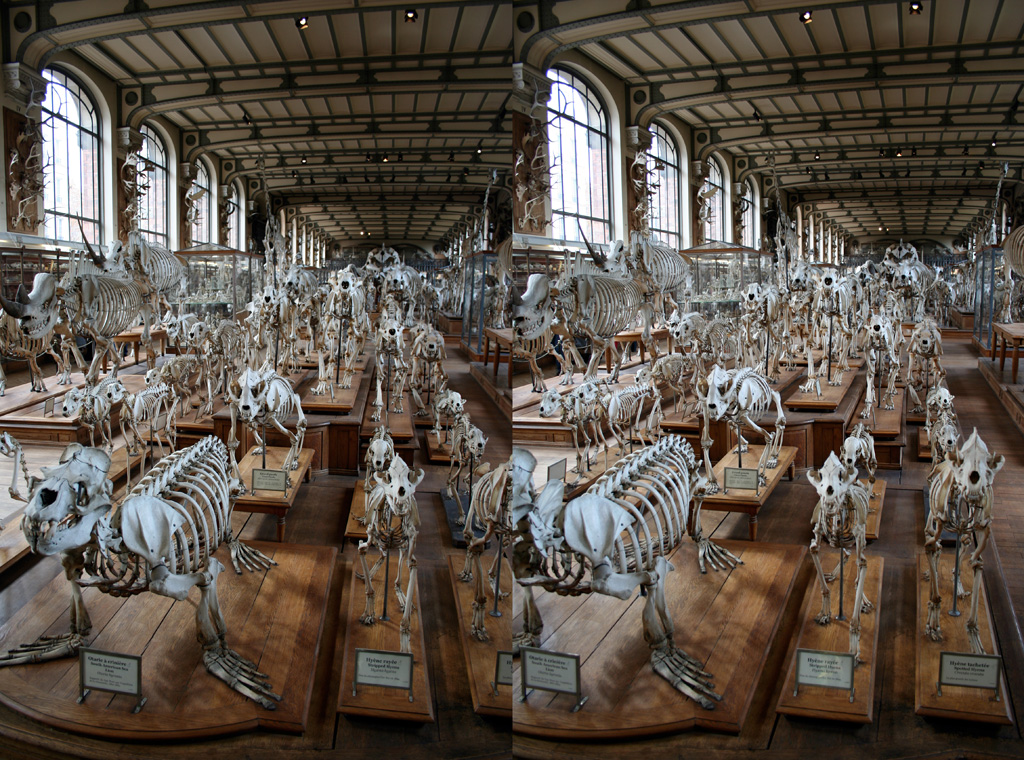
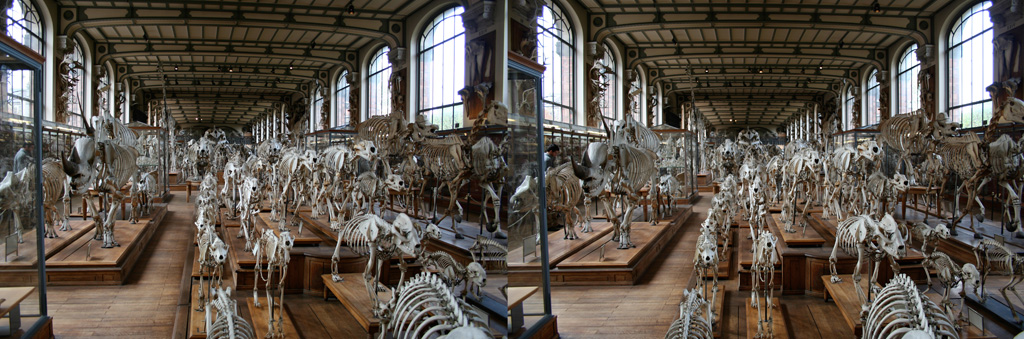
The Galarie de Paléontologie et d’Anatomie Comparée in the Jardin de Plants in Paris has a fantastic collection of mammal skeletons, which are even more wonderful when seen amassed as a forrest of skeletons in the museum. I have posted some stereoscopic pictures of the palaeontology gallery previously (see here), but the mammals downstairs are also very impressive.

If you have trouble resolving the images  make them smaller and concentrate on a common object in the middle ground. The lower image is not the easiest to assemble by going cross-eyed but it work quite well when you find it. Once you have registered the 3D image try and relax, and the three dimensions will pop out a bit more.

Comparative Anatomy